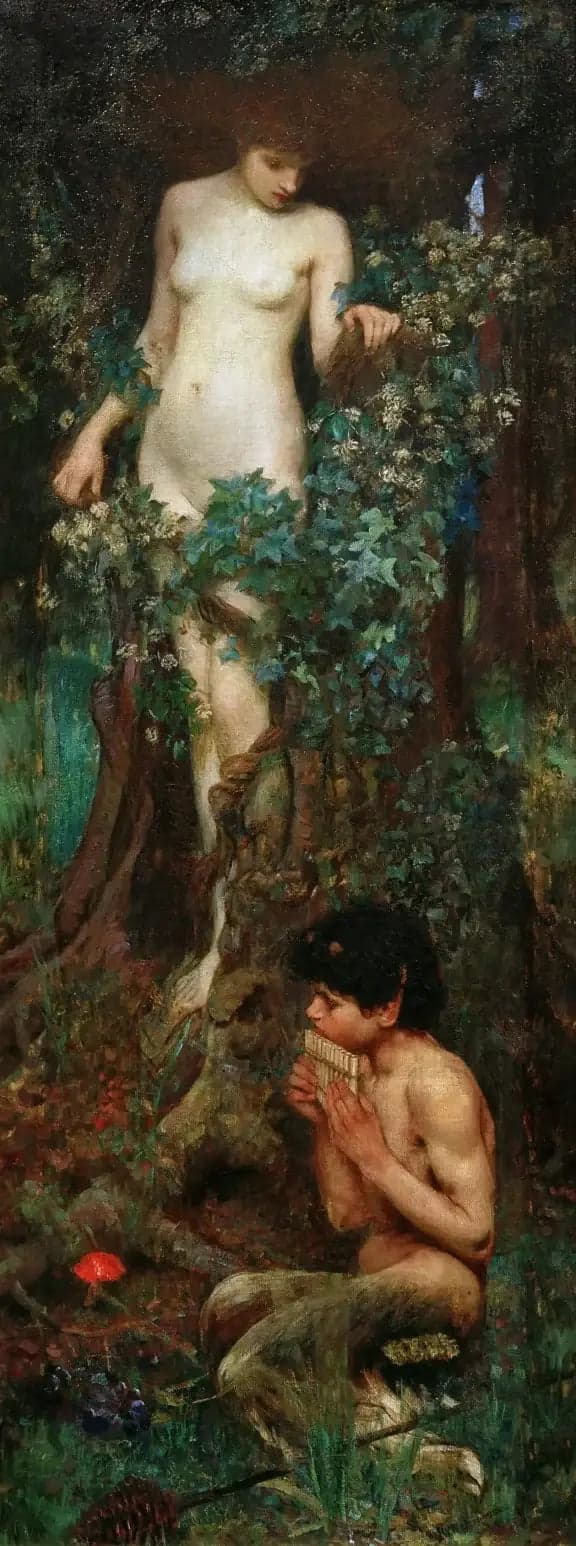
The Hamadryad
Scene depicted
The captivating scene of The Hamadryad depicts a wood nymph emerging from a tree, embodying the harmony between humanity and nature. Like a dreamlike vision, she seems to pursue a melody that only she hears, reminding us of the fragility of ephemeral beauty. The canvas captures the delicacy of this moment, suspended between the real and the mythological.
Historical context
Created in 1900 in London, this painting , emblematic of the Pre-Raphaelite movement, reflects an era where imagination and nature intertwine deeply. Currently, the canvas is preserved at the Tate Britain , an institution that celebrates British artistic heritage. This masterpiece measures 122 x 77 cm, perfect for close contemplation.
Place in the artist's career
The Hamadryad represents a stylistic peak in Waterhouse's career. It is part of his maturity period, alongside works such as “Ophelia” and “The Lady of Shalott,” where light plays a ubiquitous role. These compositions all evoke a deep sensitivity to nature and feminine themes, linked by a unique finesse of execution.
Anecdote
John William Waterhouse once said: “Magic is found in nature, where its forms and colors come to tell stories.” This quote evokes the precise moment he was inspired by a soft melody, a spring whisper as he wandered through the alleys of a secret garden. This atmosphere contributes to the evocative power of The Hamadryad.