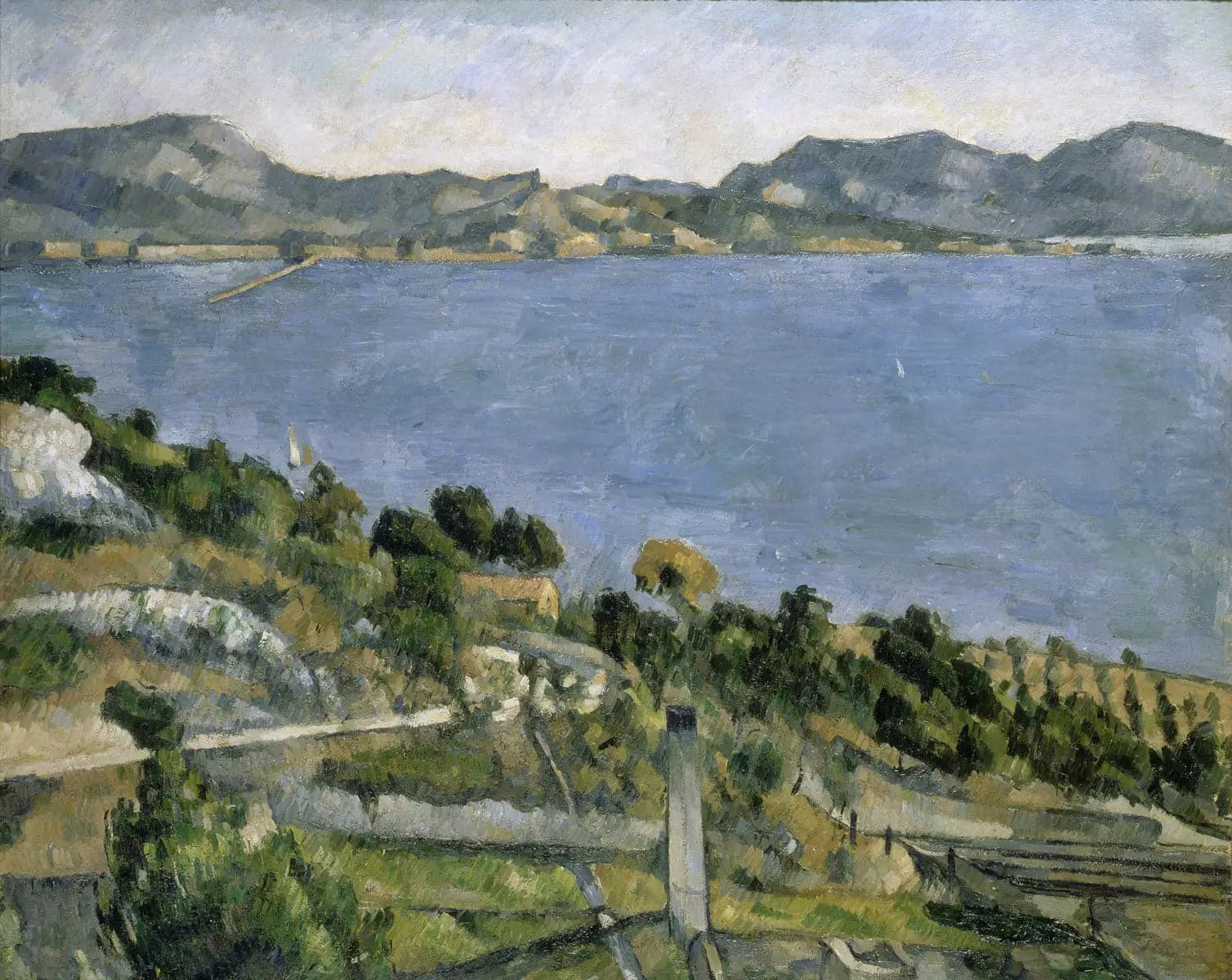
The Gulf of Marseille seen from L'Estaque
- Original dimensions
- 73 x 59.5 cm
- Museum
- Metropolitan Museum of Art
- Year
- 1878
Scene depicted
This canvas offers a striking view of the Mediterranean gulf, framed by rolling hills and bathed in brilliant light. The shades of blue contrast with the orange touches of the rocks, creating a vibrant atmosphere where shadow and light dance. Cézanne appropriates nature, restructuring the landscape into a visual harmony that transcends mere representation, inviting the viewer to enter his sensitive universe.
Historical context
Created in 1878, this painting emblematic of Paul Cézanne is a true testimony of its time, emerging in the heart of l'Estaque, a small fishing port on the Côte d’Azur. The work is part of the impressionist movement, an artistic revolution of the late 19th century, characterized by a lively capture of light and natural landscapes. Today, the canvas is located at the Metropolitan Museum of Art in New York, a prestigious setting for a canvas of such significance, measuring 73 x 59.5 cm.
Place in the artist's career
The Gulf of Marseille seen from l'Estaque represents a pivotal period in Cézanne's career, a moment when he merges impressionism and post-impressionism , foreshadowing the future developments of modern art. Alongside his famous canvas “The Card Players” and “The Sainte-Victoire Mountain,” this painting illustrates his journey towards a more advanced abstraction, establishing his own pictorial language.
Anecdote
“One must paint with one's heart, and nature will reveal itself.” Paul Cézanne , in constant search of pictorial truth, found his inspiration one spring morning, within this haven of peace that is l'Estaque. The gentle whispers of the waves, the salty scents of the sea mingled with the fragrances of wildflowers shaped his imagination, nourishing the evocative power of his masterpiece, The Gulf of Marseille seen from l'Estaque .