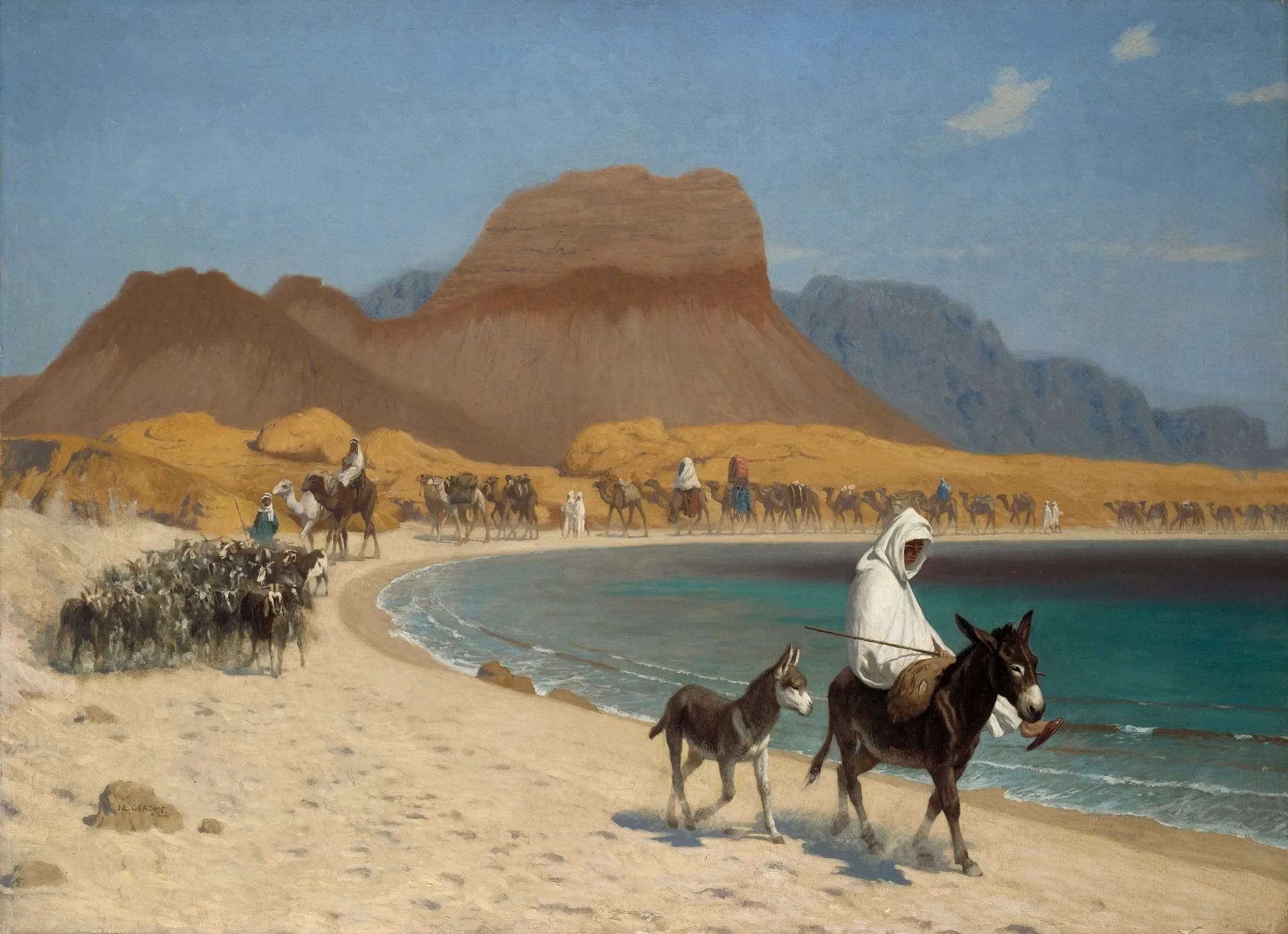
The Gulf of Aqaba - Jean
- Original dimensions
- 81 x 60 cm
- Museum
- National Gallery of Ireland
- Year
- 1897
Scene depicted
The Gulf of Aqaba unfolds under a golden sky, where the harmony of colors merges with the grandeur of the surrounding mountains. This painting depicts not only a landscape but a state of mind, an invitation to travel. The white sails of the boats dance with the wind, while the sparkling water reflects an almost divine light. Gérôme, with unparalleled virtuosity, creates an atmosphere that is both peaceful and enchanting, engaging the viewer in a wondrous contemplation.
Historical context
Created in 1897, this painting evokes the majestic coastline of the Gulf of Aqaba, a region prized for its natural beauty and deep history. Jean-Léon Gérôme , a prominent representative of Orientalism, captures here the essence of a world in full transformation, at the dawn of the 20th century. The canvas is now displayed at the National Gallery of Ireland , where its beauty continues to amaze visitors.
Place in the artist's career
The Gulf of Aqaba represents a significant milestone in Gérôme's career, a peak of his artistic expression. Through this canvas , one could relate it to two other masterpieces: "The Supplement to the History of Saint John the Baptist" and "The Flute of Pan." From one to the other, a technical evolution emerges, ranging from meticulous realism to the exploration of transcendent light.
Anecdote
"Inspiration arises where the eye rests." These words of Gérôme resonate powerfully when thinking about the genesis of the masterpiece . Let us imagine the artist, sitting in a sunlit alley, observing the gentle movement of the waves and the vibrant colors of nature. This canvas is the fruit of that moment, a moment of revelation, of serenity, captured with meticulousness.