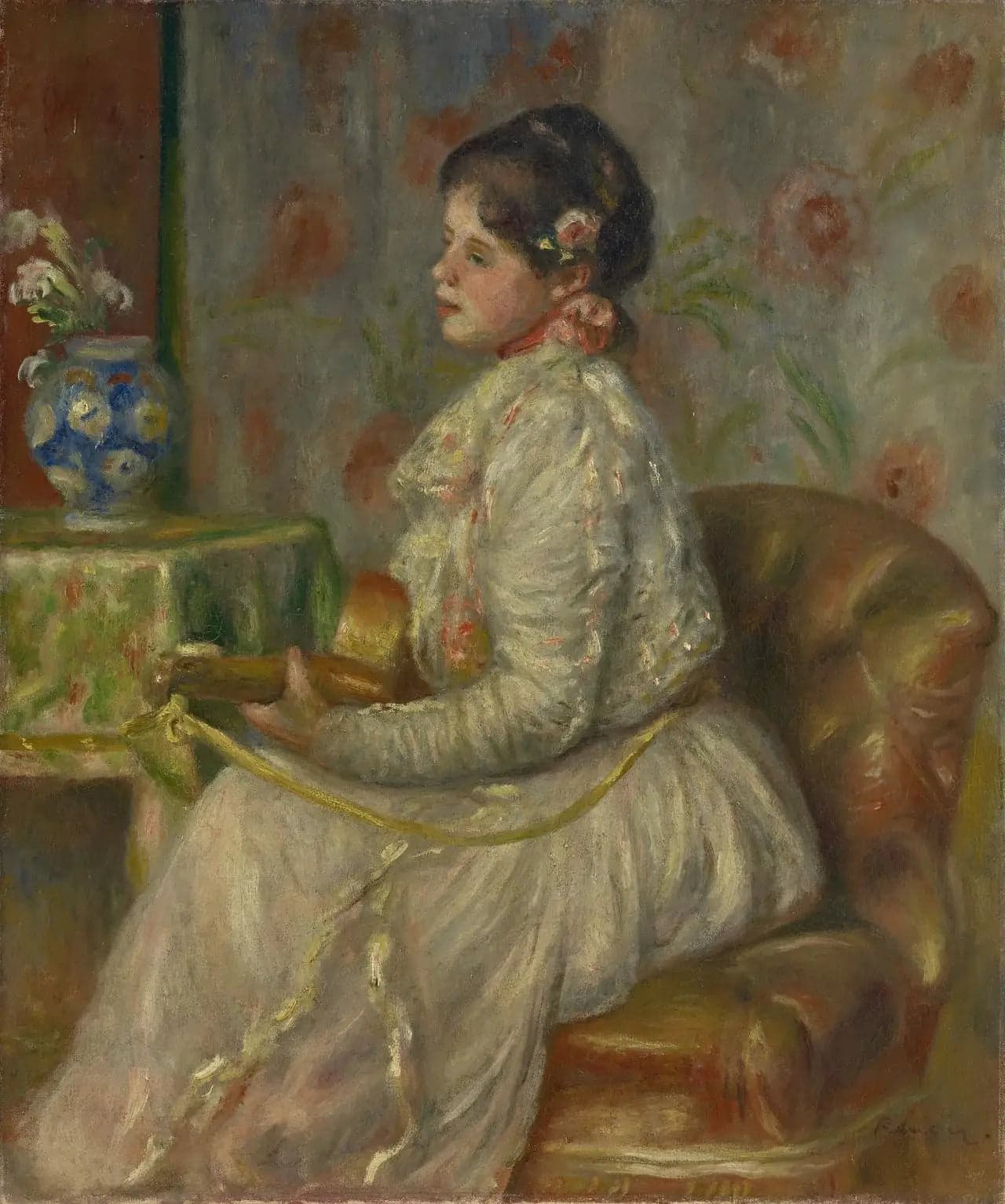
The Guitarist - Pierre
- Original dimensions
- 46 x 55 cm
- Museum
- National Gallery of Victoria
Scene depicted
In this painting , Renoir immortalizes a moment of grace where a musician, immersed in his art, captivates his audience. The nuances of light and shadow in this masterpiece reveal the diverse emotions that emerge when a floating melody permeates the air, weaving a tactile connection between the music and the observer.
Historical context
Created in 1868, this painting takes place in Paris, the artistic epicenter of France. The Guitarist is emblematic of the Impressionist movement, characterized by the exploration of light and color. This canvas is currently located at the National Gallery of Victoria , a prime destination for art lovers, aiming to capture the very essence of the Impressionist era.
Place in the artist's career
As a pivotal work, The Guitarist marks a key period in Renoir's career, where he weaves his first successes. Alongside Luncheon of the Boating Party and Dance at Bougival , this painting bears witness to a stylistic evolution between the finesse of light play and the capture of fleeting moments of life.
Anecdote
Renoir stated: “Painting is a bit like love, you have to approach it with passion.” It was during a sweet Parisian spring, on the banks of the Seine, that he found inspiration for this masterpiece . The vibrant melody of a guitarist in the streets swept him into a world of bright colors and gentle exhilaration — an echo of the soul through his canvas .