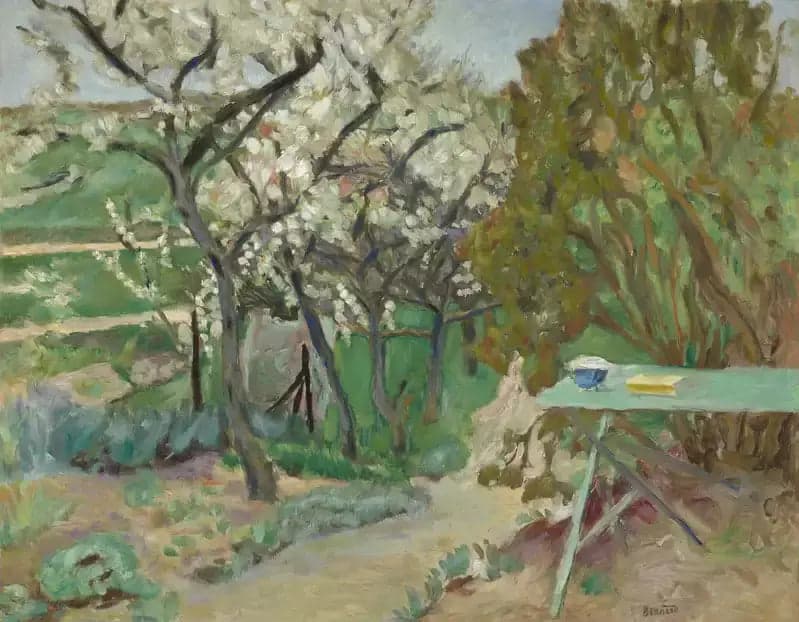
The Green Table
- Original dimensions
- 65 x 51 cm
- Museum
- National Gallery of Art
- Year
- 1910
Scene depicted
The Green Table offers an intimate view of a domestic scene, where a table adorned with various objects seems to vibrate with life. The composition is dominated by warm hues and diffused light, creating an atmosphere of conviviality and softness. This painting , where nature harmonizes with the everyday, becomes a tribute to the art of living, to the beauty of simple moments.
Historical context
Created in 1910 at the crossroads of Impressionism and Fauvism , the painting "The Green Table" by Pierre Bonnard embodies the beginning of the 20th century, a time when art liberated itself from conventions. Today, this painting resides in the sublime setting of the National Gallery of Art in Washington, inviting every visitor to discover a work pixelated by light and time.
Place in the artist's career
This painting marks a crucial step in Bonnard's career, consolidating his status as a bold artist. In this period of maturity, he explores themes similar to those in "Woman with a Cat" and "The Luncheon," delving into the emotional nuances of domestic space through unique painting techniques and vibrant palettes.
Anecdote
“The colors, sometimes vibrant, sometimes soothing, are the whispers of light,” Bonnard might have said while painting this masterpiece . The inspiration came to him on a spring morning when the sun's rays filtered through the windows of his apartment, illuminating the table with colors and memories. This fleeting moment, captured in the canvas , reveals the evocative power of everyday life transfigured by art.