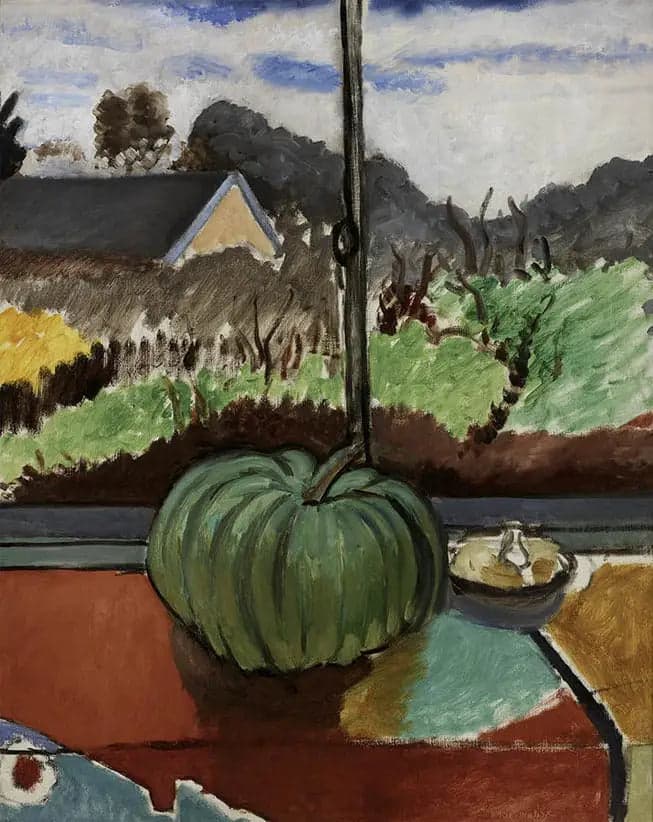
The Green Pumpkin
- Original dimensions
- 64.5 x 80 cm
- Museum
- Rhode Island School of Design Museum
- Year
- 1916
Scene depicted
This painting immerses the viewer in a world where nature and art unite. Matisse reveals a pumpkin, a living symbol of the earth's abundance and generosity. Evoking a lively and joyful interior space, this composition is a celebration of color, shapes, and textures, paying tribute to the simple wonders of life. Every detail is a call to contemplation, a timeless jewel of the pictorial heritage.
Historical context
Created in 1916 in Nice, France, The Green Pumpkin is part of the Fauvism , a revolutionary artistic movement that flourished in France in the early 20th century. This canvas , now housed in the Rhode Island School of Design Museum , reflects not only Matisse's feverish imagination but also an era when art resonated with intense cultural and emotional upheavals.
Place in the artist's career
The Green Pumpkin stands as a major milestone in Matisse's career, brilliantly illustrating his phase of artistic maturity. This painting juxtaposes with other significant pictorial works , such as The Joy of Life and Woman with a Hat, revealing his evolution towards greater abstraction and an increased sensuality of forms and colors.
Anecdote
"Color is a force, a surge of life." This is what Matisse might have whispered while envisioning his painting . On a gentle spring morning, in the garden of his villa in Nice, he observed the light playing on his subjects, awakening in him the inspiration for this masterpiece with vibrant hues.