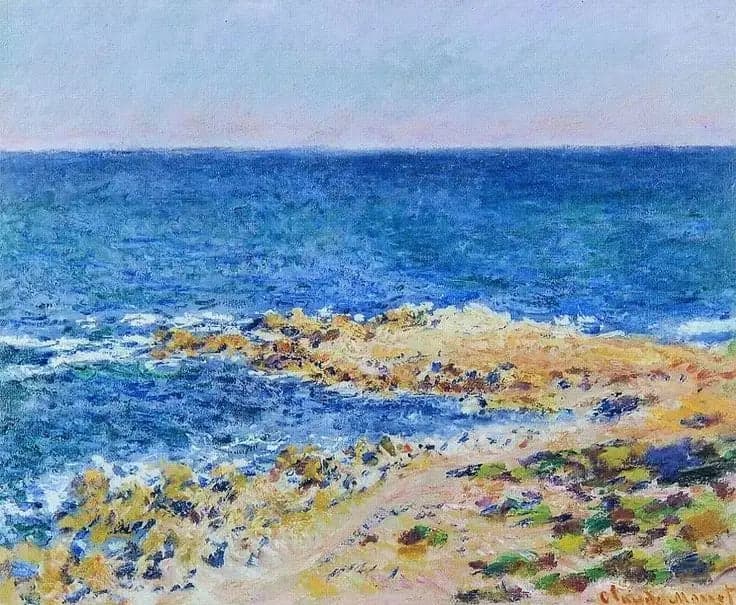
The Great Blue at Antibes
- Original dimensions
- 73 x 60 cm
- Museum
- Not specified
- Year
- 1856
Scene depicted
In this canvas , Monet immerses us in the tranquility of the azure waters. The landscape is enveloped in a peaceful atmosphere, where each brushstroke reveals shimmering nuances of the sky and sea, as if the light itself were felt on the canvas. The scene is a tribute to nature, celebrating the simple beauty of sunny days by the sea.
Historical context
Year: 1856 |BRK| Museum: Not specified |BRK| Dimensions: 73 x 60 cm
Place in the artist's career
This painting , rooted in the 1850s, represents a decisive turning point in Monet's career. While other paintings such as “ Impression, Sunrise ” and “ The Water Lilies ” mark milestones in his evolution, The Great Blue in Antibes embodies a bold exploration of the effects of light on water, a recurring theme in his work of rare sensitivity.
Anecdote
Claude Monet , when faced with the sparkling sea of Antibes, is said to have murmured: “This is where light finds its most beautiful setting.” This painting is a reflection of a moment stolen from time, a sweet spring morning, where each captured hue communicates a vibrant emotion, embraced by the sea breeze.