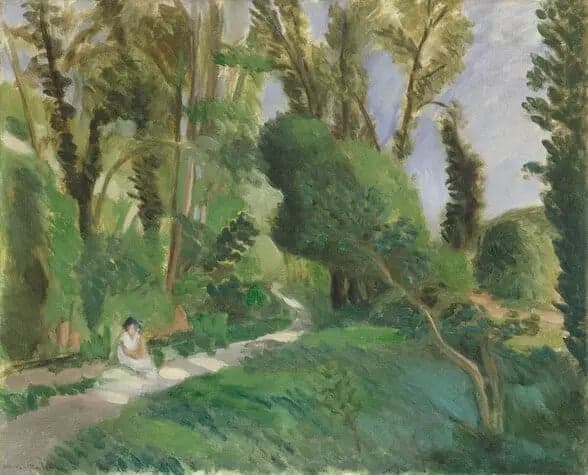
The Gorges of the Wolf
- Original dimensions
- 60.9 x 50.2 cm
- Museum
- National Gallery of Art
- Year
- 1922
Scene depicted
The Gorges du Loup vibrates with emotional intensity, capturing a spectacular view of the jagged gorges overlooking a sparkling river. This composition transports us on a visual journey, where the movement of the water seems to dance under the sun, bathed in vibrant hues. Matisse, through his canvas , creates a dialogue between light and shadow, awakening in us the call of nature.
Historical context
Created in 1922, in the enchanting setting of France, this painting illustrates the belonging of Henri Matisse to the Fauvist movement, recognized for its bright and bold colors. This painting is displayed at the National Gallery of Art , where it continues to amaze visitors. Each brushstroke of this canvas captures not only a view but also an era when art frees itself from traditional constraints, thus becoming a true mirror of human emotions.
Place in the artist's career
This painting represents a turning point in Matisse's career, a moment when he asserts himself as a master of modern painting . His previous masterpieces like The Piano Lesson and The Dance show a more academic approach, while with The Gorges du Loup, he fully embraces Fauvism . This painting is an ode to artistic freedom, marking the editor of a remarkable technical and emotional evolution.
Anecdote
Matisse once remarked: "The true adventure of a canvas begins when you inject the soul into it." This quote perfectly summarizes the essence of his creativity, an inspiration that arose from a radiant morning, facing the natural beauty of the gorges. It envelops the painting The Gorges du Loup with a unique aura, resonating with the power of nature and the whisper of rivers.