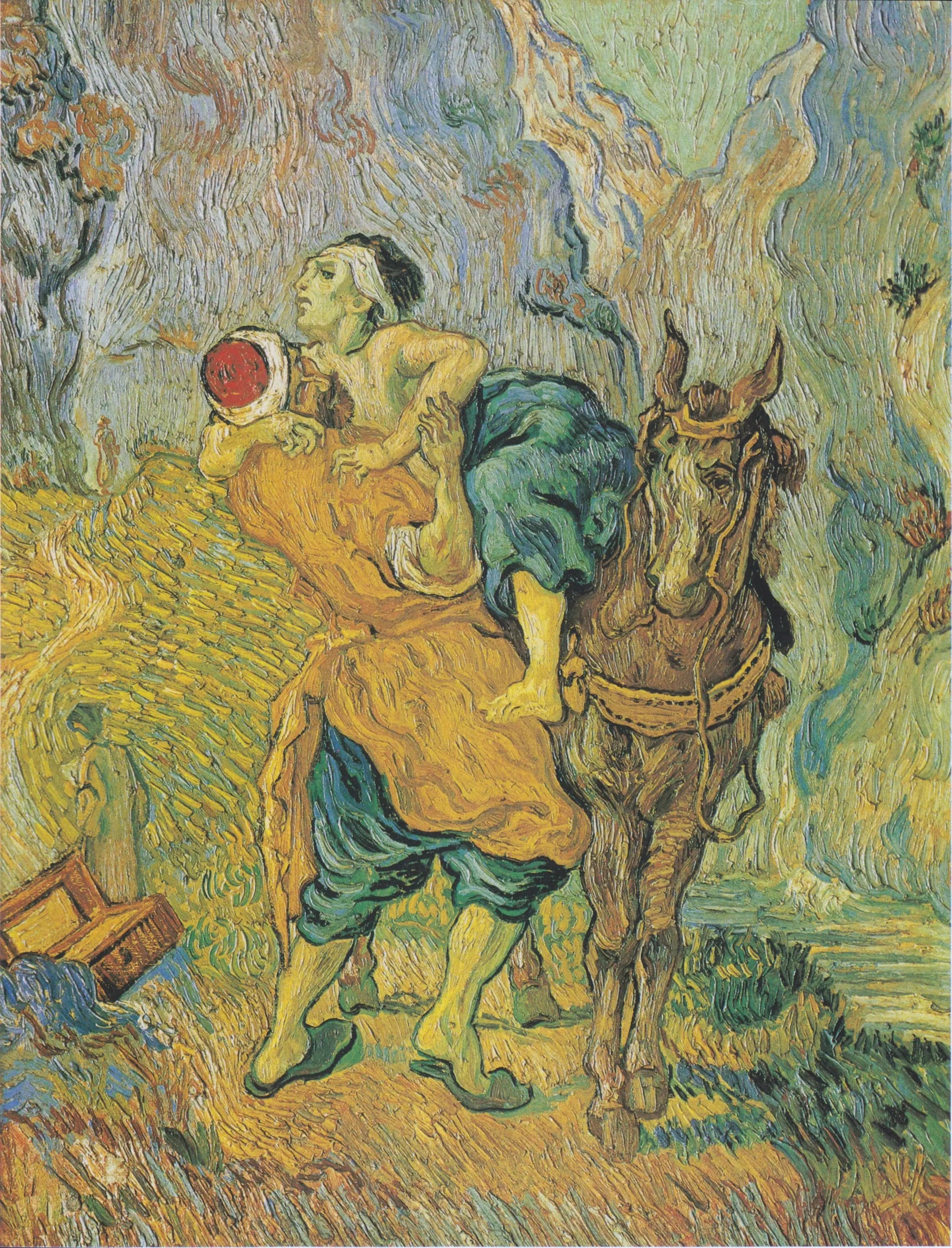
The Good Samaritan
Scene depicted
This painting finely illustrates the biblical story of the Good Samaritan, a symbol of charity and empathy. The composition reveals a man in distress, helped by a passerby in a landscape that is both arid and filled with light. The human figures blend into the surrounding nature, creating a poignant dialogue between humanity and sacrifice.
Historical context
Created in 1890, in the beautiful city of Saint-Rémy-de-Provence , this painting is emblematic of the post-impressionist movement. At that time, Van Gogh, plagued by his inner turmoil, transposes his emotions onto the canvas with striking intensity. Today, this canvas resides at the Kröller-Müller Museum and is displayed in dimensions of 60 x 73 cm.
Place in the artist's career
This canvas stands as a major milestone in Van Gogh's career, a work that testifies to his emotional peak. In parallel, works like “ The Starry Night ” and “ The Sunflowers ” illustrate his technical evolution. Each painting revealing a new chapter of his artistic quest.
Anecdote
“The beauty of a simple gesture of eternal kindness,” said Vincent, referring to his source of inspiration for this masterpiece . Perhaps it was on a spring morning, as he wandered through the streets of Saint-Rémy, crossing the gaze of a stranger, that he felt the power of compassion that he would immortalize on his canvas .