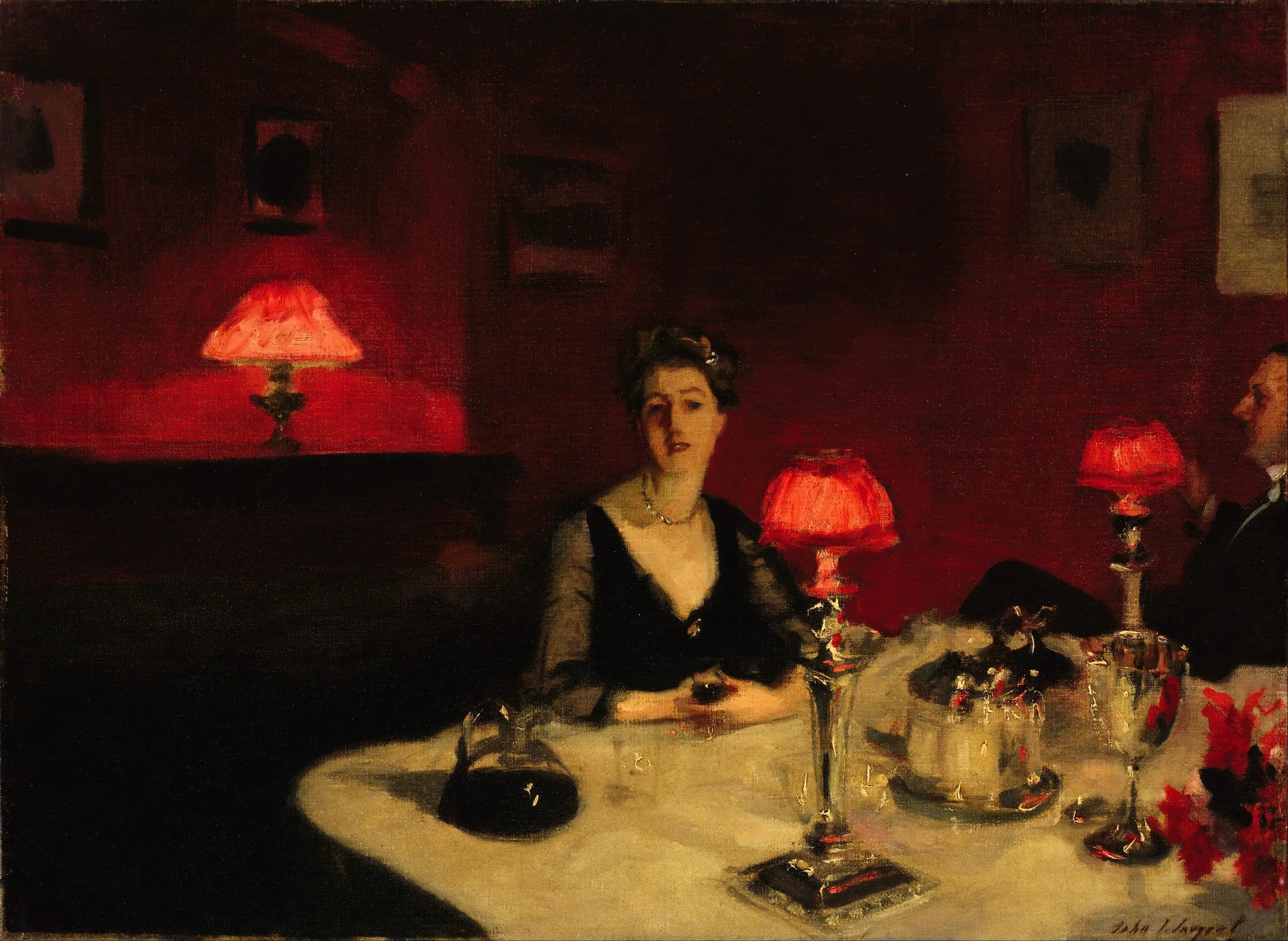
The Glass of Port
- Original dimensions
- 666.75 x 514.35 cm
- Museum
- Nationalmuseum
- Year
- 1884
Scene depicted
This poignant and rich painting depicts an intimate scene where a man savors a glass of port, surrounded by the elegance of a muted decor. The relaxed posture, accompanied by a luxurious ambiance, evokes subtle exchanges and dandy memories. Sargent excels here at freezing the moment, transforming the composition into an invitation to reflect on the passage of time.
Historical context
Created at the end of the 19th century, at the heart of the European artistic scene, the iconic painting The Glass of Port is part of an innovative impressionist movement. Made in Stockholm, this work is now displayed at the Nationalmuseum , encapsulating the elegance of a refined era. At the time of its creation, the canvas seems to vibrate with effervescence, blending English and French influences that testify to Sargent's genius.
Place in the artist's career
In the career of John Singer Sargent , The Glass of Port represents a pivotal moment, revealing his genius to the world. On par with his famous portraits such as Madame X or The Water Party , this painting illustrates a transition towards a stylistic maturity that combines technical mastery and sensitivity. The influences that emerge testify to his ongoing evolution and quest for authenticity.
Anecdote
“Art is a celebration of life through a canvas to paint.” These words from Sargent resonate as an ode to his masterpiece. Inspired by a moment of contemplation during a summer evening, he captures not only the image but the atmosphere surrounding it: the distant sound of conversations, the dancing light of the chandeliers, and the aroma of refined dishes. Each brushstroke in The Glass of Port is imbued with this fleeting essence.