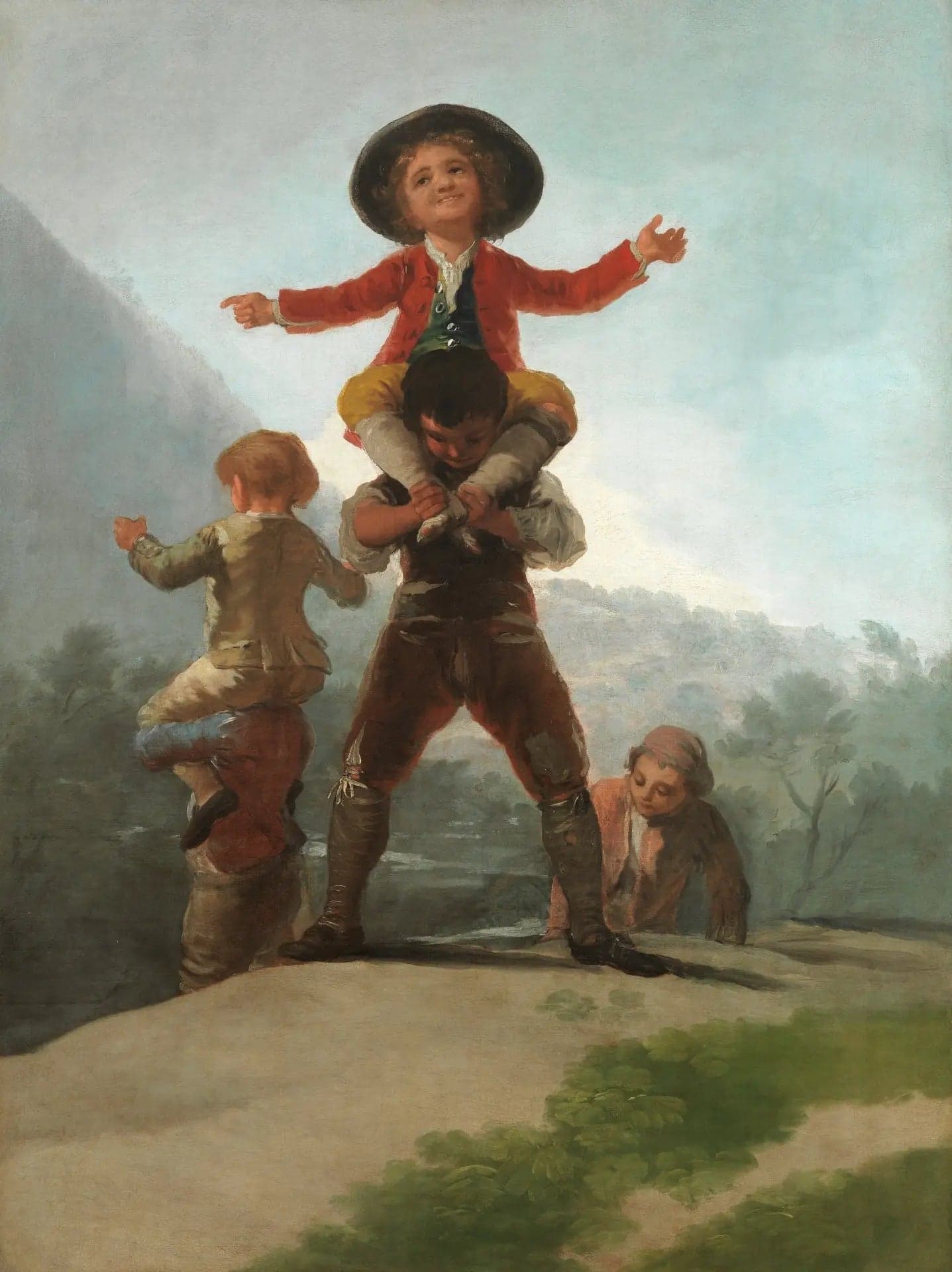
The Gigantillas
- Original dimensions
- 104 x 137 cm
- Museum
- Prado Museum
- Year
- 1791
Scene depicted
The painting "Las Gigantillas" illustrates a vibrant scene from Spanish tradition, where diverse, intriguing, and colorful figures mingle around a celebration. Goya excels at depicting the joy and enthusiasm of the characters, their bright costumes and dynamism, thus transforming this image into a true visual narrative, both festive and poignant.
Historical context
Created in Madrid, Spain, in 1791, "Las Gigantillas" is part of the early Romanticism artistic movement, a period marked by emotion and uniqueness. This painting masterpiece is now located in the Prado Museum, where it attracts the attention of art lovers from around the world, fascinated by its evocative power. With imposing dimensions of 104 x 137 cm, this canvas showcases Goya's mastery, capable of translating rich atmospheres and deep narratives into images.
Place in the artist's career
"Las Gigantillas" represents a key milestone in Goya's career. Situated at a time when he refined his style and experimented with deeper and more dramatic narratives, this painting is part of a lineage of other significant works such as "The Disasters of War" and "The 3rd of May 1808." These canvases , while sharing the same emotional intensity, explore distinct themes through varied techniques.
Anecdote
Francisco de Goya is said to have once stated: "Art is the memory of emotions." That morning, inspired by the soft lights of spring, he captured the shadows and lights of the silhouettes of anonymous giants, executing graceful movements and evoking an emotional momentum. "Las Gigantillas" is much more than a simple canvas ; it is a resonance of the soul and human beauty.