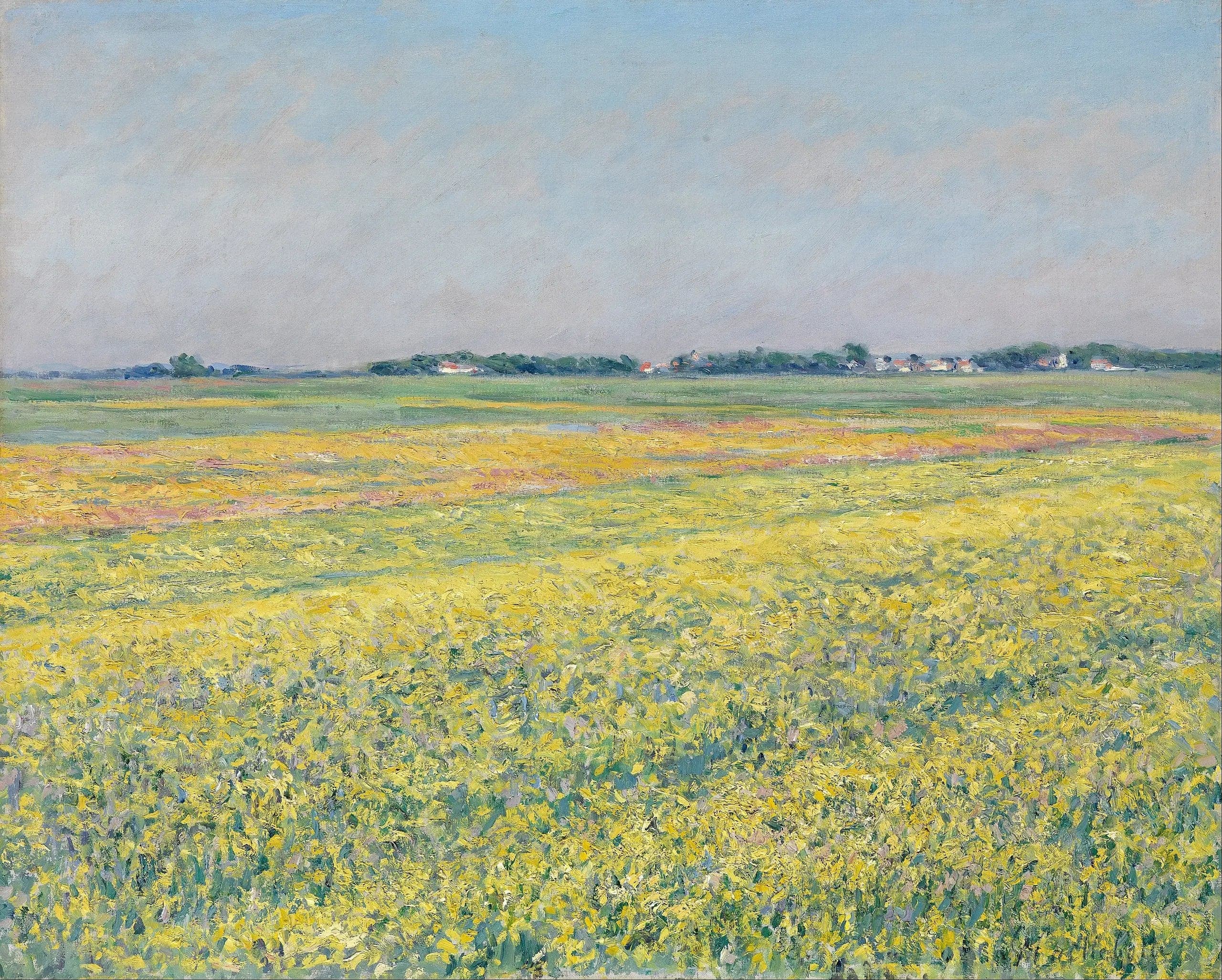
The Gennevilliers Plain, Yellow Fields
- Original dimensions
- 817 x 659 cm
- Museum
- National Museum of Victoria
- Year
- 1884
Scene depicted
In this painting, Caillebotte transports us to the heart of a vast plain, where the fields bursting with golden colors stretch as far as the eye can see. The composition reveals a delicate harmony between bright lights and shadows that project soft shapes, creating a soothing atmosphere imbued with simplicity and elegance. This rural landscape, tinged with subtle nostalgia, seems to capture a suspended moment, inviting the viewer to wander through this serene nature.
Historical context
Created in 1884, this painting is iconic and immerses the viewer in the peaceful plain of Gennevilliers, located near Paris, France. Signed by the master of the Impressionist movement, Gustave Caillebotte , this work testifies to a time when light and nature became the protagonists of a whole new form of artistic expression. Currently, this canvas is preserved at the National Museum of Victoria , a true sanctuary for art lovers.
Place in the artist's career
This painting , The Plain of Gennevilliers, Yellow Fields, marks a pivotal period in Caillebotte's career. After revealing his emerging talent with works such as The Bridge of Europe and The Floor Scrapers, this painting fits into a pronounced Impressionist movement, illustrating the artist's stylistic evolution towards greater freedom of composition and mastery of light.
Anecdote
“Nature is a living painting; you just have to open your eyes to see the beauty,” could say Gustave Caillebotte , inspired by a sunny morning when he painted this pictorial work. This fleeting moment of contemplation in a sunlit field infused an evocative strength into his painting , inviting everyone to embrace the tranquility of the countryside.