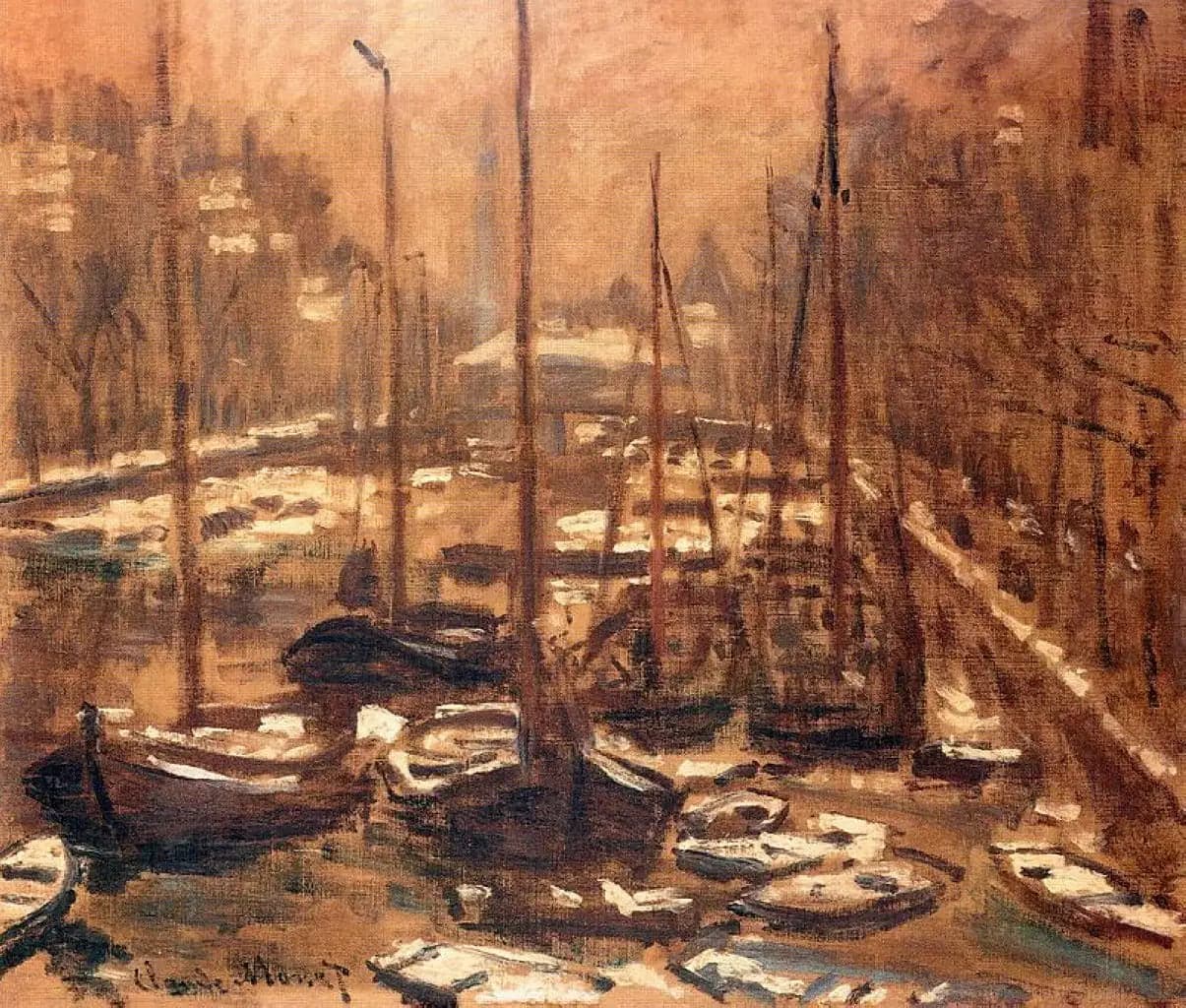
The Geldersekade in Amsterdam, winter
- Original dimensions
- 65 x 55 cm
- Museum
- Botero museum
- Year
- 1874
Scene depicted
This painting features the Geldersekade, a characteristic canal of Amsterdam, deeply marked by winter. The canvas reflects a peaceful atmosphere where snowflakes gently fall on pastel-colored roofs. The reflections in the water offer a visual harmony, creating a link between the city's architecture and the surrounding nature. It is a pictorial work that invites the viewer to feel the tranquility of a Dutch winter.
Historical context
Year: 1874 |BRK| Museum: Botero museum |BRK| Dimensions: 65 x 55 cm
Place in the artist's career
“Le Geldersekade in Amsterdam, Winter” represents an important period in the career of Claude Monet . It illustrates his evolution towards subtle abstraction, alongside his famous canvases “ Impression, Sunrise ” and “ Water Lilies .” This painting serves as a bridge between his explorations of natural landscapes and his commitment to capturing emotions, revealing a style in full maturity.
Anecdote
“Light is like silence, it speaks to the soul,” Monet might have said while recalling this winter scene. Imagine him, standing on the bridge, the breath of winter caressing his face, absorbing every nuance of light and every reflection in the water. This delicate inspiration resonates in the echo of the painting “Le Geldersekade in Amsterdam, Winter,” capturing the very essence of the moment.