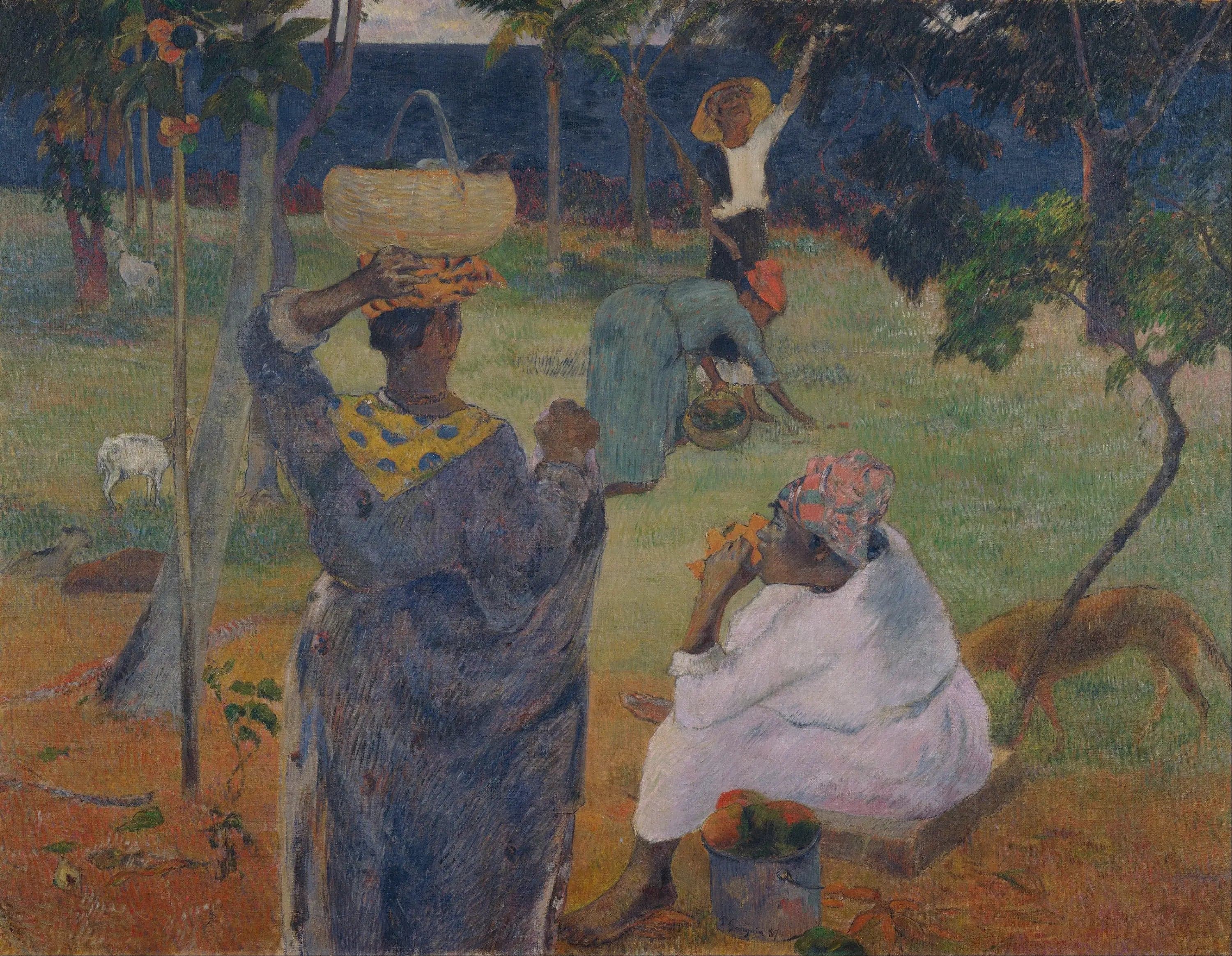
The Gathering of Fruits, or At the Mangoes
- Original dimensions
- 116 x 89 cm
- Museum
- Van Gogh Museum
- Year
- 1887
Scene depicted
In this pictorial work, Gauguin immerses us in the heart of a lively scene where women, dressed in colorful fabrics, engage in the harvesting of exotic fruits. The shimmering colors of the canvas illuminate the faces, while the juicy, golden mangoes remind us of the sweetness of the tropics. The painting resonates as an ode to abundance and harmony with nature, transcended by the mastery of shades and forms.
Historical context
Created in 1887, The Harvest of Fruits, or To the Mangoes, is part of the post-impressionist movement, a movement that symbolizes the quest for vibrant colors and personal expressions. This iconic canvas currently finds its place at the Van Gogh Museum , where it resonates with the echo of the artist's creative genius. The painting, with generous dimensions of 116 x 89 cm, evokes a world where nature and humanity flourish in harmony.
Place in the artist's career
The Harvest of Fruits, or To the Mangoes represents a significant turning point in Gauguin's career. It marks his maturation period, a moment when stylization and bold use of color assert themselves. Alongside works like Vision after the Sermon and Where Are You Going? a stylistic evolution emerges, harmonizing raw emotion with a thoughtful composition, characteristic of his creative spirit.
Anecdote
“Nature is my greatest teacher,” claimed Gauguin, inspired by the lush landscapes and sweet scents of the tropics. One morning, as the sun illuminated a secret corner of his garden with its golden light, he captured the essence of that moment in The Harvest of Fruits, or To the Mangoes. This sublime painting evokes not only a scene of daily life but also a deep meditation on ephemeral beauty.
Major exhibitions
Gauguin Exhibition at the Salon des XX 1889