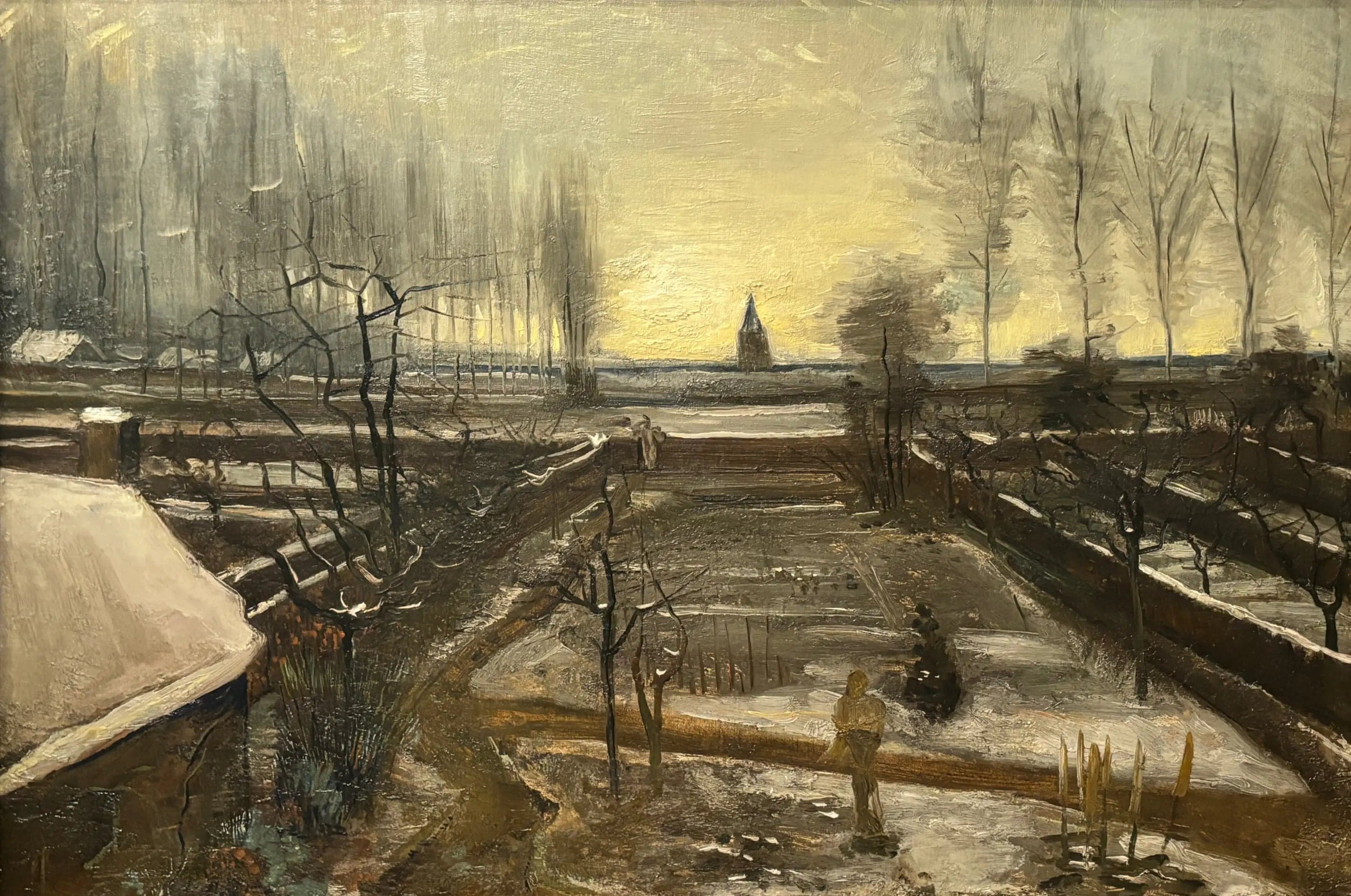
The Garden of the Presbytery at Nuenen in the Snow
Scene depicted
This striking painting depicts a garden imbued with tranquility, where the snow delicately covers every element. The viewer's gaze is invited to dive into this winter scene, where each snowflake seems to tell the story of past seasons and the eternal beauty of nature, frozen in a moment of silence. The canvas evokes a landscape of peace, highlighting Van Gogh's deep connection with his environment, as well as his desire to capture the reality of everyday life.
Historical context
Created in 1885, this painting embodies life in the peaceful town of Nuenen , in the Netherlands. Rooted in the artistic movement of realism , The Parsonage Garden in Nuenen under the Snow is infused with local culture and the intense passion of Vincent van Gogh for nature. Currently, this canvas , measuring 78 x 53 cm, is held in the reserves of a museum, waiting to reveal its secrets to the world.
Place in the artist's career
This painting represents a significant milestone in Van Gogh's career, a moment when his style began to take shape. At that time, he created works such as The Potato Eaters and The Starry Night , illustrating his technical and emotional evolution. This painting testifies to his commitment to realism , before he plunged into impressionism and the vibrant colors that would mark his artistic maturity.
Anecdote
Vincent van Gogh often spoke of the beauty of nature with these words: “Nature is full of splendor that men are unable to truly appreciate.” It was in the calm of a snowy morning that he was inspired by the parsonage garden, a place that, under the snow, told a story of peace and serenity, an emotion crystallized at the heart of his masterpiece .