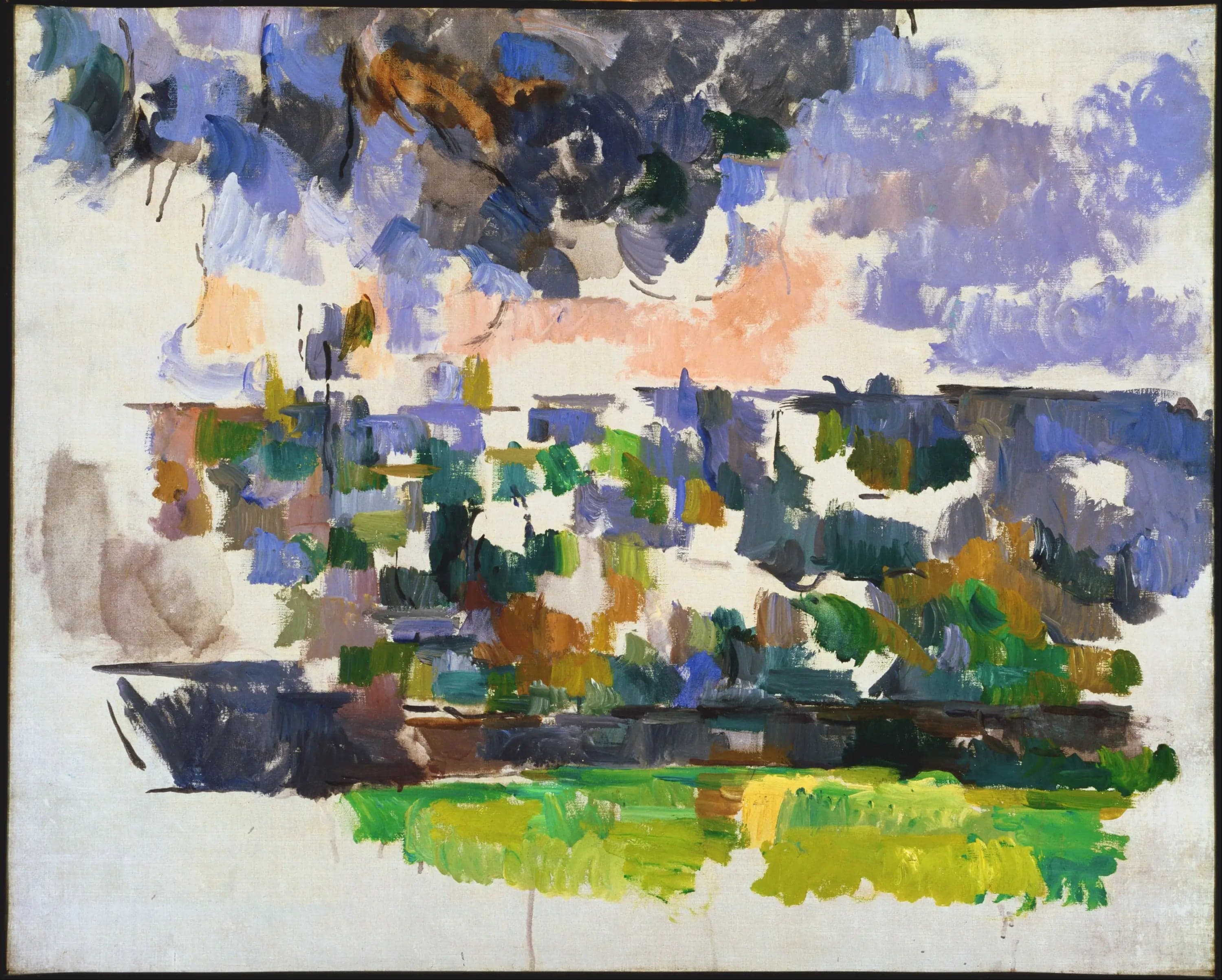
The Garden of the Lauves
- Original dimensions
- 31.88 x 25.75 cm
- Museum
- Phillips Collection
- Year
- 1906
Scene depicted
This painting reveals a tranquil scene, where lush plants mingle with sunlight. The shimmering colors draw a harmony between shadow and light, highlighting Cézanne's genius in capturing the beauty of the garden in all its splendor. It evokes a natural composition, inviting the viewer to feel the flutter of the breeze through the foliage.
Historical context
Created in 1906 in the serene setting of Aix-en-Provence, this painting is emblematic of the post-impressionist movement. Paul Cézanne , at the convergence of impressionism and cubism , offers here a vibrant representation, where each brushstroke tells a story. The painting is currently displayed within the prestigious Phillips Collection in Washington, honoring the artistic legacy associated with it.
Place in the artist's career
The Garden of Lauves is part of a period of maturity in Cézanne's career, illustrating his relentless desire to transcend academic conventions. This masterpiece shares a brilliant conversation with works such as The Montagne Sainte-Victoire and The Large Bathers , where the artist's technical evolution reflects his contemplation of form and color.
Anecdote
“Nature is my palette, my colors are my emotions.” These words resonate deeply when observing The Garden of Lauves . Inspired by the light of a gentle spring morning, Cézanne found in this garden a palpable serenity, where each leaf, each shadow, awakens our sensitivity. This canvas then becomes the reflection of a moment stolen from eternity.