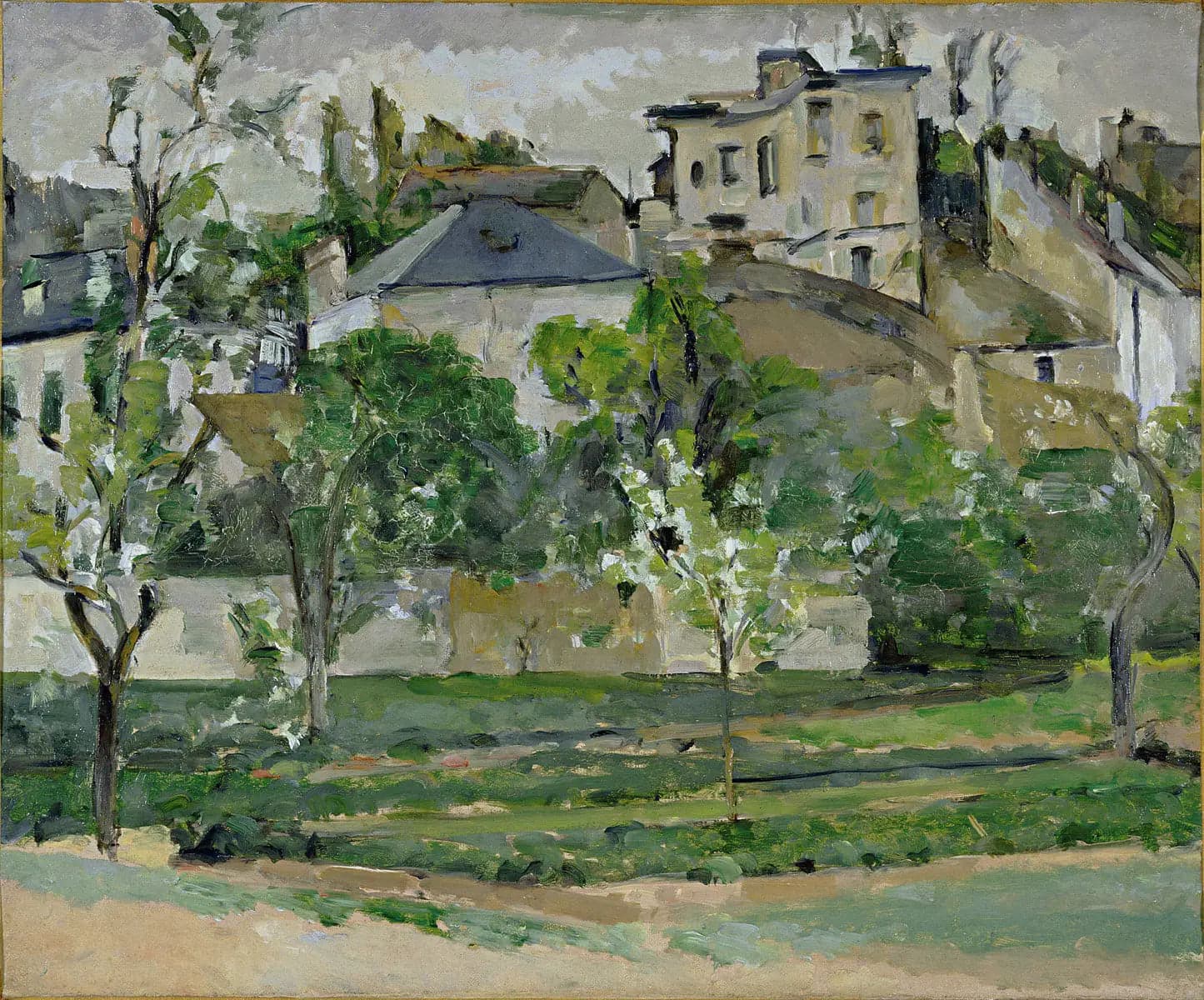
The Garden of Maubuisson, Pontoise
- Original dimensions
- 61 x 50 cm
- Museum
- Texas
- Year
- 1877
Scene depicted
The painting “The Garden of Maubuisson, Pontoise” depicts a bucolic scene where life flourishes amidst lush foliage and vibrant blooms. Light plays a key role, illuminating the bright colors that meet in a harmonious dance, thus creating a serene face of nature through the impressionist lens of Cézanne. The soft forms, chiaroscuro, and vibrant life of the gardens blend to compose a captivating pictorial work .
Historical context
This painting , created in 1877, is part of the impressionist movement, born from the daydreams and shimmering light of Pontoise. In this charming town, Paul Cézanne managed to capture the essence of a vibrant garden, where petals dance in the gentle breeze and where each leaf sparkles under the golden rays of the sun. Currently housed in a museum in Texas, this canvas measuring 61 x 50 cm evokes a moment suspended in time, where nature and human delicacy intertwine.
Place in the artist's career
Positioned at the heart of his impressionist period, “The Garden of Maubuisson, Pontoise” marks a turning point in the artist's career. This painting, alongside “The House of Pommeraye” and “The Card Players,” reflects Cézanne's evolution towards a unique synthesis of forms, colors, and emotions. This canvas thus illustrates a growing maturity in his style, brilliantly combining realism and abstraction.
Anecdote
“I take pleasure in painting what nature dictates to me, in the brilliance of the moment.” These words from Cézanne, spoken one spring morning by the river, embody the creative spirit behind this masterpiece . The garden, with an almost surreal calm, offered an atmosphere imbued with serenity, a playground for his artistic genius that drew deep emotions from his immediate surroundings.
Major exhibitions
The Impressionists in private