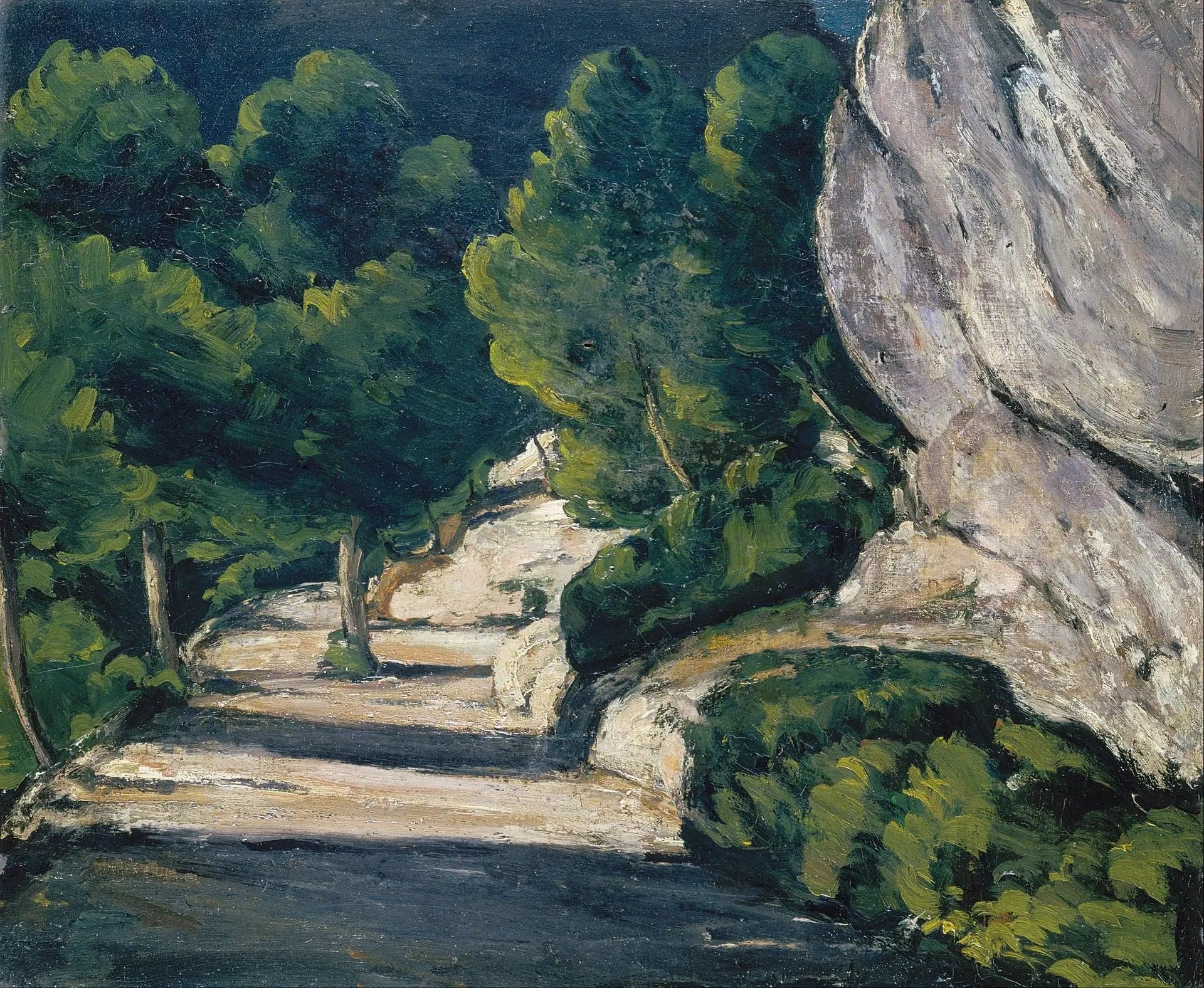
The Forest Road
- Original dimensions
- 65.2 x 65.2 cm
- Museum
- Städel Museum
- Year
- 1870
Scene depicted
The painting “The Forest Road” subtly explores the dialogue between man and nature. The winding paths, lined with majestic trees, soar into a perspective that invites the viewer to take a stroll through this landscape. The atmosphere emanating from this scene evokes the soft sounds of rustling leaves and the melodious song of a nearby stream, thus creating a haven of peace and serenity.
Historical context
Created in 1870, this painting is set in the bucolic framework of Aix-en-Provence, a city in the south of France, the cradle of the Impressionist movement. At a time when art begins to emancipate itself from academic rules, Cézanne draws his inspiration from the light and landscapes of the south, while mastering each brushstroke to immortalize the beauty of nature. Currently housed at the Städel Museum in Frankfurt, this canvas is a vibrant testament to the artistic evolution of the 19th century.
Place in the artist's career
“The Forest Road” is at the heart of Cézanne's career, marking a crucial step towards his period of maturity. Positioned between his previous work “The Orchard” and his ultimate masterpiece “The Large Bathers,” this painting reveals the evolution of his style, transitioning from Impressionism to a more structured formalism. Each canvas he creates during this period triggers a new exploration of color and light, showcasing his creative genius.
Anecdote
“Nature is my painting, it speaks to me,” Cézanne might have said when referring to the origin of this masterpiece . One April morning, while wandering through the underbrush, the filtering sunlight playing with the branches inspired him to translate this peaceful atmosphere into a striking pictorial work. This canvas is not merely a representation, but an invitation to feel what surrounds it.
Major exhibitions
Q123235779