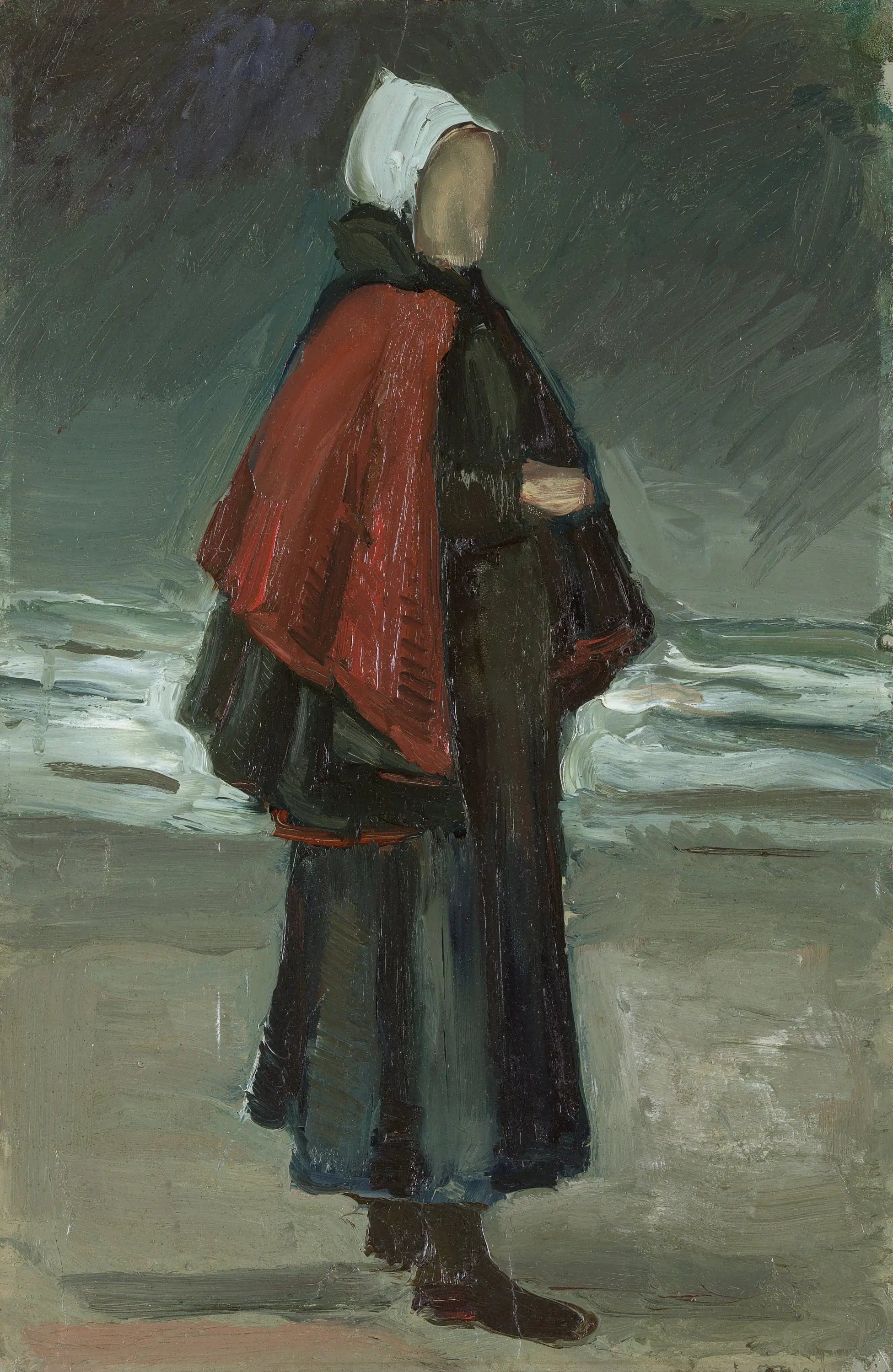
The Fisherman's Wife on the Beach
- Original dimensions
- 34 x 52 cm
- Museum
- Kröller-Müller Museum
- Year
- 1882
Scene depicted
This painting illustrates a woman on the beach, waiting for her fisherman to return. The canvas, rich in warm colors, depicts a moment of tranquility mixed with a slight melancholy. The sea, on the horizon, evokes both promise and anticipation, reflecting the daily life of fishermen and the vastness of the world that lies before them. A beautiful work that resonates with the struggles and joys of human life.
Historical context
Created in 1882, in the beautiful city of The Hague, this painting belongs to the post-impressionist period. Vincent van Gogh , luminist and expressionist in his approach, sought to capture the very essence of the maritime scene, blending light and emotion. Today, this remarkable work of art is housed in the Kröller-Müller Museum , inviting visitors to explore this vibrant composition.
Place in the artist's career
The Fisherman's Wife on the Beach stands as a pivotal moment in the career of Vincent van Gogh , an artist in search of authenticity. It reflects a style in full bloom, connecting his work to other masterpieces such as The Potato Eaters and Starry Night , showcasing Vincent's emotional and technical evolution throughout his life.
Anecdote
Vincent van Gogh , fascinated by the sea and its stories, said: “Art is the most beautiful of stories told without words.” The Fisherman's Wife on the Beach was inspired one sunny morning, when the waves whispered secrets to the shore. This simple yet poignant scene thus becomes a celebration of life and the bonds between humans and nature, encapsulating the evocative power of this unforgettable painting.