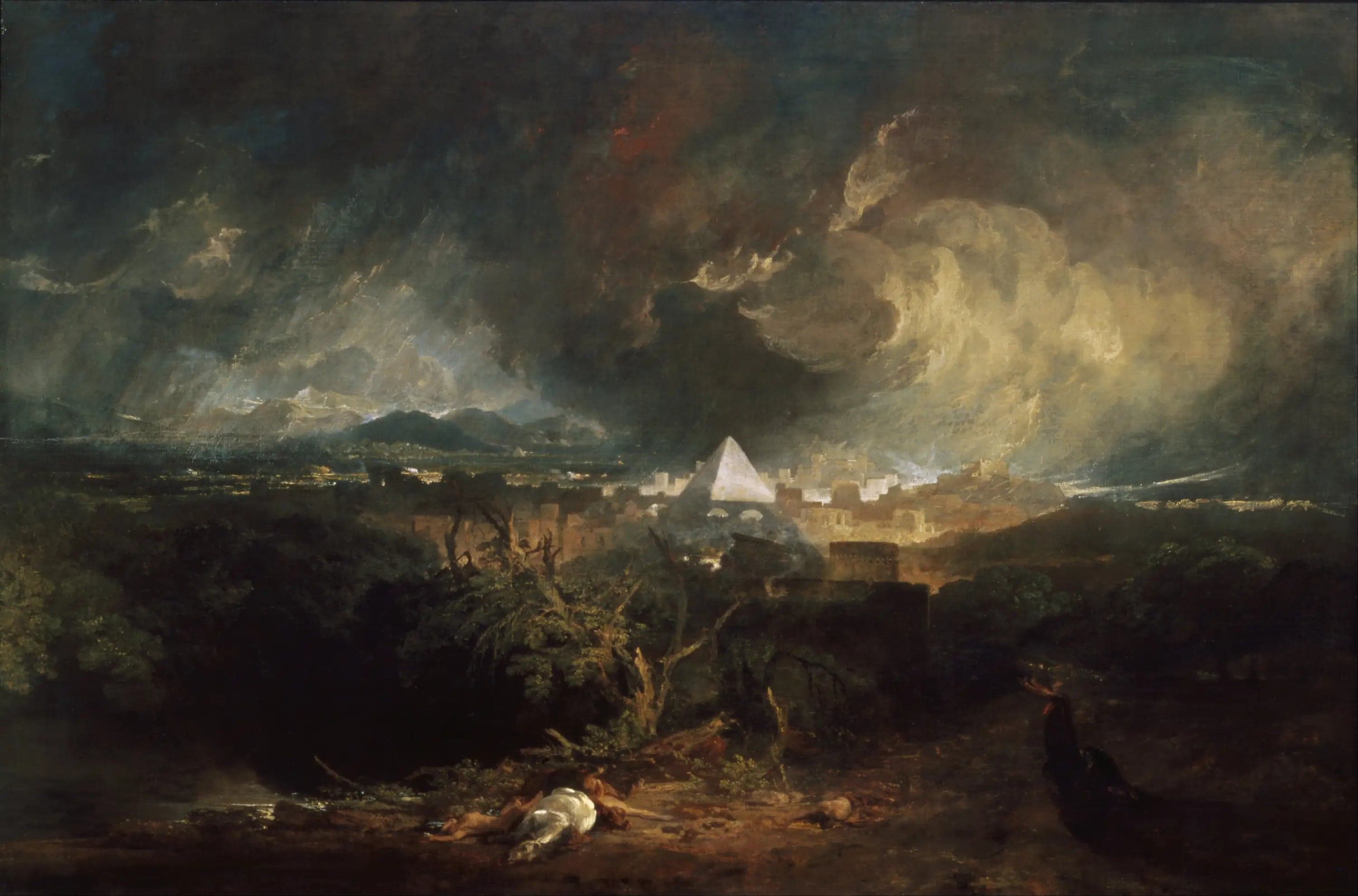
The Fifth Plague of Egypt
- Original dimensions
- 72 x 48 cm
- Museum
- Indianapolis Museum of Art
- Year
- 1800
Scene depicted
The Fifth Plague of Egypt represents a captivating moment where the land of the pharaohs suffers a divine calamity. The scene vibrates with energy as the shadow of death lurks, enveloping the canvas with its presence. Turner manages to communicate the intensity of this event through a striking play of light, almost palpable, that one feels on the skin.
Historical context
This iconic painting by J. M. W. Turner, created in 1800, emerges from a time when romanticism redefined pictorial sensibilities. Anchored in the tumultuous historical context of England, it invites a rediscovery of artistic craftsmanship in full bloom. Currently on display at the Indianapolis Museum of Art , this painting measuring 72 x 48 cm is a window into an era of deep emotions and intense reflections.
Place in the artist's career
This painting marks a turning point in Turner's career, combining innovative technique and deep emotional engagement. At this time, he is already distinguished with other works such as The Song of the Dome of St. Paul and The Voyage. The Fifth Plague of Egypt represents the pinnacle of a bold stylistic exploration where each piece reveals a new facet of his universe.
Anecdote
"Light is the memory of hearts" Turner might have said one morning as he contemplated the beauty of the broken skies. It is in these moments of sweet magic that the inspiration for his masterpiece fluctuates, transforming a biblical scene of anguish into a luminous pictorial work.