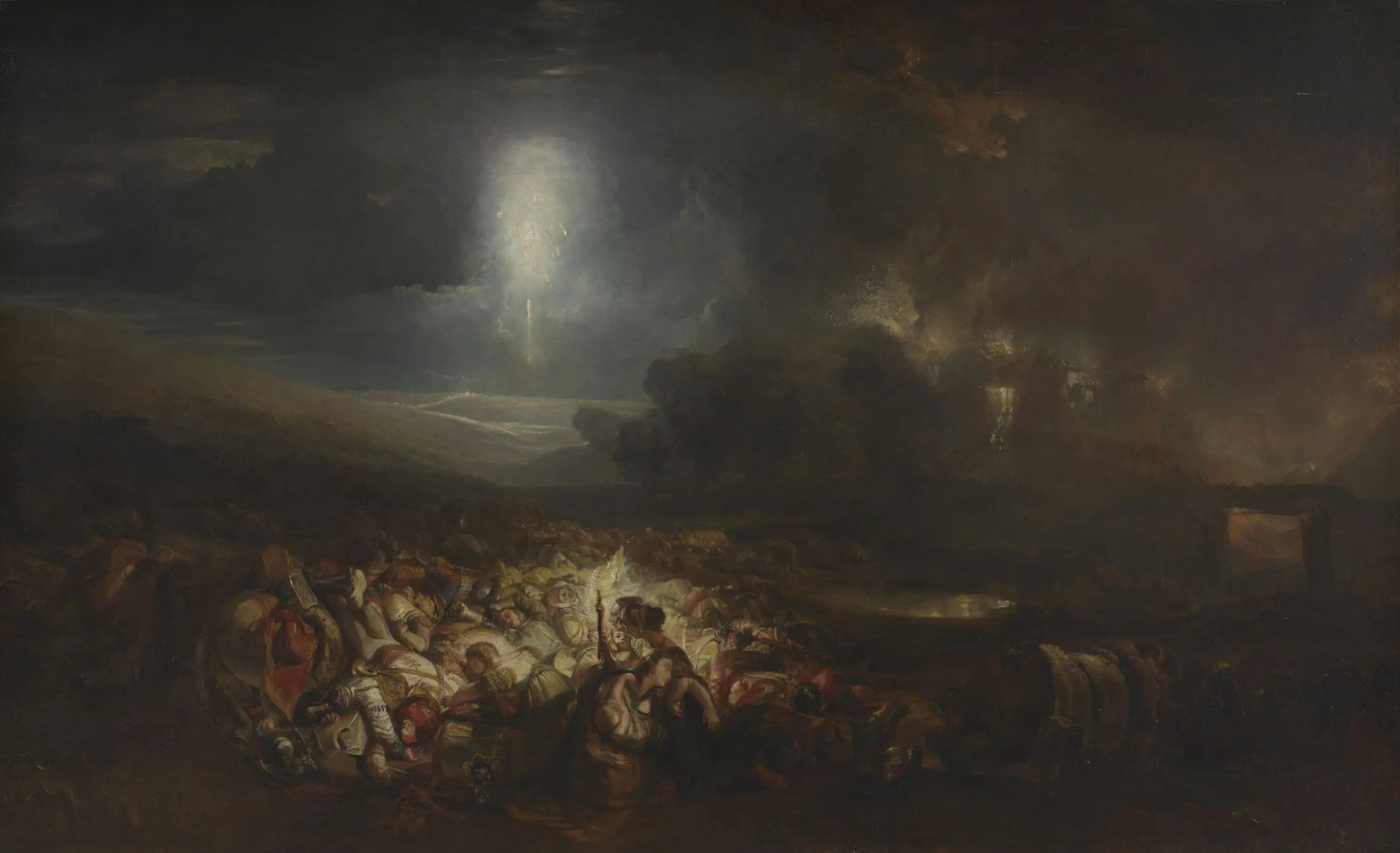
The Field of Waterloo
- Original dimensions
- 147.3 x 238.8 cm
- Museum
- Tate
- Year
- 1818
Scene depicted
This painting powerfully represents the battlefield of Waterloo, where French and allied forces clashed. One can distinguish a tormented landscape, saturated with vibrant colors, reflecting a fierce struggle. The figures of the soldiers, bathed in a gloomy light, seem almost floating, creating an atmosphere of tragic apocalypse. Turner transcends the simple representation of the battle, evoking the struggle between life and death, between hope and desolation.
Historical context
Created in 1818, in a European context marked by the upheavals of the Napoleonic wars, the canvas emblematic of J. M. W. Turner immerses us in the heart of the intensity of heroic battles. This painting academic is currently located in London, in the prestigious collection of the Tate museum, where it is admired for its evocative and artistic power. The artist, at this moment in his career, is part of the romantic movement, marking minds with his bold and poignant vision of history.
Place in the artist's career
The Field of Waterloo stands as a milestone in Turner’s career, an artist who is distinguished by an increasingly bold style. Alongside his works like The Fighting Temeraire (1839) and Rain, Steam and Speed (1844), this painting illustrates an evolution towards a more marked abstraction, where light and color take precedence over forms and narrative details, testifying to the creative genius of a true pioneer of romanticism .
Anecdote
Turner once stated: “Light is the soul of every painting.” It is with this philosophy that he approached the creation of his masterpiece . Inspired by the tumult of a stormy sky on a spring morning, he captured the thrill and melancholy that emanate from this painting , paying tribute to human tragedy while celebrating the beauty of nature.