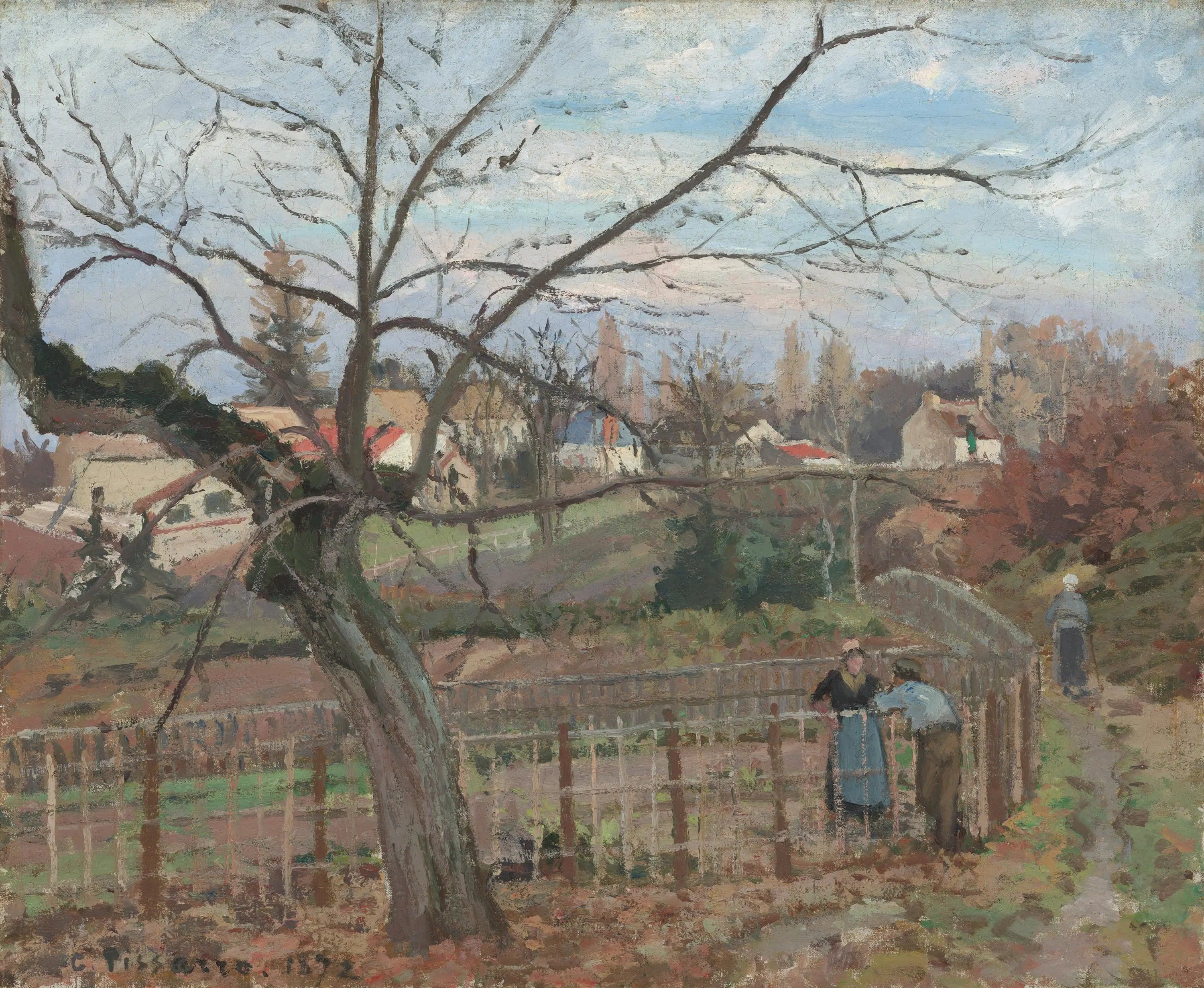
The Fence
- Original dimensions
- 457 x 378 cm
- Museum
- National Gallery of Art
- Year
- 1872
Scene depicted
In this canvas , Pissarro immerses us in a moment of rural serenity. The scene depicts a wooden fence, framed by lush greenery, where the play of light dances on the surfaces. The vibrant colors and balanced composition offer us a reflection on the harmonious link between man and nature, as the breath of the wind seems to whisper through every blade of grass.
Historical context
Created in 1872, at the dawn of Impressionism , this painting is the emanation of an artist fully exploring new light and color perceptions. In the heart of France, in the historically rich town of Auvers-sur-Oise, Pissarro captures the beauty of rural landscapes with unmatched delicacy. Today, this work is located at the National Gallery of Art in Washington, where its immense canvas of 457 x 378 cm attracts gazes and nourishes the souls of visitors.
Place in the artist's career
“The Fence” is part of Pissarro's flourishing career as he explores the nuances of Impressionism while evolving towards an increasingly assertive style. This canvas represents not only a turning point in his artistic approach but also dialogues with other works of his, such as “The Apple Harvest” and “The Street of the Machine,” revealing a growing technical and emotional maturity, where each brushstroke tells a unique story.
Anecdote
“Art is a fugue in time,” said Pissarro, evoking the precious ability of painting to immortalize fleeting moments. This masterpiece was born on a morning fragrant with spring flowers, as the artist walked in the gentle light of the rising day. It was at this moment that his soul awakened to the beauty of wooden fences, symbols of both rurality and the intimacy of cultivated fields.