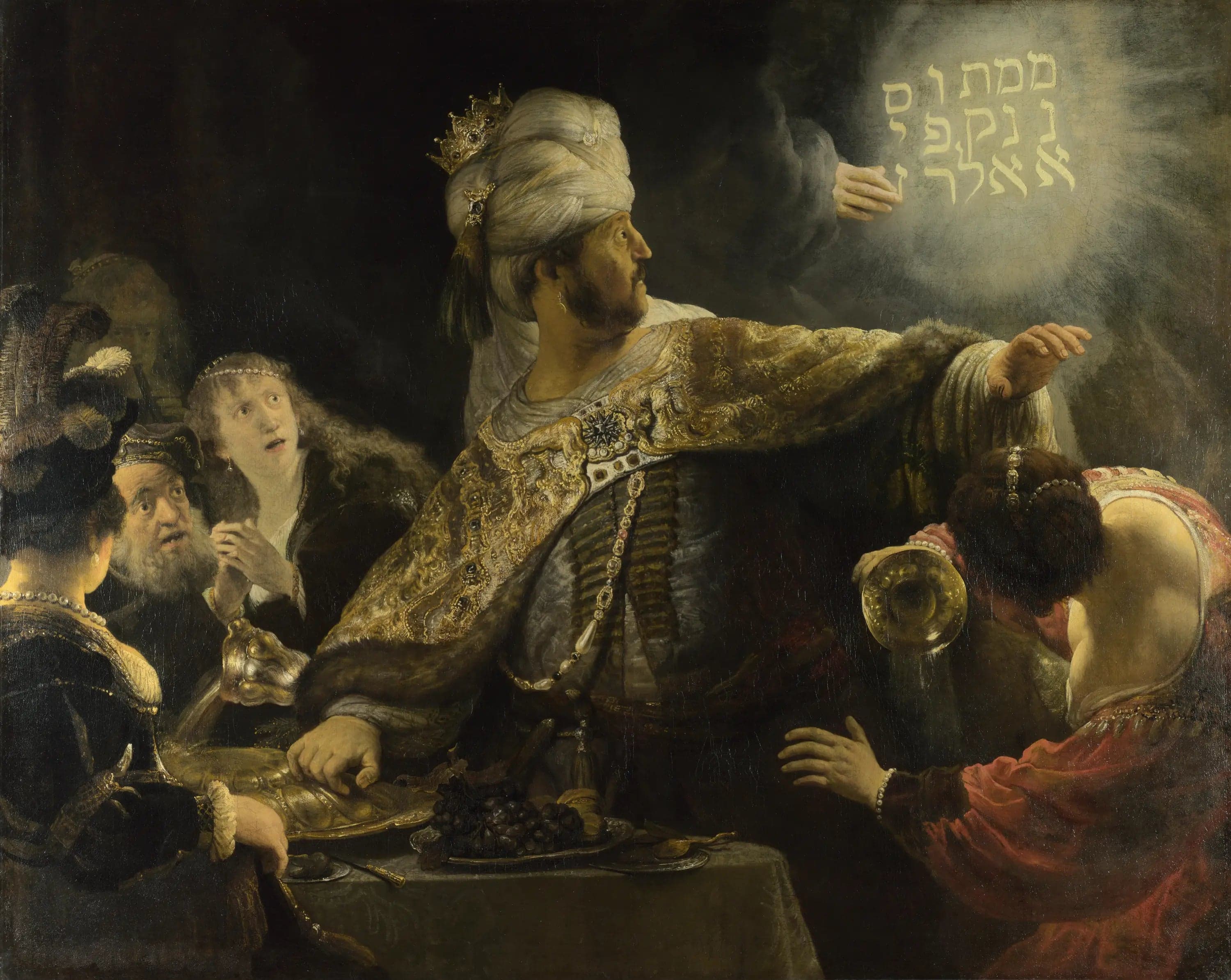
The Feast of Balthazar
- Original dimensions
- 209.2 x 167.6 cm
- Movement
- baroque
- Museum
- National Gallery
- Year
- 1636
Scene depicted
This painting illustrates a crucial moment from the Bible, where Balthazar, king of Babylon, hosts an ostentatious banquet. Ignoring divine warnings, he mocks the gods, which will lead to his downfall. The vibrant faces, exaggerated gestures, and the brilliance of colors immerse the viewer in an atmosphere of feasting and tension, symbolizing human arrogance in the face of the divine.
Historical context
Painted in 1636 in Amsterdam, this iconic work belongs to the baroque movement, characterized by its dramatic intensity and emotional depth. Now exhibited at the National Gallery, this large painting showcases the virtuosity of Rembrandt and his era, where art served both as a mirror to society and a window into complex inner worlds.
Place in the artist's career
The Feast of Balthazar marks a turning point in Rembrandt 's career. This work sits between his famous painting The Anatomy Lesson of Dr. Tulp and The Night Watch , two witnesses to his evolution towards a deeper exploration of human emotions. This painting not only showcases his technical skill but also his ability to traverse different narrative and emotional registers.
Anecdote
“Light is the spirit of painting.” This wise quote resonates with the genesis of this masterpiece. Legend has it that Rembrandt , on a misty morning, was inspired by the magic of a princely feast observed from a distance. This scene, full of mystery and life, finds a vivid resonance in the evocative power of The Feast of Balthazar .