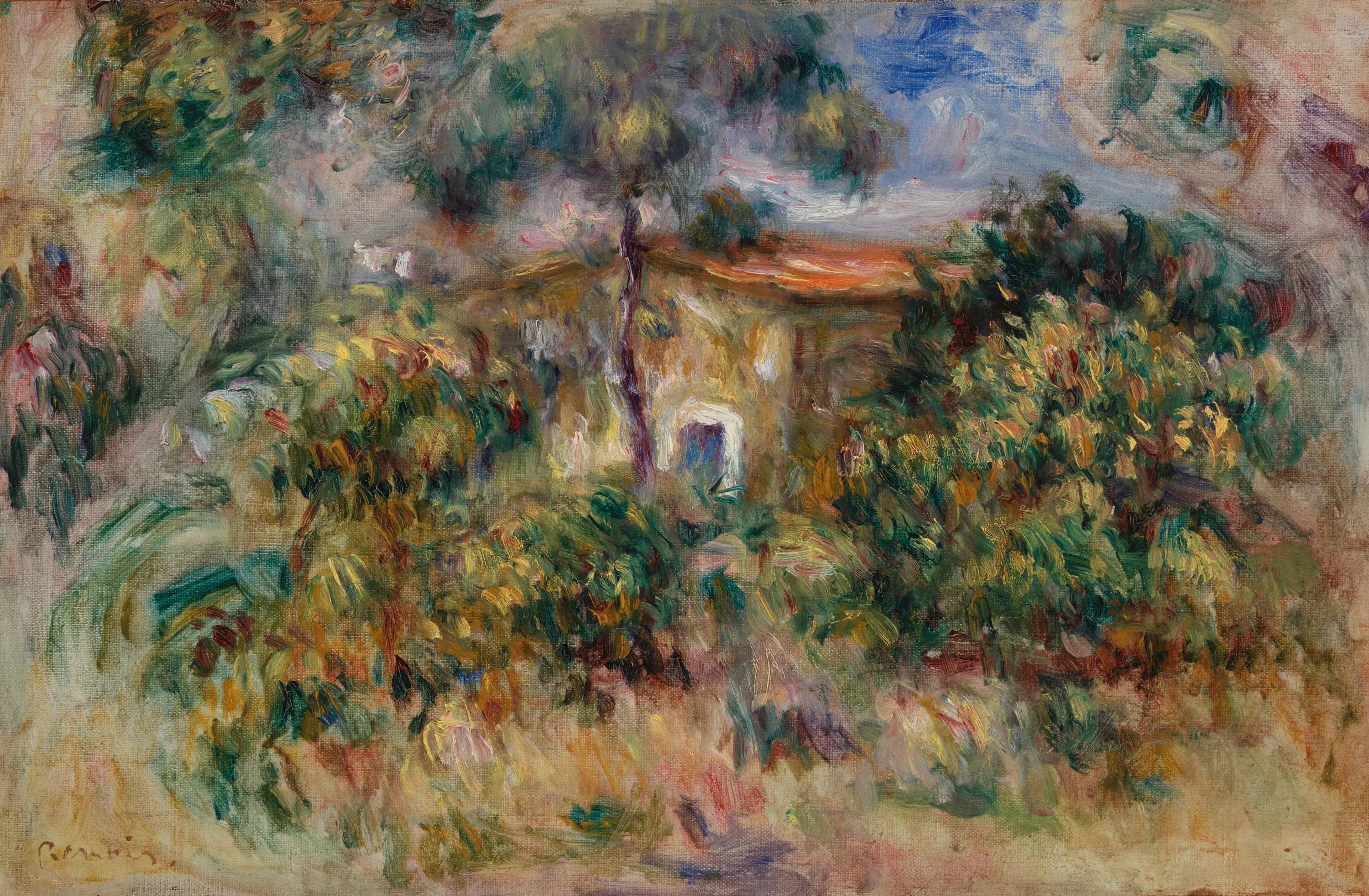
The Farm - Pierre
- Original dimensions
- 47.2 x 31.3 cm
- Museum
- Barnes Foundation
- Year
- 1917
Scene depicted
The Farm offers an idyllic and gentle view of nature, integrating rural life and the beauty of the environment. This canvas , bathed in warm light, invites contemplation of a scene of tranquility and harmony. The delicacy of the brush strokes and the richness of the colors evoke memories of serenity, of communion with the earth.
Historical context
Created in 1917, during a period of great introspection for the artist, this painting bears witness to the impressionist movement that emerged at the end of the 19th century in France. Located in Philadelphia, the Barnes Foundation houses this canvas , a work of great finesse, capturing the light and soul of the surrounding nature, at a time when the world was increasingly opening up to the nuances of everyday life.
Place in the artist's career
This painting is situated at a pivotal moment in Auguste Renoir 's career, where he integrates more modern elements while remaining true to his impressionist roots. Compared to other iconic canvases such as “The Luncheon of the Boating Party” and “The Bathers,” The Farm illustrates a stylistic evolution where his compositions become increasingly introspective and rich in emotion.
Anecdote
“Beauty lies in the simplicity of things,” Renoir is said to have declared regarding inspiration. One sunny morning, while walking in the French countryside, the painter was struck by the sweet melody of the birds and the golden hues of a field. This fleeting moment then transforms into a canvas , a masterpiece imbued with the vivid shades of spring sunlight, thus immortalized by his brush.