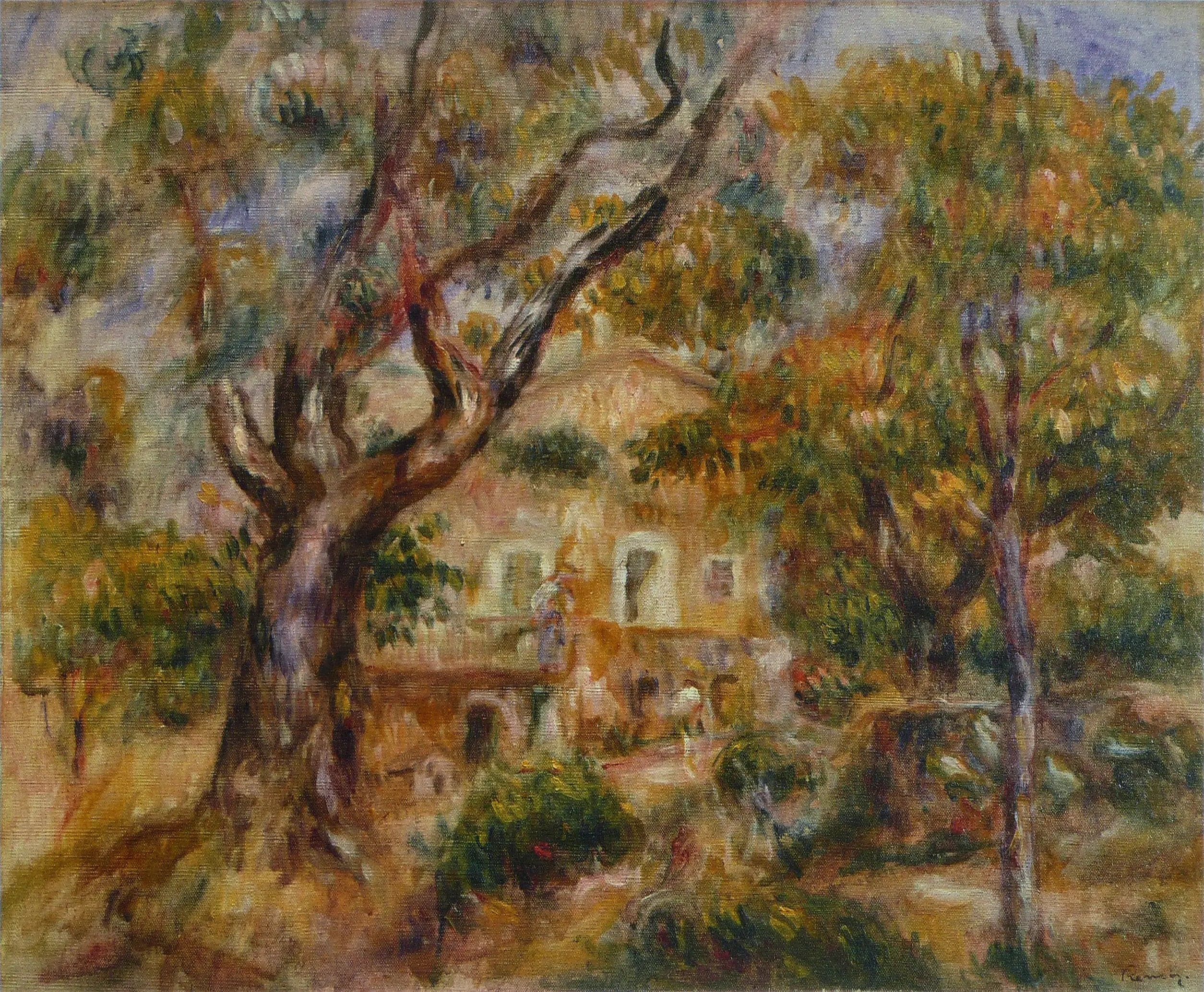
The Farm of Collettes, Cagnes - Pierre
- Original dimensions
- 65.4 x 54.6 cm
- Museum
- Metropolitan Museum of Art
- Year
- 1911
Scene depicted
The painting “La Ferme des Collettes, Cagnes” depicts a restful scene while highlighting the harmony between man and nature. One can distinguish a farm with red roofs, flowering gardens, and human figures flourishing in a playful setting, stemming from Renoir's technical mastery to create a composition full of life and warmth.
Historical context
Created in 1911 on the peaceful shores of Cagnes-sur-Mer, this painting is emblematic of the Impressionist movement, where light and color meet to capture the evanescence of the moment. This painting, now housed in the Metropolitan Museum of Art in New York, bears witness to a time when art became a window open to the beauty of Provençal landscapes.
Place in the artist's career
This painting marks a period of maturity in Renoir's career, brilliantly following his masterpieces such as “Le Déjeuner des canotiers” and “La Danse à la ville.” Each of these works reflects a marked evolution towards a deeper understanding of light and human emotions.
Anecdote
“I wish to capture the light, the warmth of the rays, and the infinite emotion of a moment.” On a simple spring morning in the Cagnes valley, Renoir may have been inspired by the song of the birds and the intoxicating scent of the flowers, elements that resonate vibrantly in his masterpiece , La Ferme des Collettes.