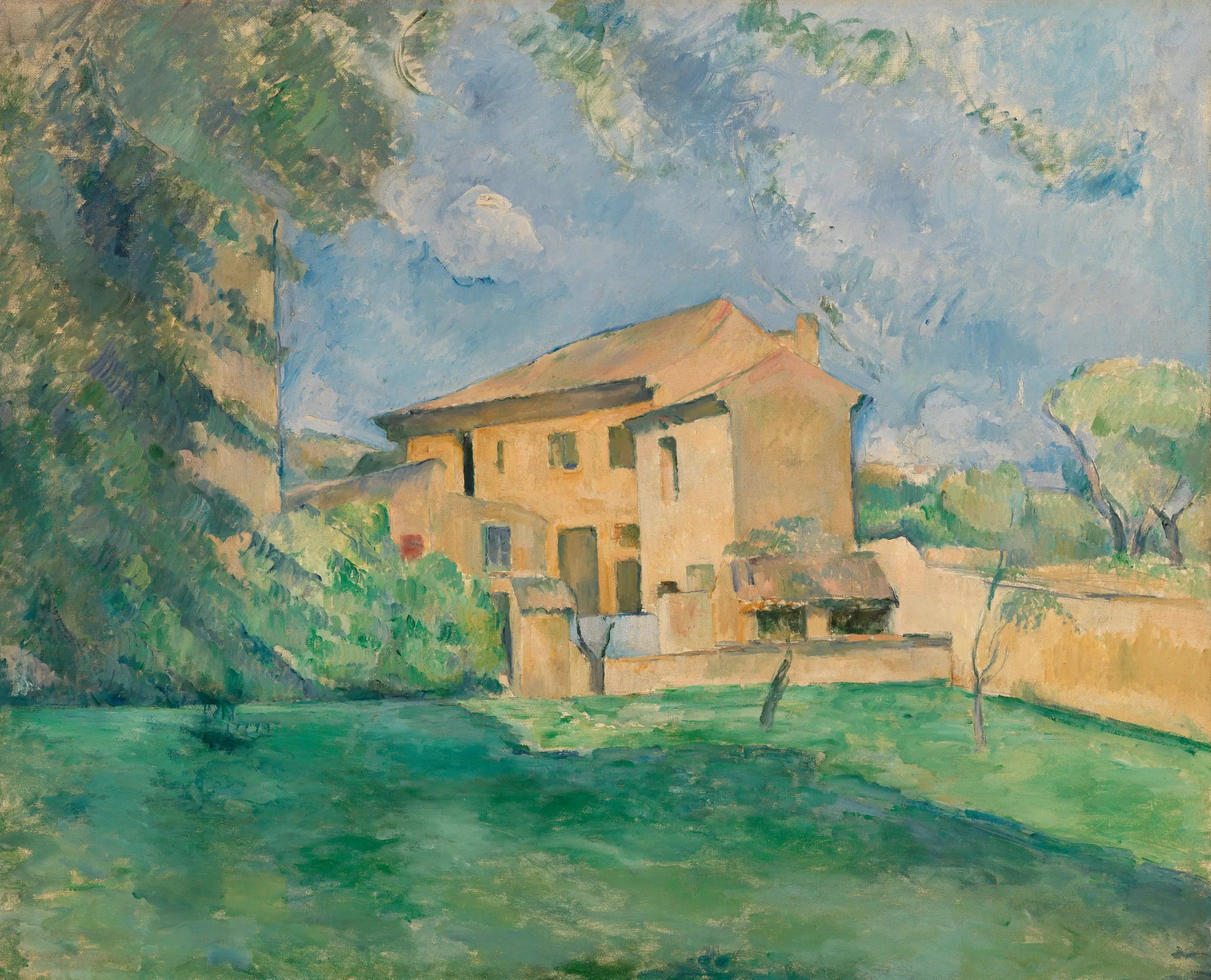
The Farm at Jas de Bouffan
- Original dimensions
- 73.3 x 60 cm
- Museum
- Barnes Foundation
- Year
- 1887
Scene depicted
This painting represents the farm of Jas de Bouffan, a place dear to Cézanne's heart, where he drew inspiration for a long time. The composition reveals a solid structure, with its white walls and orange-tiled roofs, emerging from a lush landscape. The trees, animated by a gentle breeze, bring a sense of life to this rural scene, symbolizing the intimate connection between the artist and his rural environment.
Historical context
Created in 1887, this iconic painting reflects the Provençal soul, located in Aix-en-Provence, in the Southeast region of France. In the midst of the Impressionist period, Paul Cézanne , a pioneer of modernity, captured the essence of his environment with his unique touch. The painting is currently housed at the Barnes Foundation , preserving its legacy in a place of artistic renown. With measured dimensions of 73.3 x 60 cm, this pictorial work invites introspective contemplation.
Place in the artist's career
The Farm at Jas de Bouffan is situated at a turning point in Cézanne's career, offering a glimpse into his stylistic evolution. This painting stands at the crossroads between his more traditional works and the paintings that foreshadow modern movements. Alongside "The Montagne Sainte-Victoire" and "The Card Players," this painting illustrates the artist's constant quest for the synthesis of forms and colors.
Anecdote
“I want to paint nature as I see it, without masking it.” These words from Cézanne resonate in every brushstroke of this masterpiece. Imagine the artist, one spring morning, strolling in the soft light, marveling at the play of shadow and light dancing on the farm he cherished so much. This moment of inspiration brought The Farm at Jas de Bouffan to life, offering the viewer a surge of raw emotion and sincerity.