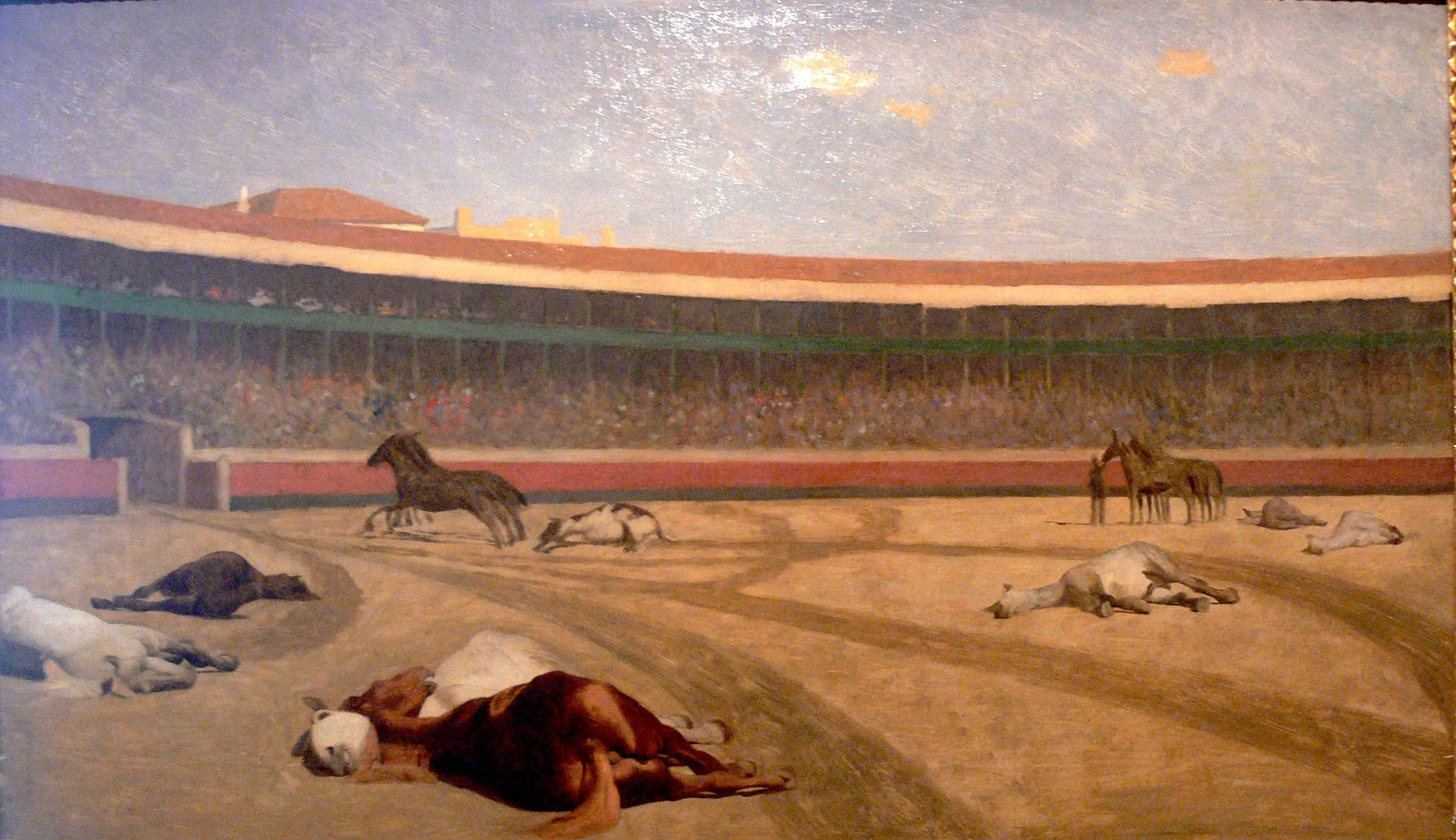
The End of the Bullfight - Jean
- Original dimensions
- 90 x 55 cm
- Museum
- museum Jean-Léon Gérôme
- Year
- 1870
Scene depicted
This canvas , of rare emotional intensity, depicts the decline of a bullfight. The scene reveals a confrontation between human and beast, capturing the frenzy of a spectacle that is both glorious and tragic. The gazes of the spectators, filled with anticipation, mingle with the palpable suffering of the animal, revealing the paradoxes of this millennia-old tradition. Gérôme manages to bring to life contradictory emotions, thus engaging the viewer in a deep reflection on the nature of violence and beauty.
Historical context
Created in 1870, in the heart of the historic city of Aix-en-Provence, The End of the Bullfight is part of the artistic movement of realism , driven by a striking artistic vision. At that time, Gérôme established himself as an essential figure in the pictorial landscape, capturing the nuances of a changing world. Currently exhibited at the museum Jean-Léon Gérôme , this remarkable painting measures 90 by 55 cm, immersing the viewer in an era where the bullfight, an ancestral rite, was both celebrated and criticized.
Place in the artist's career
The End of the Bullfight marks a crucial step in Gérôme's career. Situated at the crossroads between a promising beginning and a brilliant artistic maturity, this painting reveals a unique mastery of composition. Let’s compare it to other works, such as The Duel of Corsairs and Pollice verso , which all reveal the technical evolution of this artist, oscillating between dramatic momentum and pictorial delicacy.
Anecdote
“Art is the reflection of our humanity. It is in every brushstroke that I seek the truth, even in pain.” This quote resonates deeply, like a distant echo of Gérôme's inspirations. He would have immersed himself in the vibrant spectacle of a bullfight one spring morning, where the smells of damp earth and the murmur of gathered crowds urged him to immortalize this poignant moment in a masterpiece . Thus, The End of the Bullfight presents itself as a silent cry of beauty and tension.