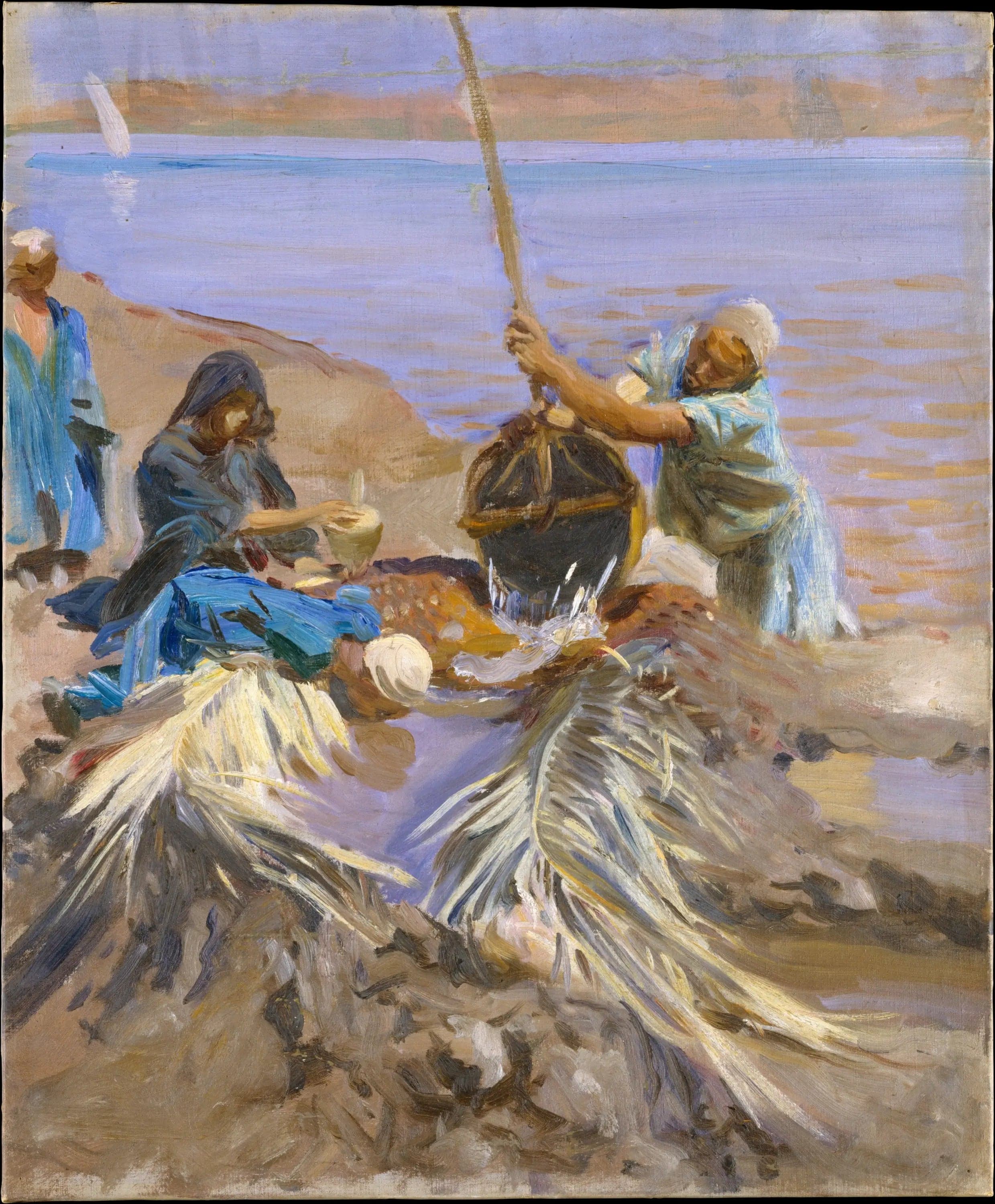
The Egyptians Raising the Water of the Nile
- Original dimensions
- 53.3 x 63.5 cm
- Museum
- Metropolitan Museum of Art
- Year
- 1890
Scene depicted
This captivating painting would immerse the viewer in a vibrant atmosphere, where the activity of the Egyptians, busy raising the water of the sacred river, mingles with the serenity announced by the tall palm trees and dancing reflections. Every detail is an invitation to discover this historical fresco, where the lives of the Egyptians and the Nile intersect in a harmonious ballet, testifying to the powerful bond between man and nature.
Historical context
Created at the end of the 19th century, this painting illustrates a fascinating moment in Egyptian history, rooted in the richness of the cultural heritage of this ancient civilization. John Singer Sargent , an iconic artist of the Impressionist and realist movement, manages to capture the very essence of the scene: devoted Egyptians engaged in the fulfillment of a millennia-old rite. The painting is currently housed at the Metropolitan Museum of Art in New York, a prestigious location that allows it to be admired by art enthusiasts from around the world.
Place in the artist's career
In the career of John Singer Sargent , this painting stands at a crucial turning point, illustrating elements of technical and emotional maturity. After masterpieces such as “Carnation, Lily, Lily, Rose” and “The Daughters of Edward Darley Boit,” Sargent develops a bolder approach to light and textures. “The Egyptians Raising the Water of the Nile” reflects his stylistic evolution, rooted in a strengthened humanistic sensitivity.
Anecdote
“The light dances on the water as it danced on the shores of my childhood.” Sargent's memory evokes moments spent by the Nile, where a scent of lotus floated in the warm air. Inspired by this enchanting landscape, he manages to infuse emotional strength into his pictorial work. The painting “The Egyptians Raising the Water of the Nile” thus becomes a reflection of his childhood memories, blending nostalgia and wonder.