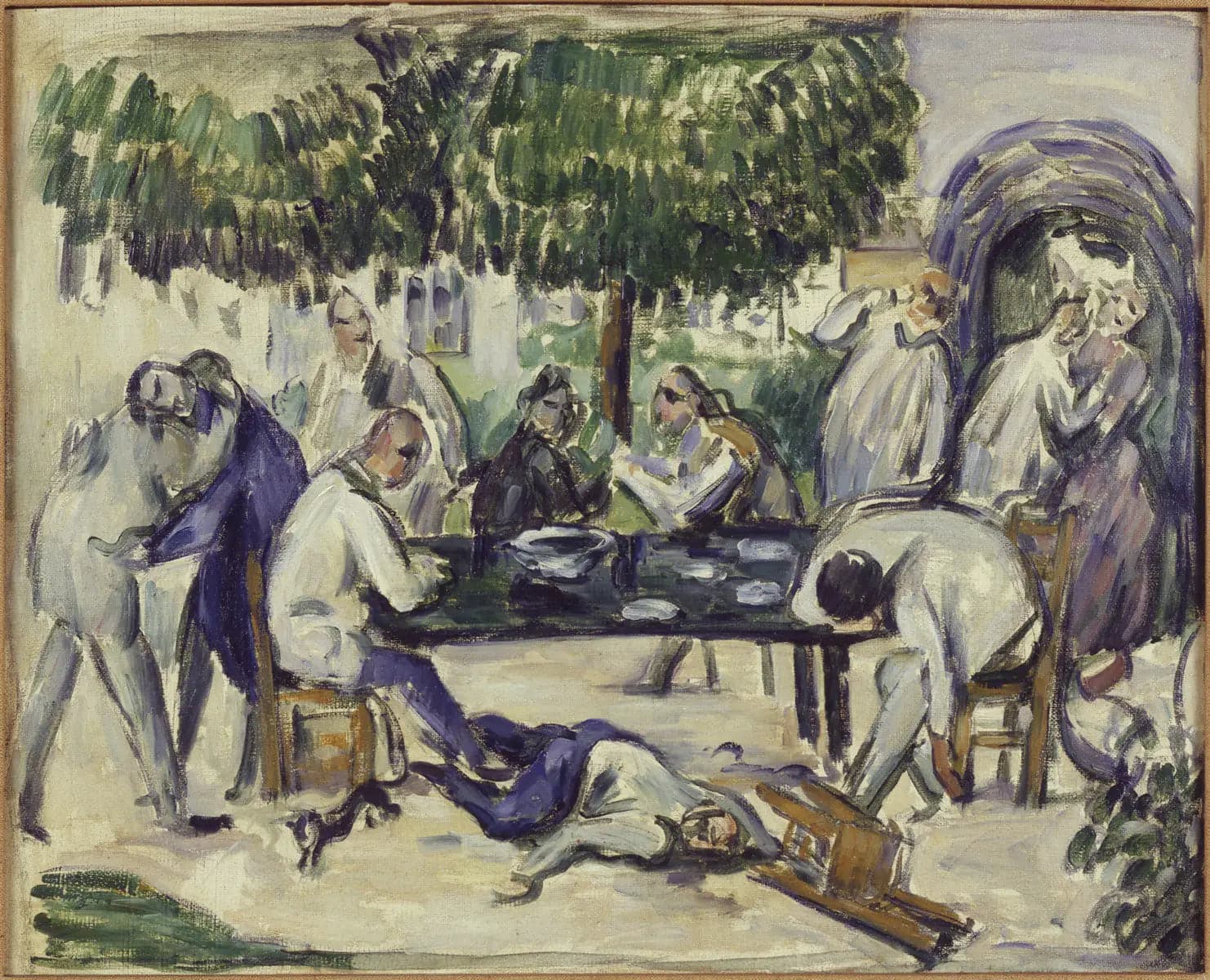
The Drunkards
- Original dimensions
- 50 x 40 cm
- Museum
- Tel Aviv Museum of Art
- Year
- 1876
Scene depicted
This canvas presents an intense scene of life. At the heart of the composition, wandering figures gather around a table, absorbed in thoughts that escape them. The faces marked by melancholy tell invisible stories, while the empty bottles are silent witnesses of troubled existences. The painting captures this fleeting moment, revealing the soul of everyday life.
Historical context
Created in 1876, this painting emblematic of Paul Cézanne flourishes in the context of the city of Aix-en-Provence, within the post-impressionist movement. At a time when art was moving away from strict academic rules, Cézanne brilliantly illustrates the tensions between light and shadow, capturing reality in an innovative way. Today, this canvas is located at the Tel Aviv Museum of Art , where its dimensions stand out: 50 x 40 cm.
Place in the artist's career
The Drunkards represents a transition in Cézanne's career. This canvas marks the beginning of his exploration of color and form, a quest that will flourish in his later works such as The Large Bathers and Still Life with Apples , illustrating his artistic evolution towards the search for structure and harmony.
Anecdote
“Art is an inner adventure,” Cézanne is said to have declared. One summer morning, lost in thought, he meets the gaze of these common men, drunk on wine and sadness. It is this fleeting yet decisive moment that inspires his masterpiece . The emotions captured in The Drunkards resonate through time, a powerful evocation of human struggle.