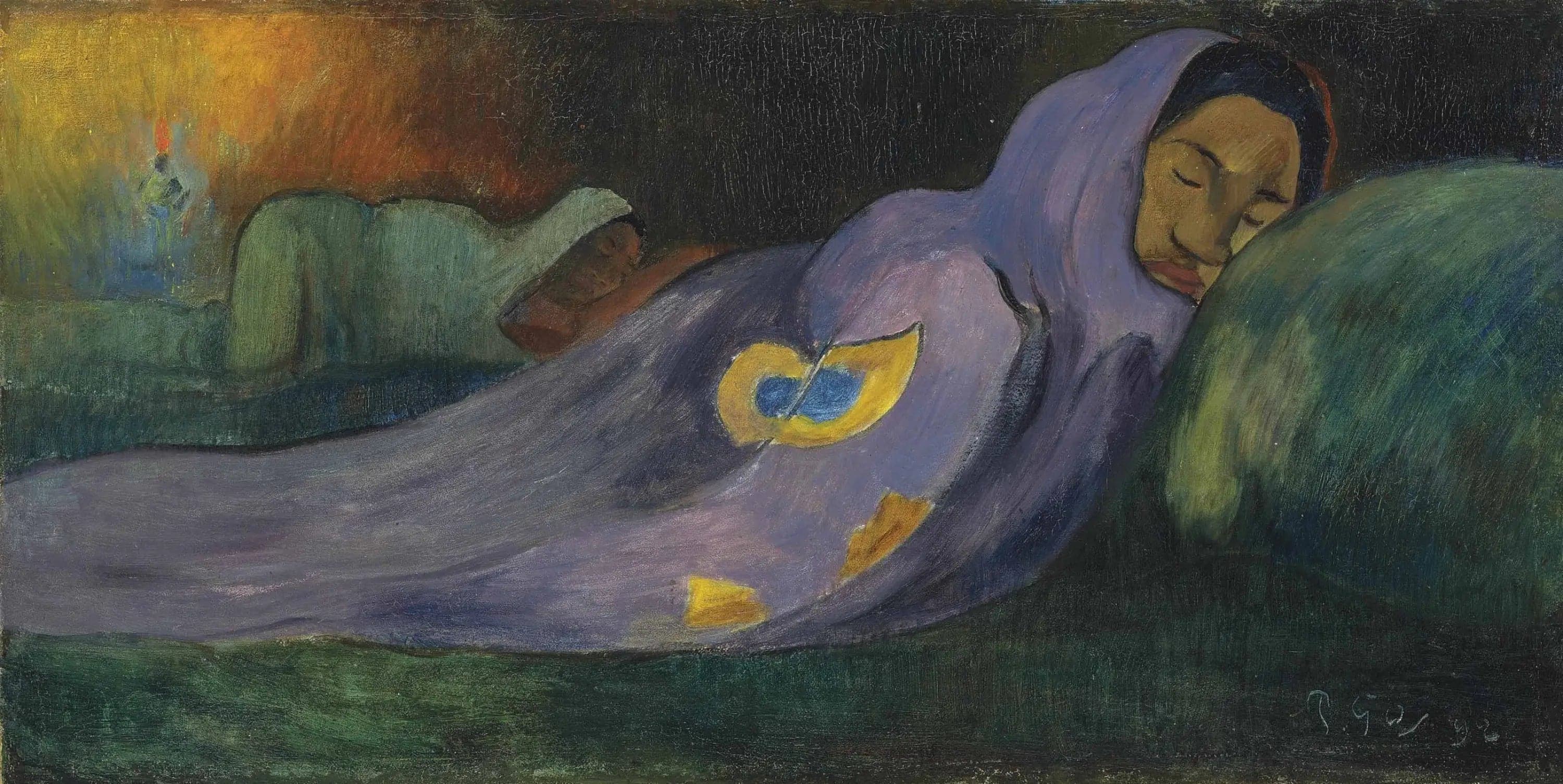
The Dream
- Original dimensions
- 67 x 35 cm
- Museum
- Not specified
- Year
- 1892
Scene depicted
"The Dream" depicts an enigmatic universe where reality fades before hallucinatory visions. The composition evokes a scene of troubling simplicity, where human figures and natural elements intertwine in a silent dialogue, as if suspended in time. Between the muted light and mystical silhouettes, Gauguin offers a visual interpretation of his own daydreams, inviting the viewer to dive into a world that belongs only to him.
Historical context
Created in 1892, the painting "The Dream" is rooted in a revolutionary artistic context, tinged with symbolist influences and post-impressionist styles. Paul Gauguin , then settled in Pont-Aven in Brittany, explores dreamlike landscapes and inner visions. This canvas , whose current location remains mysterious, bears witness to a time when artists sought to emancipate themselves from conventions to embrace subjectivity. With its delicate dimensions of 67 x 35 cm, this pictorial work surprises with its intimacy.
Place in the artist's career
"The Dream" stands as a pivotal work in Gauguin's career, marking a transition towards a freer and more personal expression. This painting emerges from a period where he experiments with a new palette and bold forms, alongside iconic pieces like "The Visit" and "Where Do We Come From? What Are We? Where Are We Going?". Each canvas marks the path towards a more introspective approach to painting .
Anecdote
“Painting is a means of escape, a key to the invisible,” Gauguin is said to have claimed, inspired by a sunny afternoon in his garden. This fleeting moment of connection between nature and art gave birth to a masterpiece that captures the essence of dreams and imagination. The painting "The Dream" illustrates this quest for transcendence, where colors vibrant with life tell a silent story.