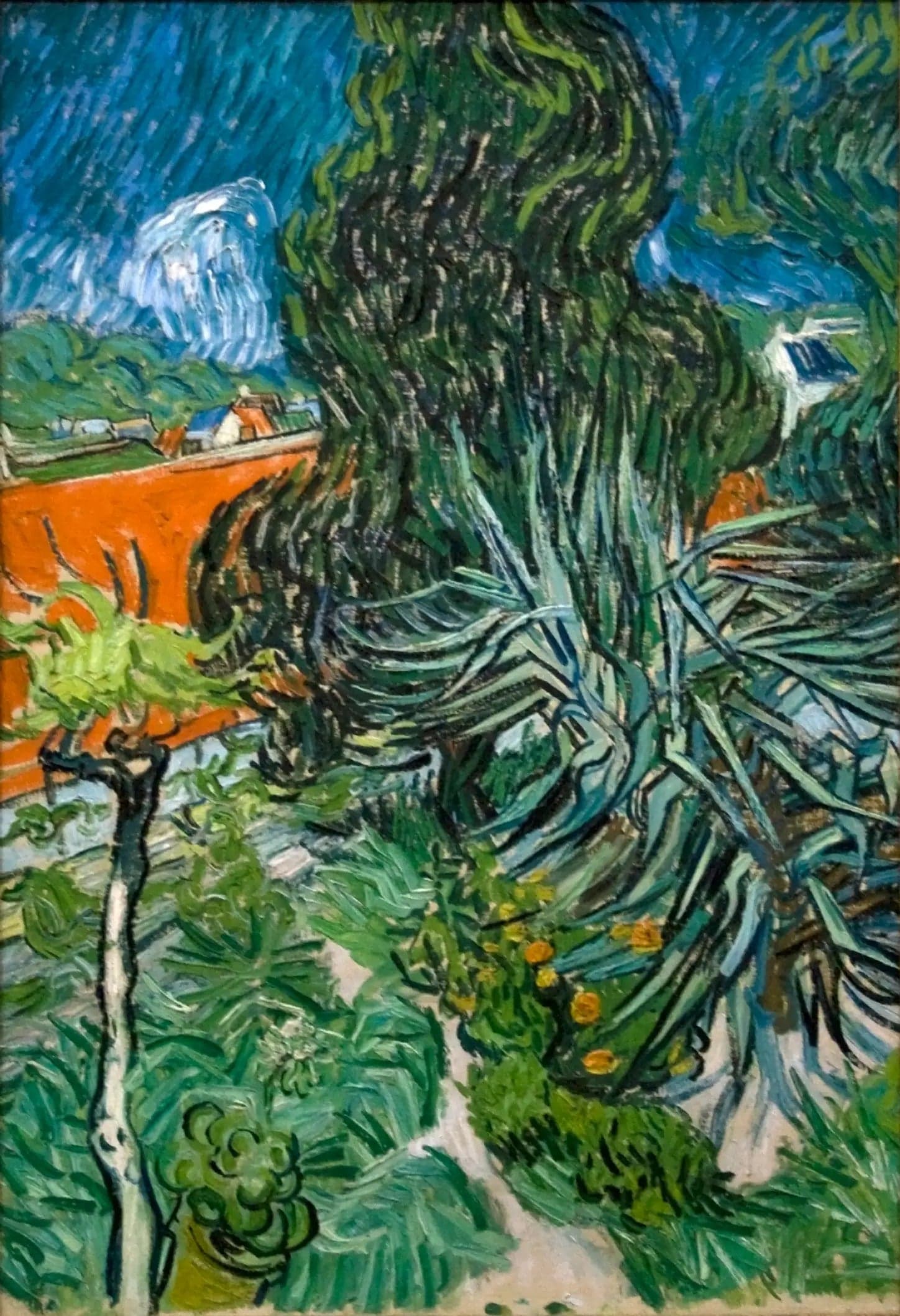
The Doctor Gachet's Garden in Auvers
Scene depicted
The painting illustrates a garden in full bloom, where nature, in collaboration with the artist, reveals itself in its intensity. The fluid shapes of the flowers, surrounded by abundant vegetation, create a space for contemplation, a haven of peace where Vincent hoped to regain balance. This iconic painting invites its viewer to dive into the delicacy of each petal, to breathe in the scents of the vibrant colors dancing in the daylight.
Historical context
Created in 1890, the iconic painting The Garden of Doctor Gachet in Auvers is set against the tragic backdrop of the end of Vincent van Gogh 's life. This pictorial work , which resides on the walls of the Orsay Museum in Paris , reflects a tumultuous period for the artist, as he lived in Auvers-sur-Oise , a peaceful commune in the Île-de-France region, where he sought inspiration and serenity. The canvas measures 51.5 x 73 cm, offering a window into the tormented soul of its creator.
Place in the artist's career
The Garden of Doctor Gachet in Auvers is a pivotal work in Vincent van Gogh 's career, symbolizing a stylistic culmination point. Just before his tragic end, this painting reveals a mastery of colors comparable to other paintings such as The Starry Night and The Sunflowers , where he explores even more intimately the relationship between the artist and his environment. These compositions illustrate the evolution of his vibrant style towards more poignant and emotional expressions.
Anecdote
“Nature speaks to me in its bright colors and gentle movements.” These words, which Vincent van Gogh might have uttered one spring morning, resonate as a tribute to the tranquility he found in the garden of Doctor Gachet. Far from the tumult of Paris, the flowers blooming on this canvas testify to his desire to capture the ephemeral beauty of existence.