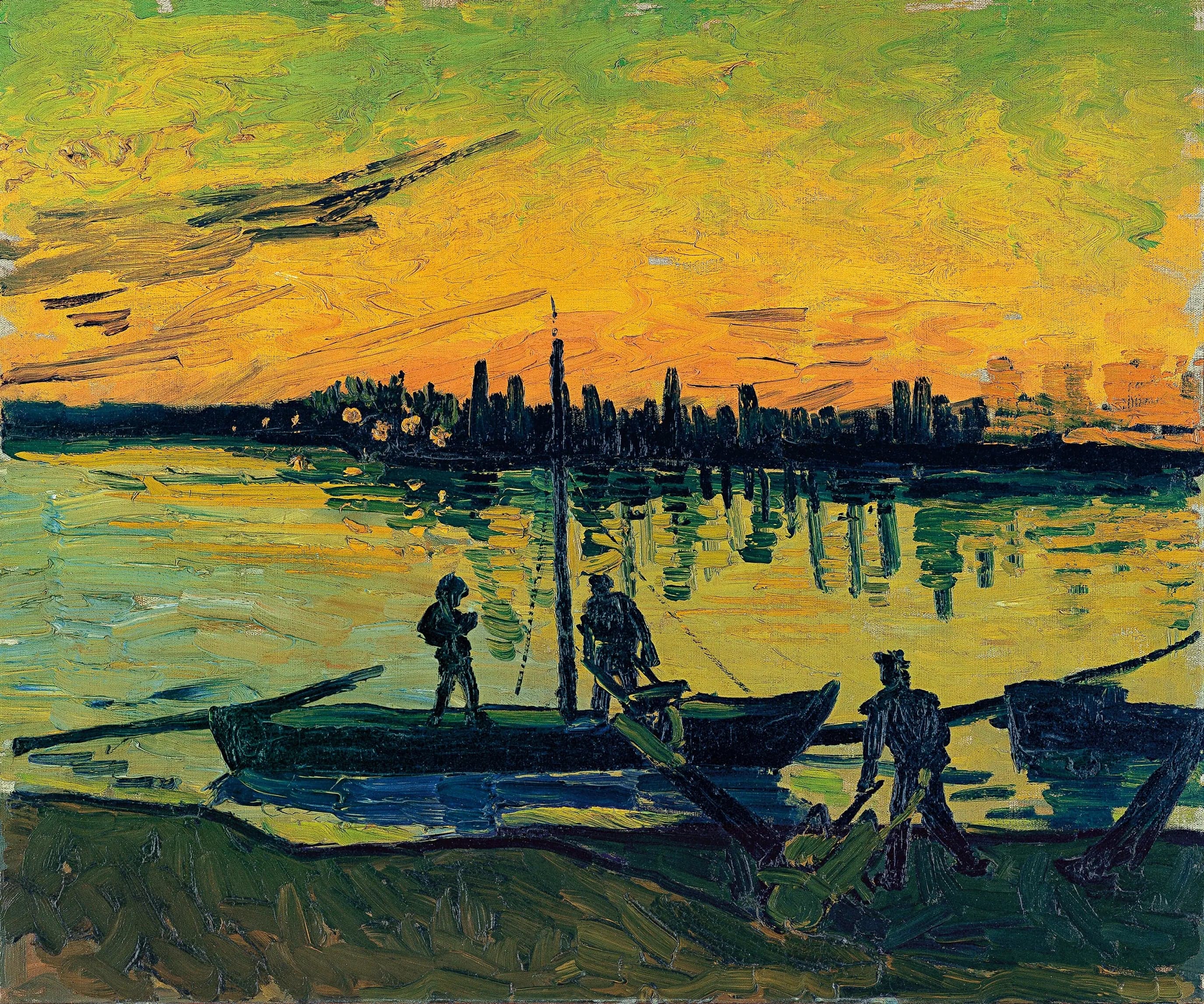
The Dockers at Arles
Scene depicted
In The Dockers at Arles , the painting depicts workers bustling at the port, their silhouettes paying homage to the vibrancy of maritime work. The animated faces and precise gestures testify to a living reality, where every detail, every brushstroke captures the essence of daily labor, while revealing a poignant beauty that emerges from human effort.
Historical context
Created in 1888, the iconic painting The Dockers at Arles is a vibrant testimony to the port life of Arles , a city in the south of France. This canvas , integrated into the post-impressionist movement, reflects the contemporary influences on Vincent van Gogh , while highlighting a cultural landscape rich in colors and emotions. Today, this painting is preserved at the Thyssen-Bornemisza Museum in Madrid and measures 64 x 54 cm.
Place in the artist's career
The Dockers at Arles represents a milestone in the career of Vincent van Gogh , illustrating his transition to greater expressiveness. Like his painting The Sunflowers , this work shows his interest in light and color, establishing an aesthetic dialogue with The Starry Night , where the vibrant energy of colors combines with emotional intensity. This process of evolution enriches the appreciation of his unique style.
Anecdote
“To paint, one must listen to the colors and taste the lights,” murmured the artist one morning while strolling along the docks of Arles. It is in this peaceful setting, where the wind carries the scent of the region's flowers, that Vincent found inspiration for his masterpiece , plunging his brushes into a vibrant palette. This moment is immortalized in The Dockers at Arles , which evokes human warmth and the simplicity of everyday life.