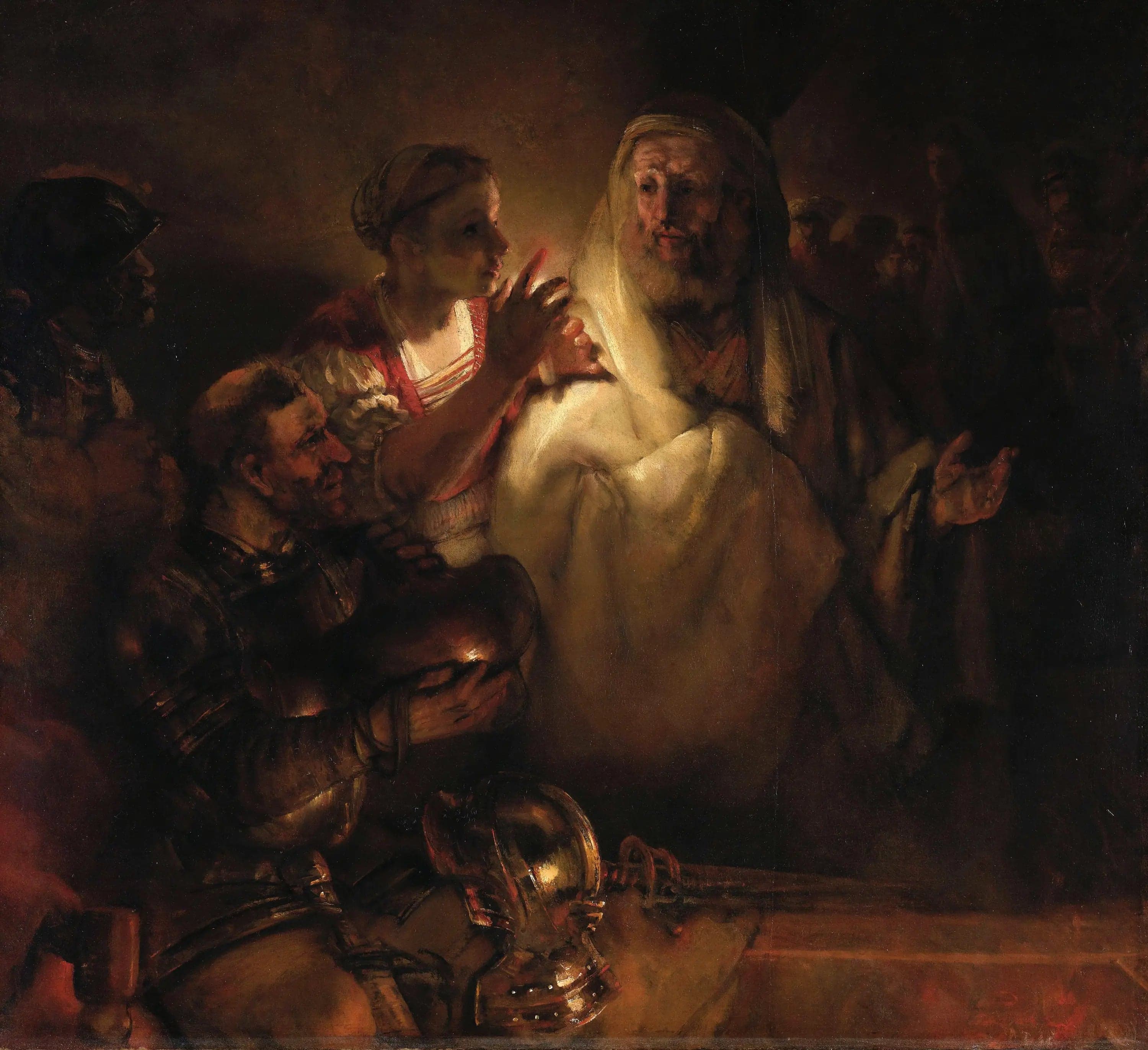
The Denial of Saint Peter
- Original dimensions
- 169 x 154 cm
- Movement
- baroque
- Museum
- Netherlands
- Year
- 1660
Scene depicted
This pictorial composition expresses a poignant biblical moment, where Saint Peter denies Jesus for the third time, as foretold. The characters, like shifting shadows, struggle within a dynamic of emotions. The intensity of their expressions and the depth of their gazes highlight the tension and pain of betrayal, with dramatic lighting emphasizing the faces, creating a heavy emotional atmosphere.
Historical context
Work : The Denial of Saint Peter |BRK| Artist : Rembrandt |BRK| Year : 1660 |BRK| Museum : Netherlands |BRK| Dimensions : 169 x 154 cm |BRK| Artistic movement : baroque |BRK|
Place in the artist's career
The Denial of Saint Peter marks a crucial turning point in Rembrandt ’s career, where his style shifted from clarity to a darker, more introspective exploration. This masterpiece, along with “The Night Watch” and “The Anatomy Lesson of Dr. Nicolaes Tulp,” demonstrates the artist’s technical evolution as he deepened his exploration of human emotions and light.
Anecdote
Rembrandt once declared: “I sought to depict the human soul in all its complexity.” This quote resonates deeply through his canvas . On a foggy morning, lost in his thoughts, he crossed paths with a man in a alleyway corner. The intensity of that moment inspired him to capture Saint Peter’s inner struggle, a true battle between faith and human weakness, which inhabits every corner of the work.