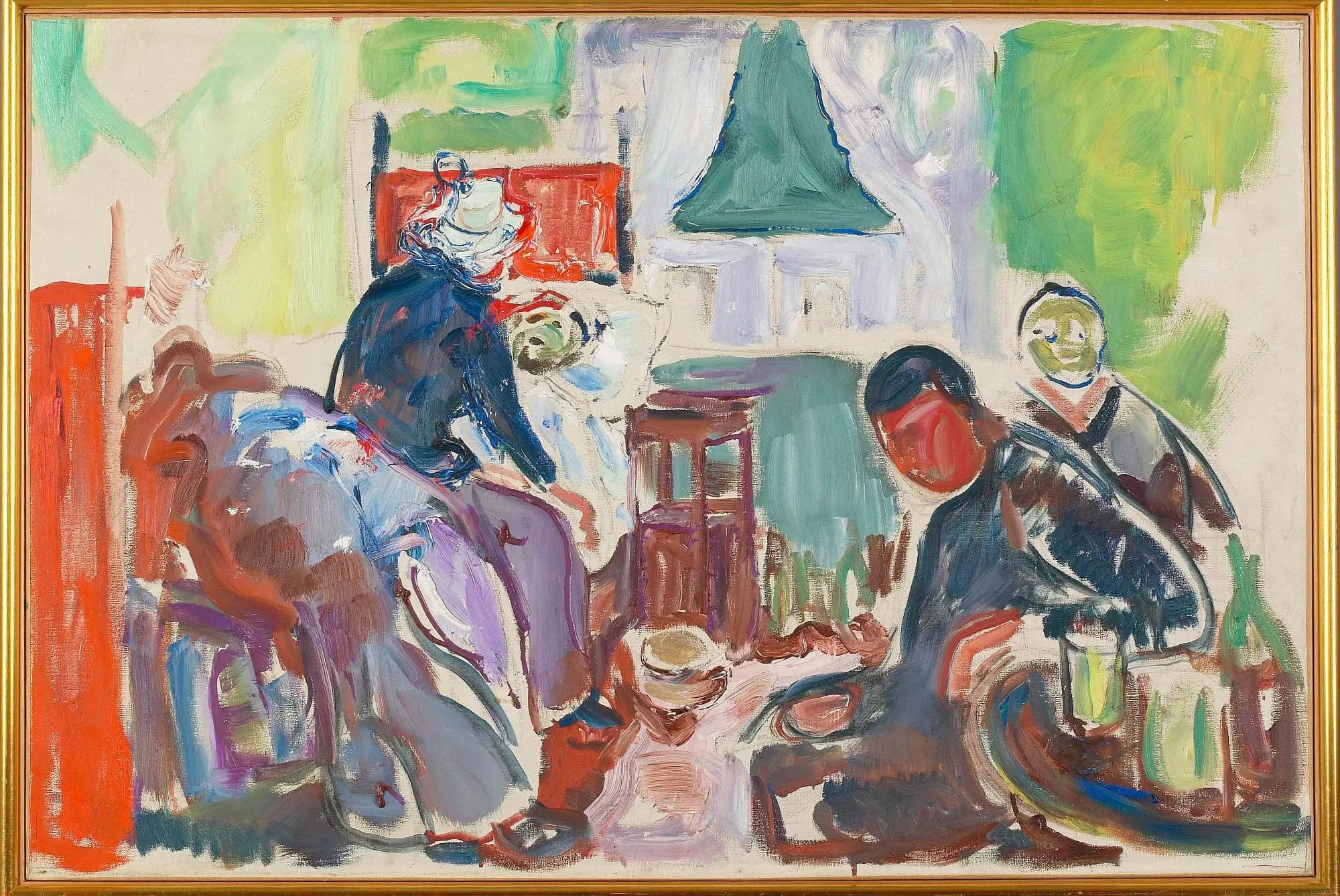
The Death of the Bohemian
- Original dimensions
- 245 x 126.5 cm
- Museum
- Munch Museum
- Year
- 1915
Scene depicted
The Death of the Bohemian transports us to a dark universe where death seems to lurk, illustrating the tragic end of life. The pictorial work represents a lifeless body, surrounded by blurred figures that exude immense sadness. This scene evokes the grief of a community faced with loss, revealing the fragility of existence and the struggle against oblivion. Munch, with his unique approach, manages to transcribe the melancholy of this moment, making this painting a true echo of human emotions.
Historical context
Created in 1915 in Oslo, this painting is emblematic of the expressionist movement that marked the beginning of the 20th century. A time when art no longer stops at hyper realism , but becomes a gateway to emotions, pains, and human struggles. This canvas is currently exhibited at the Munch Museum, a place dedicated to the work of this influential artist, who is talked about for his troubled history and emotional depth.
Place in the artist's career
The Death of the Bohemian fits into the maturity phase of Edvard Munch , marking a stylistic turning point in his career. After works like The Scream and The Madonna, this painting highlights a darker and more introspective development. In parallel, compositions such as The Dance of Life and The Oath of Love, although more animated, share a similar emotional depth that reflects the artist's evolution.
Anecdote
Edvard Munch once stated: “Art is an emotion.” Inspired by a scene of life and death theater, he felt the irrepressible need to capture human suffering and anguish in his painting . It was in an alley, as a scent of rain mixed with the smell of damp earth permeated the air, that he saw a spark of sadness awaken his creative spirit, giving birth to this masterpiece.