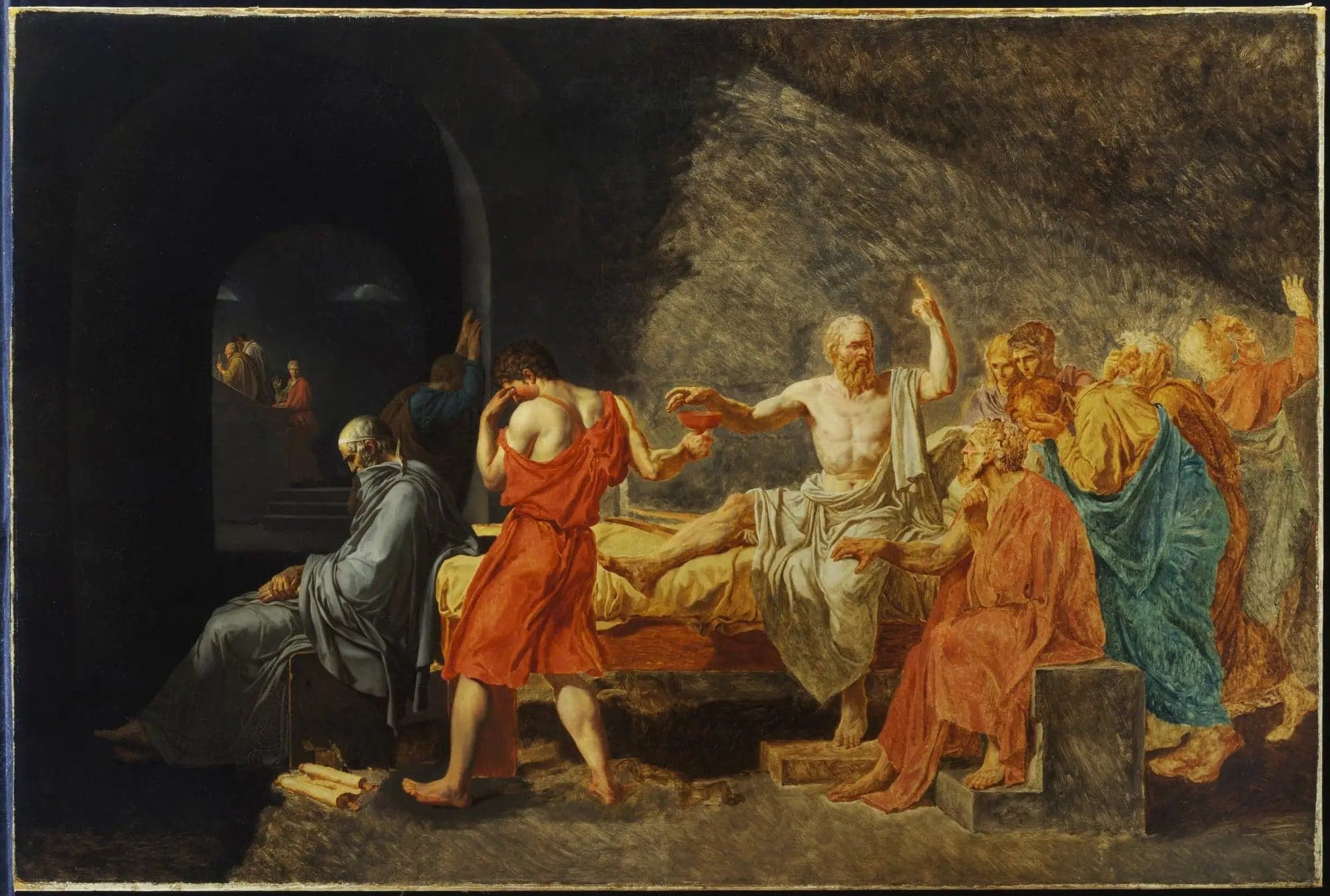
The Death of Socrates - Jacques
- Original dimensions
- 196.2 x 129.5 cm
- Movement
- academicism
- Museum
- Metropolitan Museum of Art
- Year
- 1787
Scene depicted
This painting illustrates the ultimate moment of Socrates, surrounded by his disciples. The philosophical hero, chained to his fate, embodies the stoic acceptance of death. Each character, a tragic silhouette, contributes to dramatizing the moment, creating an effect of immediacy. This painting becomes a celebration of reason, elevating the discourse on virtue and the immortality of the soul.
Historical context
Created in 1787, this painting emblematic of the academic movement was born in Paris, a vibrant city at the heart of the French Revolution. The canvas , now housed in the Metropolitan Museum of Art , reflects the influence of Enlightenment ideas, where reason and morality emerge in response to obscurantism. With impressive dimensions of 196.2 x 129.5 cm, this pictorial work is a reflection of a period full of intellectual and political upheaval.
Place in the artist's career
“The Death of Socrates” marks a major turning point in David's career, where he transcends his previous works such as “ The Oath of the Horatii .” This canvas represents an affirmation of the artist's commitment to republican ideals and morality, while perfecting a technique that will be his signature.
Anecdote
“Truth always needs a witness,” said David, inspired one spring morning after encountering a face marked by wisdom and renunciation. This fleeting moment, captured in a breath of light, profoundly nourished the conception of this masterpiece . The strength of the canvas lies in this emotional depth, a victory of the human spirit in the face of adversity.
Major exhibitions
Salon of 1787