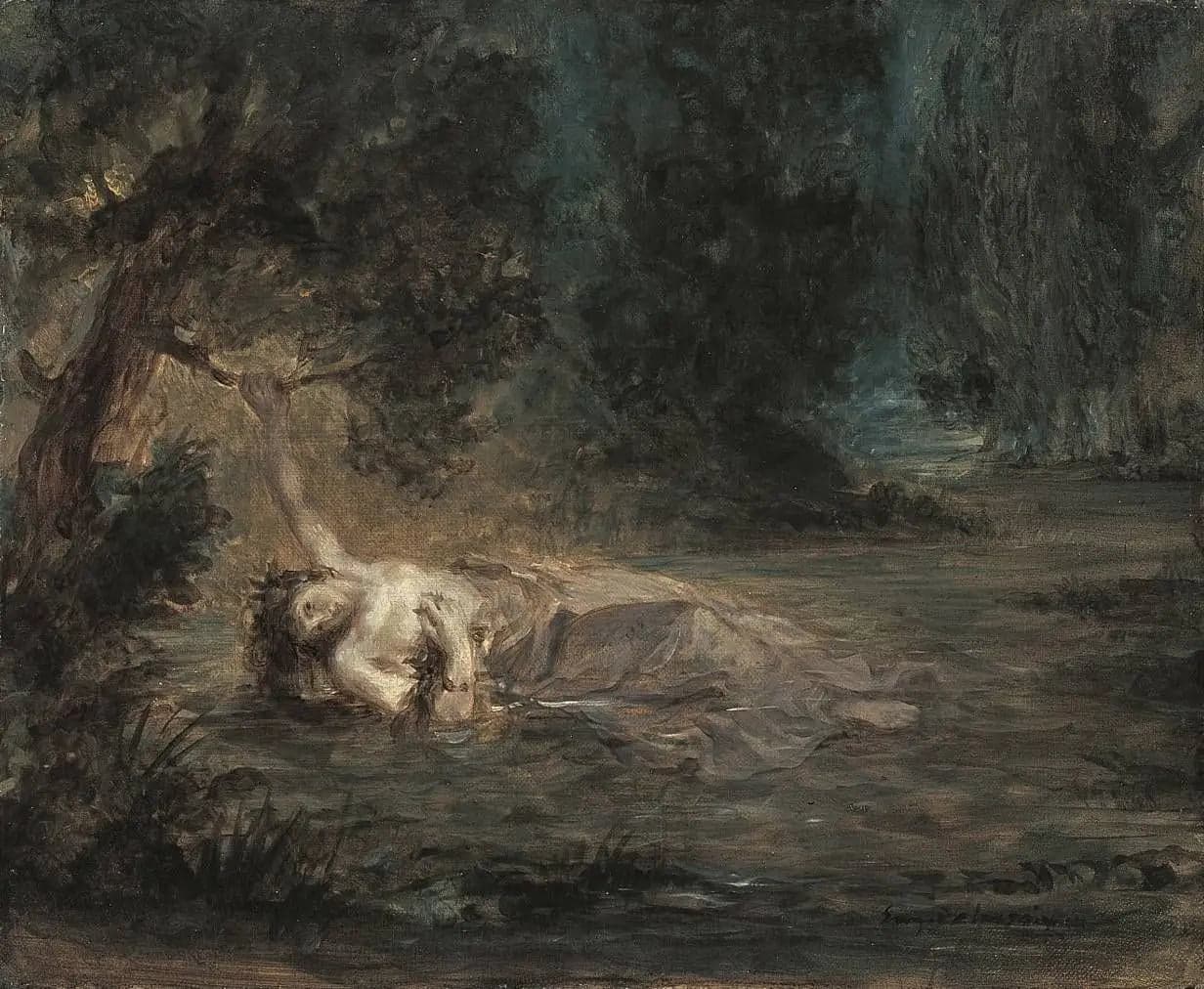
The Death of Ophelia
- Original dimensions
- 30.5 x 23 cm
- Museum
- room 942
- Year
- 1848
Scene depicted
In this painting , the artist captures the poignant moment when Ophelia, overwhelmed by the weight of sadness, floats peacefully on the water. The delicate movement of the waves embraces the contours of her body while flowers and branches surround her, creating an atmosphere that is both serene and tragic. The composition evokes a silent melody, that of a life suspended.
Historical context
Created in 1848, this painting embodies its roots in the vibrant city of Paris, at the heart of a romantic movement sweeping through art at that time. Delacroix's canvas captures the tragic story of Ophelia, imbued with infinite melancholy, and is currently displayed in the museum with the fascinating dimensions of 30.5 x 23 cm. This painting resonates with echoes of a time when emotion intertwines with artistic technique.
Place in the artist's career
Considered a flagship work in Eugène Delacroix 's career, The Death of Ophelia symbolizes the pinnacle of his emotional exploration. It can be compared to other iconic paintings such as Liberty Leading the People , where the power of feelings and the bold use of color are presented similarly, thus demonstrating the evolution of his style over the years.
Anecdote
It is said that Eugène Delacroix , inspired by a gentle morning light, once declared: "Nature is the first of masters." It was by the edge of a tranquil stream that he envisioned the tragic scene of Ophelia. This moment of communion with the environment nourished the soul of the painting , infusing a dramatic force into the masterpiece .