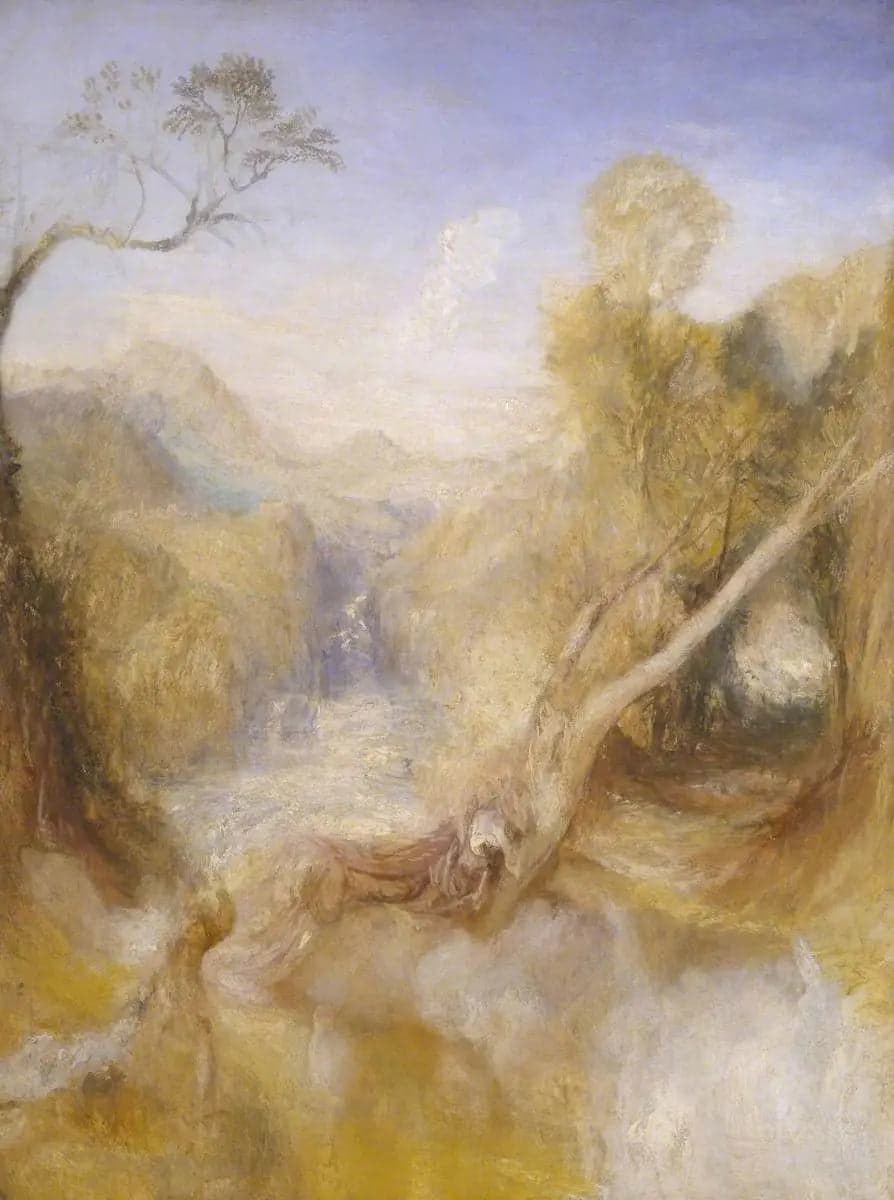
The Death of Actaeon, with a Distant View of Montjovet, Val d’Aosta
- Original dimensions
- 149.2 x 111.1 cm
- Museum
- Tate
- Year
- 1837
Scene depicted
The canvas depicts the tragic fate of Actaeon, hunting deer in the light of a blazing sunset, witnessing a fateful encounter with the goddess Artemis. Capturing surprise and horror, the painting seizes a pivotal moment where beauty and fate intertwine, creating palpable tension. The distant Montjovet, formidable and imposing, adds a narrative dimension to Actaeon's anguish, encapsulating human tragedy within a vibrant landscape.
Historical context
Created in 1837, this iconic painting finds its roots in the historic city of London, where Joseph Mallord William Turner , a leading figure of British romanticism , thrived within a captivating artistic momentum. Capturing the essence of natural beauty while remaining anchored in a mythological tradition, the painting resonates with the depth of the romantic movement. Currently on display at the Tate , this majestic canvas measures 149.2 x 111.1 cm, revealing every detail with a richness of emotion.
Anecdote
Turner once declared: “Light is my muse, and every guinea fowl I paint is a tribute to its fleeting magic.” Inspired one morning while observing the skies of Aosta, the light of a rising sun imbued his mind and nourished the vision of The Death of Actaeon, with a Distant View of Montjovet, Val d’Aosta . This pictorial fiction emanates from a subtle harmony between the tragic and the sublime, inviting the viewer to dive into a universe of sensations.