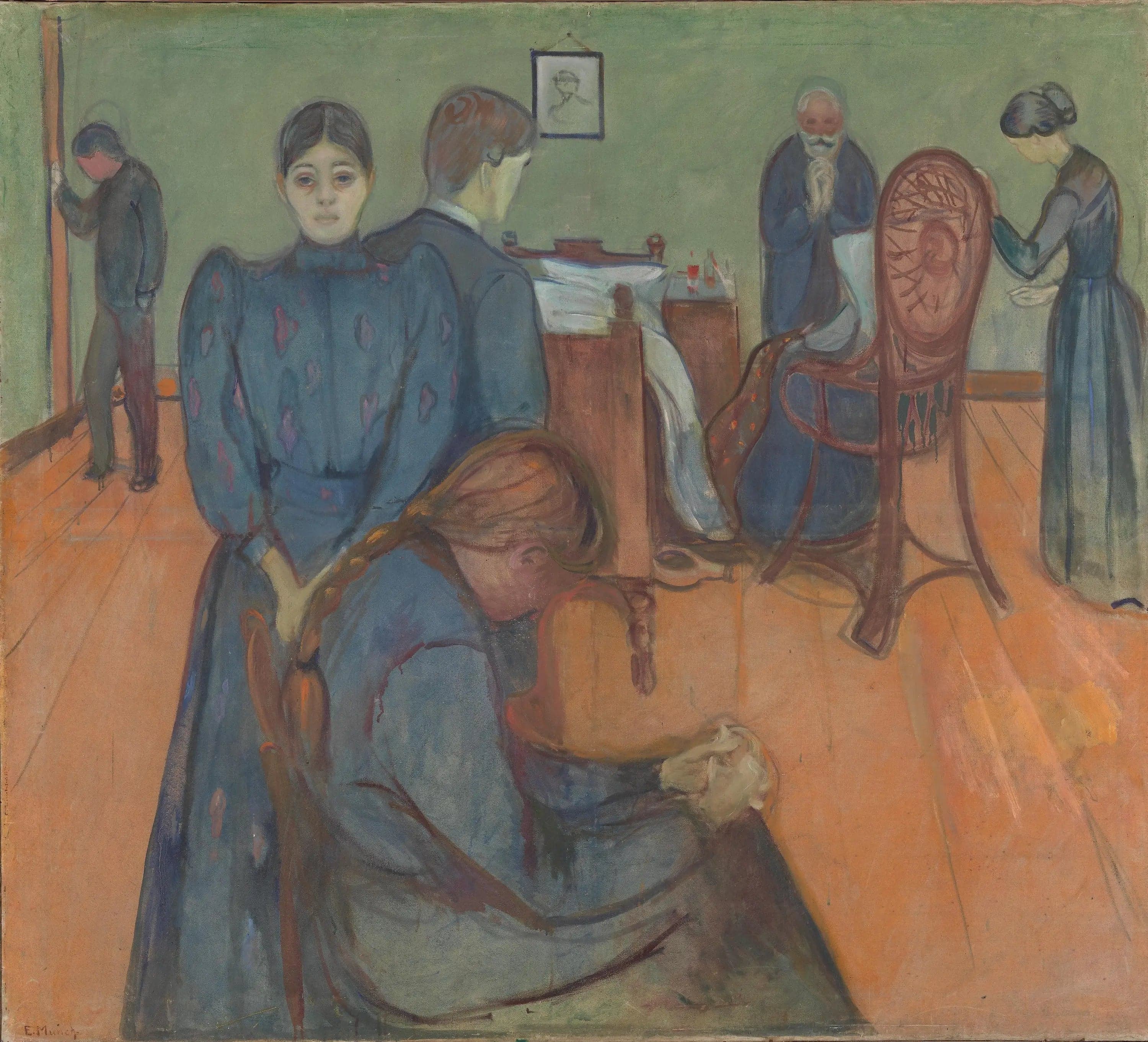
The Death in the Sick Room
- Original dimensions
- 160 x 134 cm
- Museum
- Munch Museum
- Year
- 1893
Scene depicted
This dramatic painting illustrates the final moment of a loved one, immersed in a farewell atmosphere. The expressions of the figures around the bed, as well as the dark hues of the canvas, awaken a deep connection with the fragility of life and the inexorable presence of death.
Historical context
Painted in 1893, in Oslo, Munch's iconic Canvas belongs to the expressionist movement. This period, where passion and emotion found their echo in visual art, is marked by artistic movements that challenge realistic representation. Currently, this masterpiece is proudly displayed at the Munch Museum, where it attracts visitors from around the world.
Place in the artist's career
The Death in the Sickroom is at the heart of Munch's career, representing a period of deep introspection and intense emotions. Alongside The Scream and The Dance of Life, this painting reflects the evolution towards a more personal and emotional art, testifying to the maturity of his creative genius.
Anecdote
“I paint my life, but also the death that surrounds it,” Munch could have declared when discussing the origin of his masterpiece. This inspiration, arising one foggy morning, when he encountered the melancholy of a dear face, nourishes the evocative power of The Death in the Sickroom.