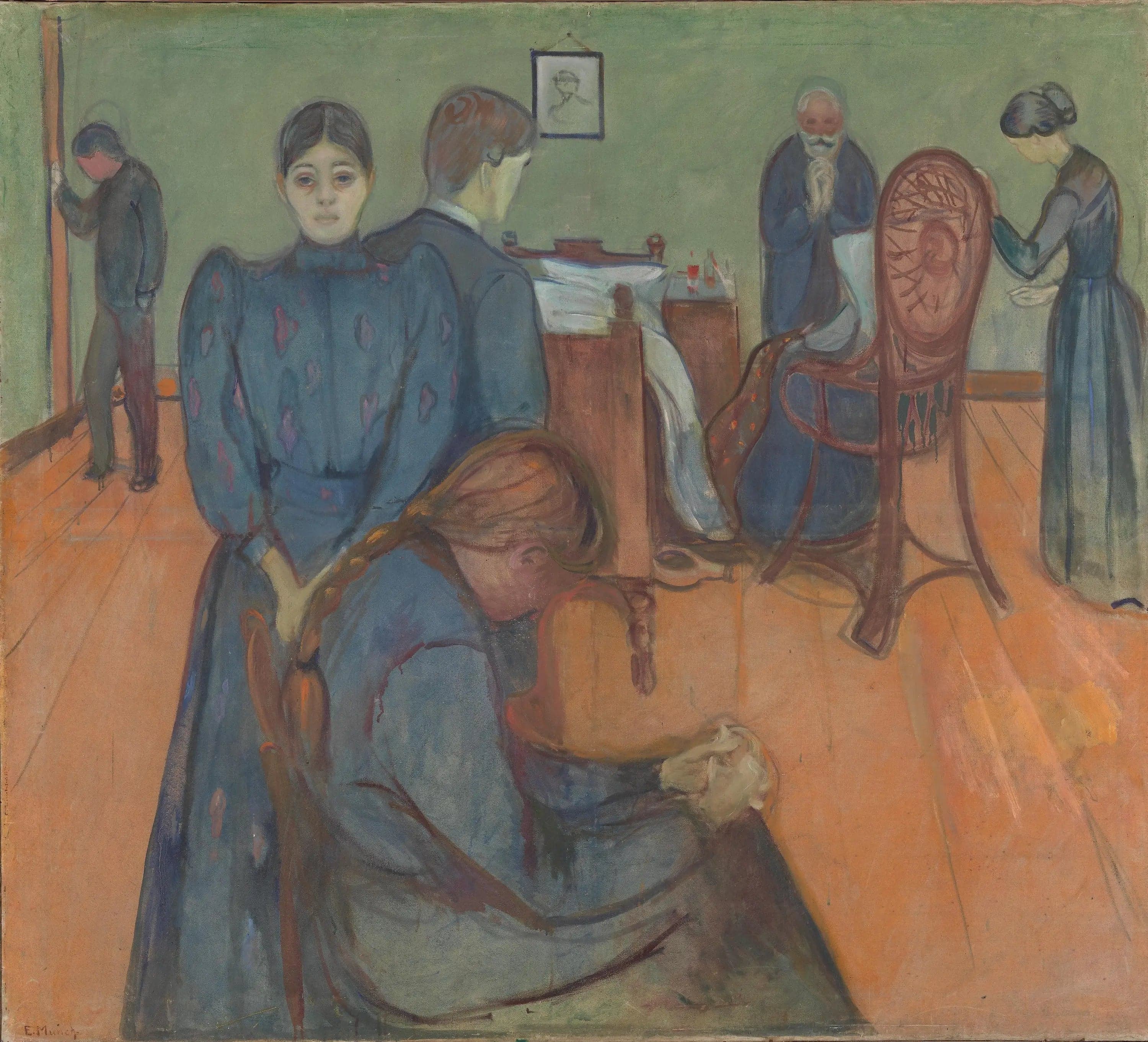
The Death in the Sick Room
- Original dimensions
- 109.5 x 91 cm
- Museum
- Munch Museum
- Year
- 1893
Scene depicted
The painting illustrates a scene filled with dramatic tension: a dying figure, surrounded by loved ones, expresses the fragility of life. In this poignant composition, Munch depicts a harsh reality where faces show anguish and sadness, creating a striking contrast between the shadow of death and the enduring love of those who remain. Every detail in the canvas evokes deep feelings, questioning our relationship with loss.
Historical context
Created in 1893, this painting is the result of an era marked by the expressionist movement, of which Munch is one of the leading figures. Located in Oslo, the canvas resonates with a new artistic sensitivity, where emotions and the human condition take center stage. The painting, exhibited at the Munch Museum, offers a poignant view of death and solitude, capturing a moment suspended in time.
Place in the artist's career
The Death in the Sickroom occupies a pivotal moment in Munch's career, revealing the emotional power that will later characterize his work. Like The Scream and The Madonna , this masterpiece marks a turning point towards a more personal and introspective expression. This painting reflects the evolution of his style, accounting for the psychological depth that will grow throughout his career.
Anecdote
“Death is a mystery. It is through my canvases that I explore its shadows.” These words, inspired by Munch's tortured genius, resonate deeply. In a peaceful alley in Oslo, on a spring morning where the soft light mingles with the fresh air, the artist felt this urgent need to transcribe pain and melancholy. This emotion, charged with truth, finds its full meaning in The Death in the Sickroom .