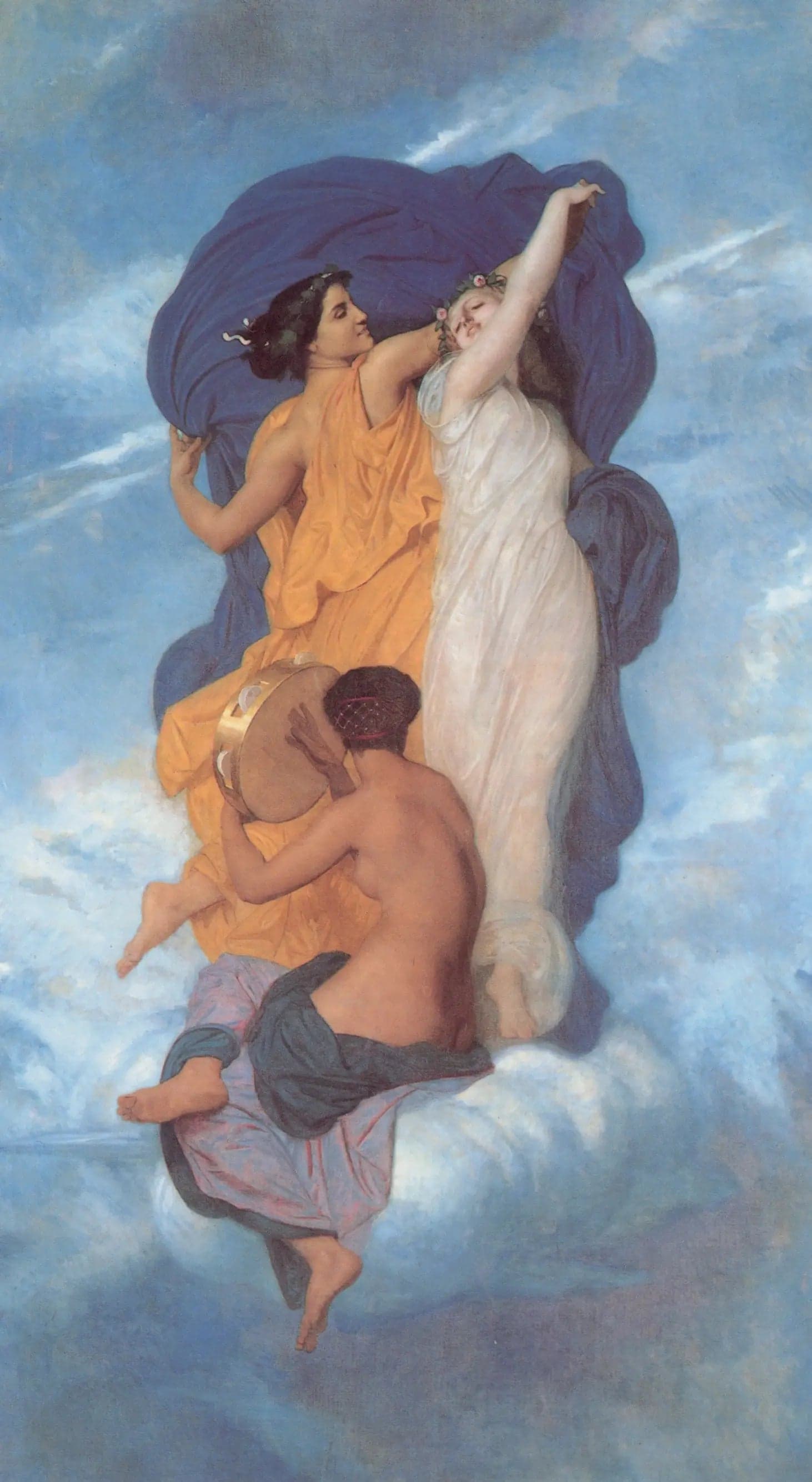
The Dance
- Original dimensions
- 181 x 366 cm
- Movement
- Academicism
- Museum
- Orsay Museum
- Year
- 1856
Scene depicted
The composition of this pictorial work captures a fleeting moment of joy and innocence. The protagonists, a group of children, shine to the rhythm of a joyful dance under the bright sun. Amid their laughter and movements, Bouguereau manages to convey an atmosphere of freedom, joy, and communion with the surrounding nature, making this scene a vibrant testimony of humanity and its passions.
Historical context
Created in 1856, in the heart of Paris, this painting belongs to the movement of Academicism , a period where mastery of technique was at the center of artistic concerns. At that time, France was culturally radiant, and this masterpiece finds its place among the treasures of the Orsay Museum , which proudly presents this canvas emblematic of Bouguereau. With impressive dimensions of 181 by 366 cm, this painting is a true visual monument.
Place in the artist's career
“The Dance” stands as one of the major milestones in Bouguereau's career, illustrating his full artistic maturity. This painting, with its finesse, echoes other masterpieces such as “The Little Model Girls” and “The Wave,” showcasing his unmatched talent for the representation of the human figure. Each painting testifies to his technical evolution, from the expression of emotions through gesture.
Anecdote
“Every dance movement tells a story, an emotion.” William-Adolphe Bouguereau was deeply inspired by the beauty of life and human interactions. He was particularly so during his spring walks in the Buttes-Chaumont park, where he admired the lightness and grace of young dancers, bringing his painting “The Dance” to life.
Major exhibitions
Salon of 1857