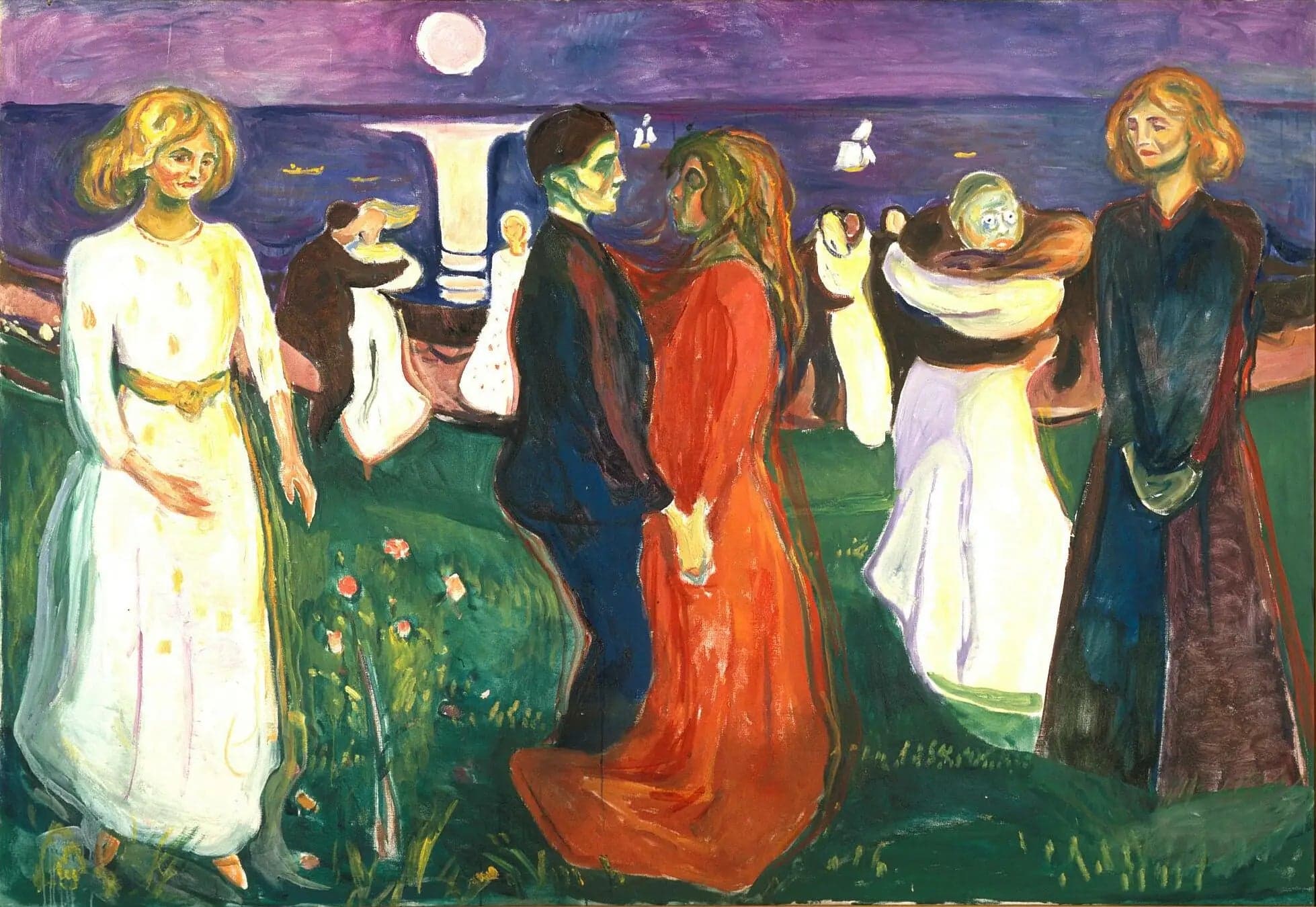
The Dance of Life
- Original dimensions
- 191 x 125 cm
- Movement
- expressionism
- Museum
- National Museum
- Year
- 2000
Scene depicted
At the heart of The Dance of Life , Munch captures a celebration of human existence. Whirling silhouettes unite in a tumultuous ballet, symbols of both the joy and sadness inherent in the human condition. The canvas tells a visual story where each figure evokes contrasting emotions, inviting the viewer on an introspective quest.
Historical context
Created in 2000, The Dance of Life by Edvard Munch emerges in the heart of Oslo, a vibrant city in Norway, where expressionist art takes root. This painting embodies the very essence of a movement that challenges established norms and immerses us in deep emotional introspection. Currently exhibited at the National Museum, it invites us to contemplate the passion and torment that have rocked the soul of its creator.
Place in the artist's career
The Dance of Life stands as a centerpiece in the work of Edvard Munch , marking a period where he explores his deepest themes. Associated with other paintings such as The Scream and The Madonna , this work testifies to undeniable technical evolution and emotional maturity, revealing his constant quest for inner truth.
Anecdote
“Life is a perpetual dance, a choreography of our emotions” Munch might have said while contemplating the fires of twilight, trapped in the moment. Imagine yourself on a cobblestone street in old Oslo, cradled by the fresh spring breeze, when the idea of The Dance of Life strikes like a lightning bolt. The movement, the color, the intensity – each element blends with the magic of a sacred moment.
Major exhibitions
Olaf Schous gifts to the National Gallery: National Gallery November 14, 1987 - February 7, 1988