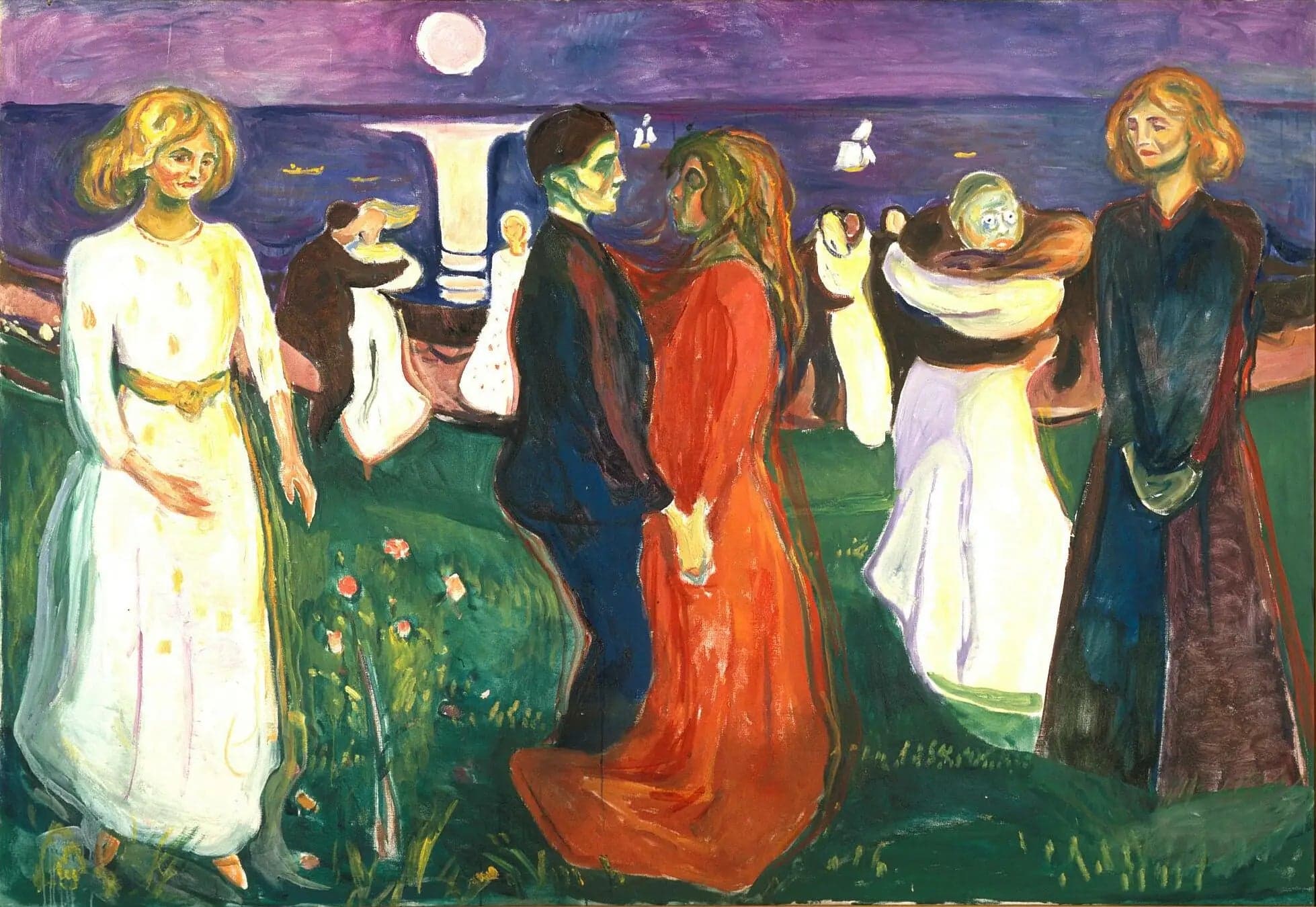
The Dance of Life
- Original dimensions
- 321 x 96 cm
- Museum
- Stenersen Museum
- Year
- 1921
Scene depicted
This vibrant painting depicts a collective dance, where silhouettes move in harmony, symbolizing the celebration of life and death. The composition illustrates a traditional ball, an immersion in the present moment, where the spirit and body converge in a transcendent experience.
Historical context
Created in 1921 as part of the vibrant expressionist movement, The Dance of Life transports us to the vibrant alleys of Oslo, Norway. This masterpiece is rooted in a cultural context where art becomes a reflection of human emotions. Currently, this painting resides in the Stenersen Museum, where it continues to captivate the souls of those who contemplate it.
Place in the artist's career
The Dance of Life stands as a turning point in the career of Edvard Munch . Following significant works such as The Scream and The Madonna , this painting represents a stylistic maturity, blending formal influences with a deeper emotional exploration.
Anecdote
Edvard Munch once said: "I did not paint what I see, but what I feel." This statement resonates powerfully in The Dance of Life , a work inspired during an autumn evening, filled with the sounds of dance and the laughter of festival-goers. The moment when the artist crossed the dancing light and the moving bodies engraved an indelible emotion within him.