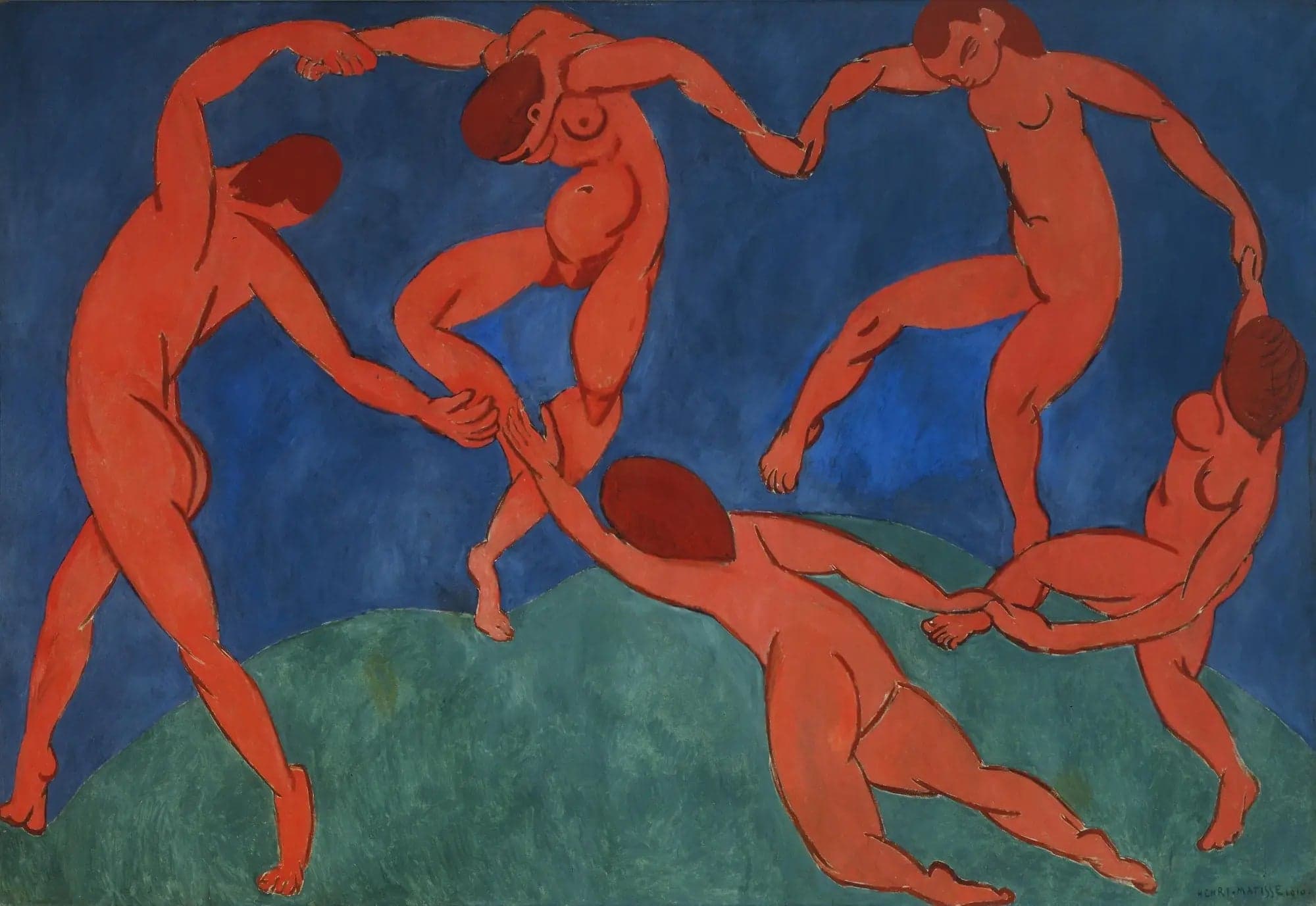
The Dance II
- Original dimensions
- 391 x 260 cm
- Movement
- Fauvism
- Museum
- Hermitage Museum
- Year
- 1910
Scene depicted
The Dance II is a striking representation of happiness and communion between man and nature through dance. Matisse stages dynamic figures, swirling against a vibrant background of pure colors, evoking sensations of joy and freedom. This canvas plays with the notion of the circle, a symbol of unity and harmony, transforming each movement into a collective celebration.
Historical context
Created in the heart of France in 1910, The Dance II is part of the Fauvist movement, where color becomes the very essence of emotion. This painting is today preserved at the Hermitage Museum , testifying to its importance in the history of art. Its monumental format, measuring 391 x 260 cm, transports the viewer into a vibrant and bold universe, a true tableau of expression and freedom.
Place in the artist's career
This painting , marking a turning point in Matisse's career, reflects his creative boldness at the beginning of the 20th century. During this period, he stands out from conventions with works like The Joy of Life and The Dance , which testify to a constant search for pure emotional expression. The Dance II remains a pinnacle of his exploration of forms and color.
Anecdote
“Color is my language,” could have said Henri Matisse , inspired by the vitality of the folk dances seen in the south of France. The brightness of laughter and the sounds of music still resonated around him, enjoying a spring morning. It is in this joyful atmosphere that the painting The Dance II takes flight, capturing the very essence of life, dance, and movement.
Major exhibitions
Autumn Salon of 1910