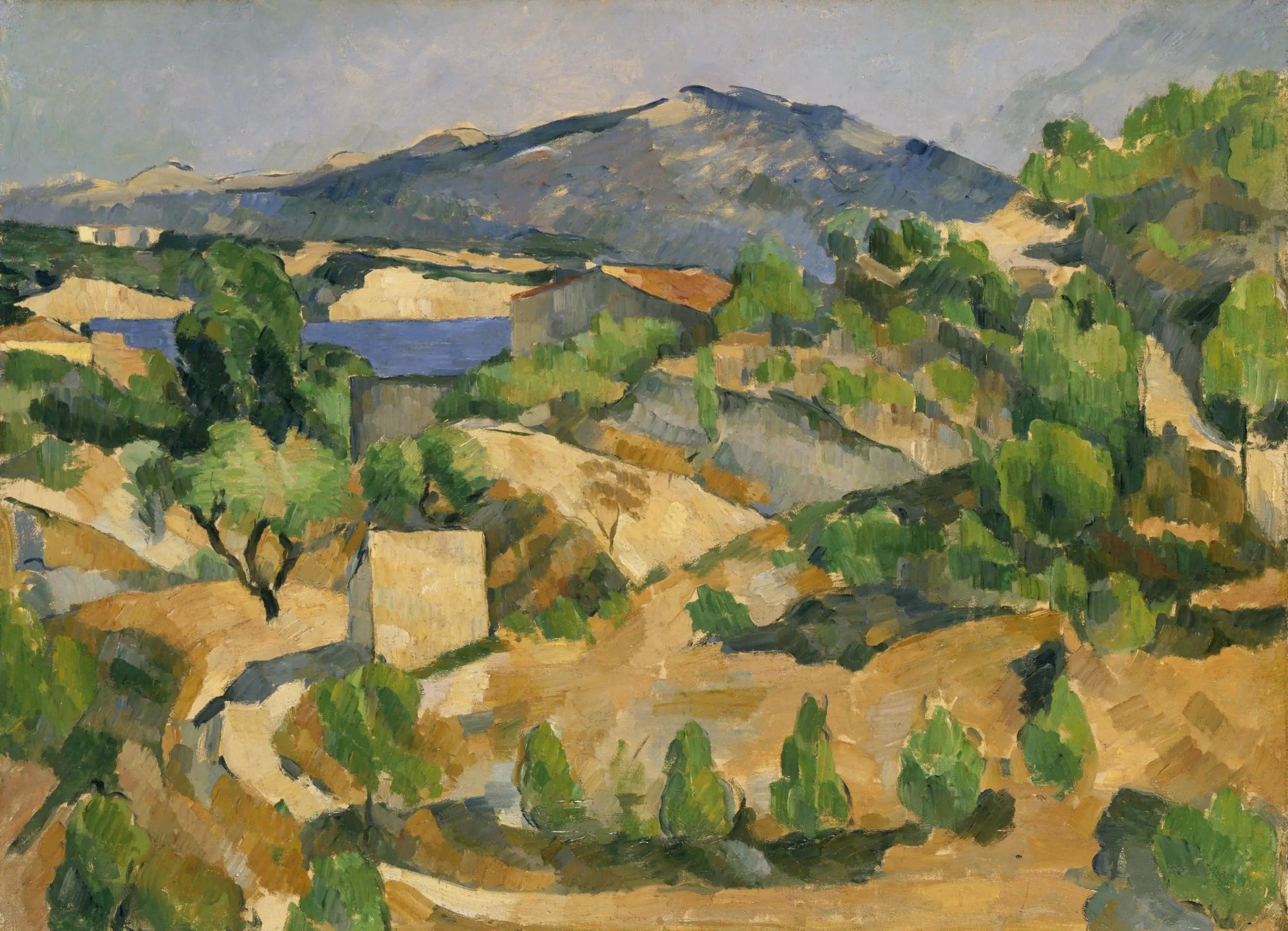
The Dam of François Zola
- Original dimensions
- 72.4 x 53.5 cm
- Museum
- National Museum of Wales
- Year
- 1879
Scene depicted
The painting "The Dam of François Zola" illustrates a peaceful scene where water waltzes with the surrounding landscape, captured by Cézanne's attentive gaze. This masterpiece tells the story of a natural harmony, where each element seems to converse with the other and create a visual symphony. The silhouettes of the trees rise majestically, reflecting a deep calm, while the dam appears as a bridge between the human and the divine.
Historical context
Created at the end of the 19th century, in 1879, in the heart of Provence, the painting "The Dam of François Zola" is part of the post-impressionist movement. This emblematic work of Paul Cézanne captures the essence of the mountainous landscapes that surround it. Currently, this canvas is located at the National Museum of Wales, where it testifies to an unbreakable cultural heritage.
Place in the artist's career
This painting is at the heart of Cézanne's career, symbolizing a period of artistic maturation. "The Dam of François Zola" juxtaposes with other works such as "The Large Bathers" or "Montagne Sainte-Victoire," representing the painter's transition to a more structured style while cultivating a new sound in light.
Anecdote
Paul Cézanne once stated: "Nature must also be seen in the heart of your soul." Inspired by a sunny morning on the banks of the dam, he captured the light of a budding spring. The crescendo of nature, the softness of the lights flirted in his mind, giving birth to this masterpiece , which evokes the shadows and reflections of the hills.