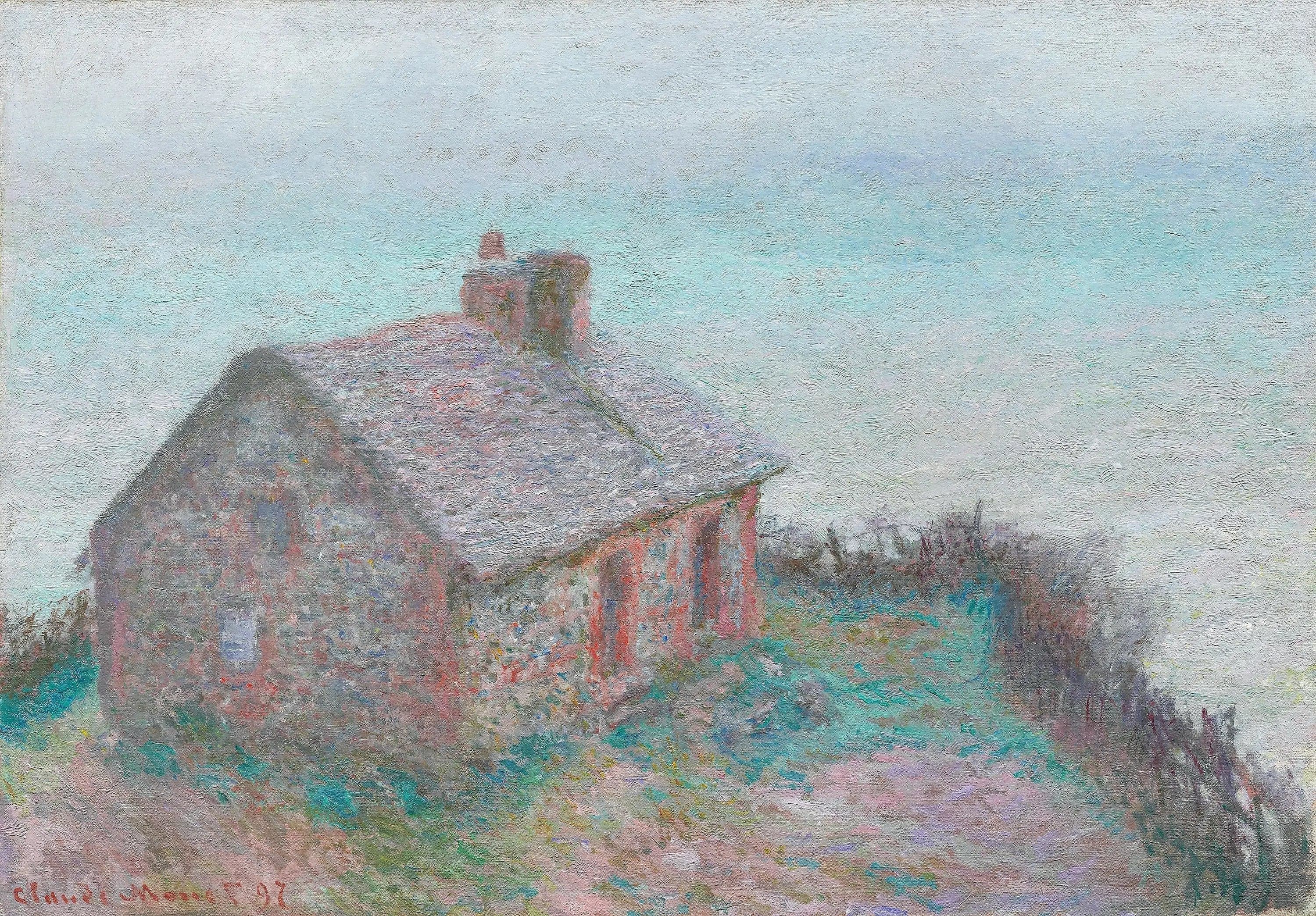
The Customs House at Varengeville
- Original dimensions
- 92.8 x 65.6 cm
- Museum
- Art Institute of Chicago
- Year
- 1897
Scene depicted
This painting illustrates a delicate view of the steep cliffs of Varengeville, with the customs house in the background, emerging as a symbol of the intimacy between man and nature. The shimmering colors of the sea and the vibrancy of the skies are beautifully captured, transporting the viewer into a suspended, almost palpable moment. The scene evokes memories of seaside strolls, the gentle sounds of waves, and the fresh breath of sea air.
Historical context
Year: 1897 |BRK| Museum: Art Institute of Chicago |BRK| Dimensions: 92.8 x 65.6 cm
Place in the artist's career
"The Customs House at Varengeville" is part of a fertile and mature period in Monet's artistic journey, marking his rise as a master of light. Alongside other iconic paintings such as " Impression, Sunrise " and " The Cathedral of Rouen ", this painting reveals his stylistic and emotional evolution, using light and movement to bring his art to life.
Anecdote
Claude Monet , while contemplating the changing landscapes of Normandy, often said: "Light is everything. It brings my canvas to life." On that day, on an intoxicating spring morning, he stood on the cliff at Varengeville, feeling the harmony between sky and sea. It is this original emotion that nourished the creation of his masterpiece, "The Customs House at Varengeville," oscillating between a breath of freedom and a gentle calm.