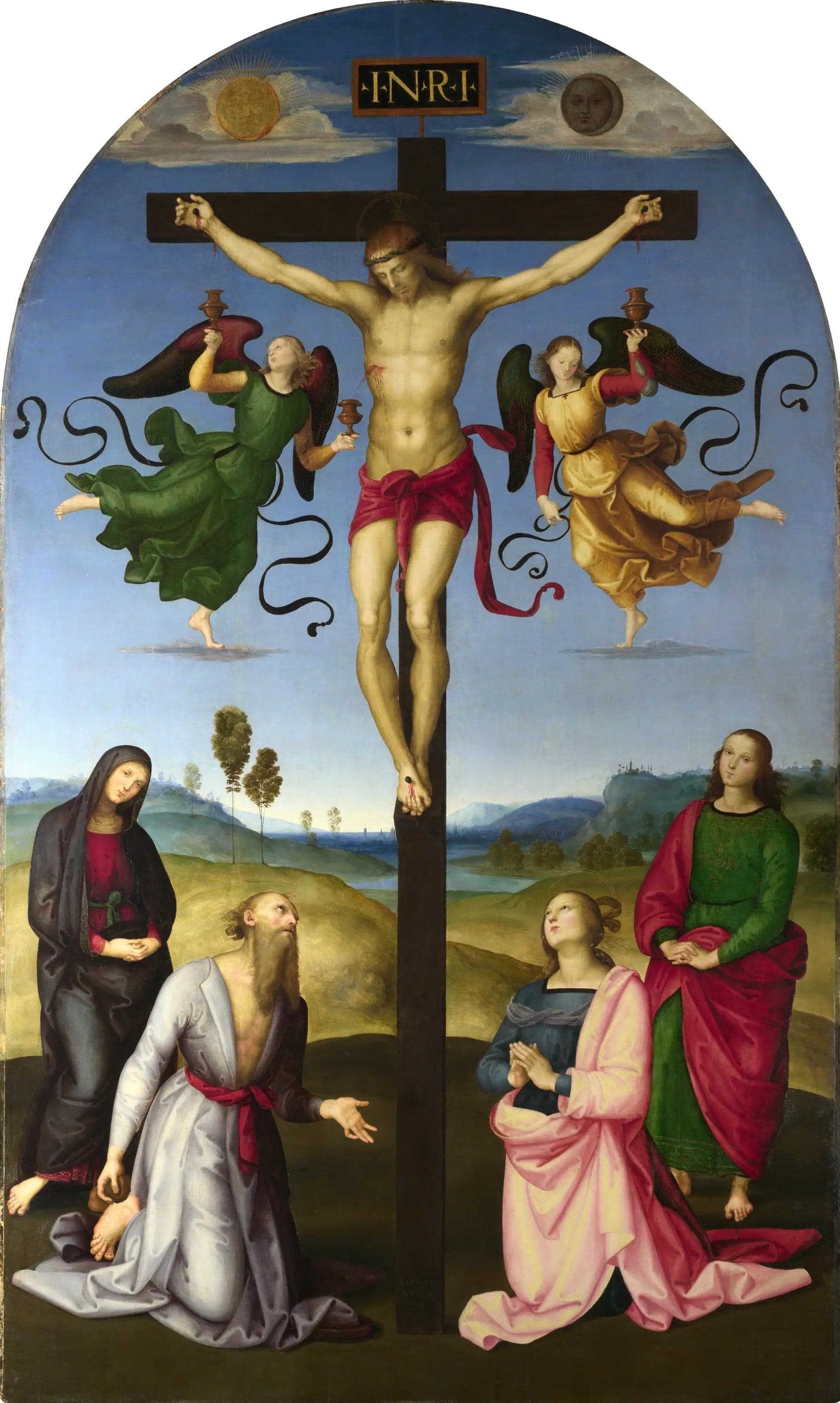
The Crucifixion Mond
- Original dimensions
- 167.3 x 283.3 cm
- Movement
- High Renaissance
- Museum
- National Gallery
- Year
- 1502
Scene depicted
This pictorial work symbolizes suffering and redemption, cruelly staged by the crucifixion of Christ, surrounded by spiritual symbols. The figures arranged with sublime emotional orchestration reveal the vital role of the protagonists in the face of this monumental religious event. The painting resonates with intensity and draws the observer into a dialogue with eternity.
Historical context
Created in 1502, this painting is rooted in the vibrant city of Rome, where the brilliance of the High Renaissance sparked artistic revolutions. The canvas, currently owned by the National Gallery in London, unfolds majestically with its impressive dimensions of 167.3 x 283.3 cm. It is here that the harmony of forms and colors meets the spiritual depth as conceived by the brilliant mind of Raphael.
Place in the artist's career
The Crucifixion Mond stands out as a significant milestone in Raphael's career. It represents not only a stylistic peak but also a turning point in his mastery of depth and light effects. In parallel with The Marriage of the Virgin and The Sistine Madonna, this painting illustrates the impressive evolution of his artistic language, moving from gentle composition to striking emotional depth.
Anecdote
Raphael, facing the light of a spring morning in Ville Marie, is said to have murmured: “The light illuminates what the soul cannot see.” It is in this sublime moment that he would have drawn inspiration for this masterpiece , transforming a tragic scene into a painting imbued with serenity, offering divine light to the viewer.