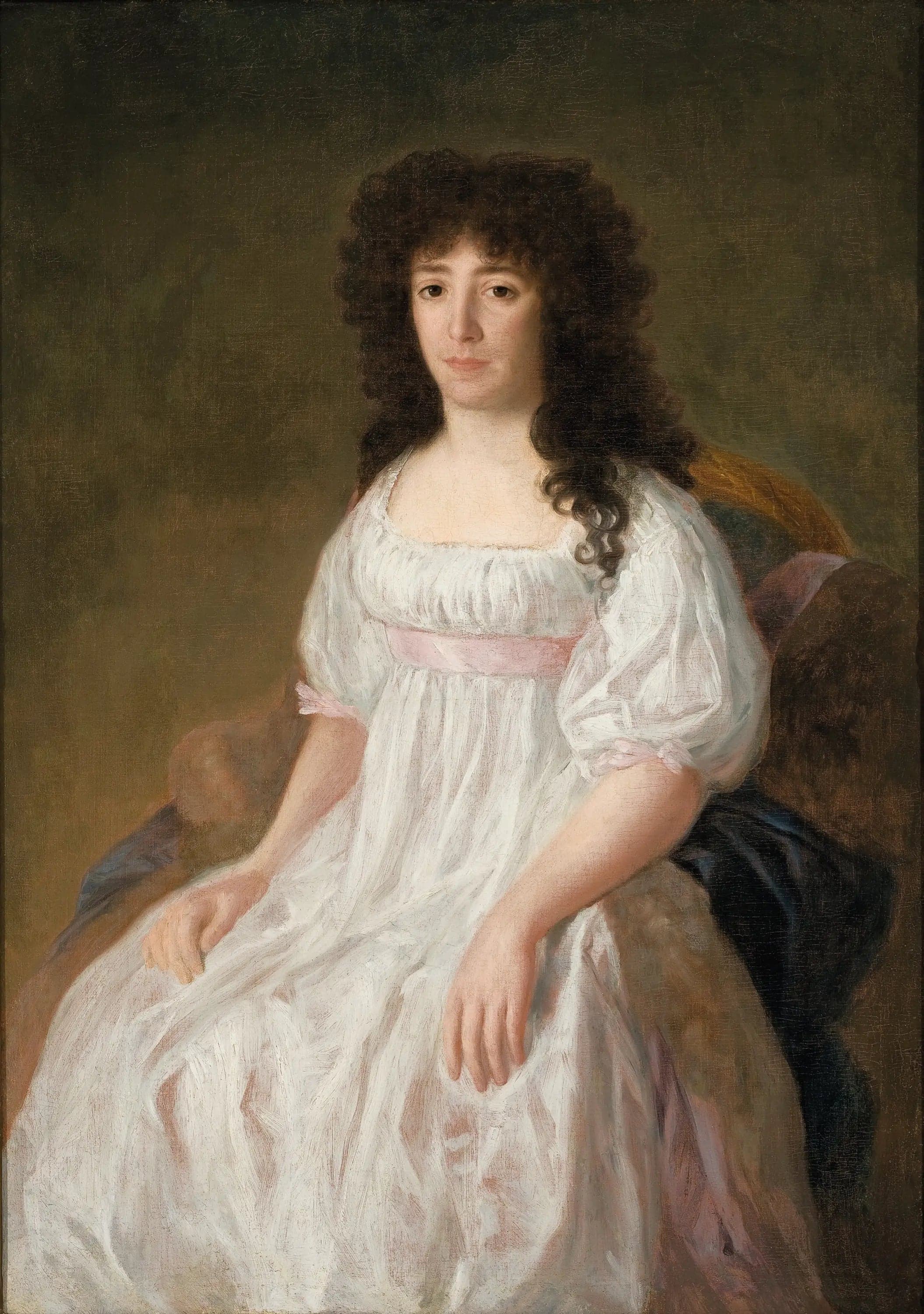
The Countess of Casa Flores
- Original dimensions
- 79.5 x 113 cm
- Museum
- São Paulo Museum of Art
- Year
- 1794
Scene depicted
This composition highlights the majestic figure of the countess, a woman of undeniable elegance, an emblematic figure of a flourishing aristocracy. The work depicts the subtle blend of power and vulnerability. In his painting, Goya immortalizes not just a face, but an entire world where serenity and underlying tensions intertwine, reflecting the complex human relationships of his time.
Historical context
Created in 1794 in Madrid, this iconic work is part of the romantic movement, which revolutionized art during this period. Set in a city experiencing a cultural boom, the painting reflects the transition of a century marked by the rise of enlightenment and the creaks of a changing aristocracy. Currently housed at the São Paulo Museum of Art , this painting reveals the elegance of a bygone era, its dimensions being 79.5 x 113 cm, thus capturing the attention and finesse of the subject.
Place in the artist's career
The Countess of Casa Flores is situated at a pivotal moment in Goya's career, where emotional depth begins to intertwine with technique, propelling him to the peak of his art. In parallel, works such as The Disasters of War and The Night Demons show a palpable evolution of his style, addressing varied themes that will challenge the public long beyond their time.
Anecdote
“Art must be inspired by the silence of souls,” Goya is said to have remarked while painting. This quote resonates like an echo in the creation of The Countess of Casa Flores , as he observed one spring morning, the soft light filtering through the drapes. The chance encounter of a gaze, a smile over time infused him with the evocative power of this canvas , resonating with so many unconfessed stories.