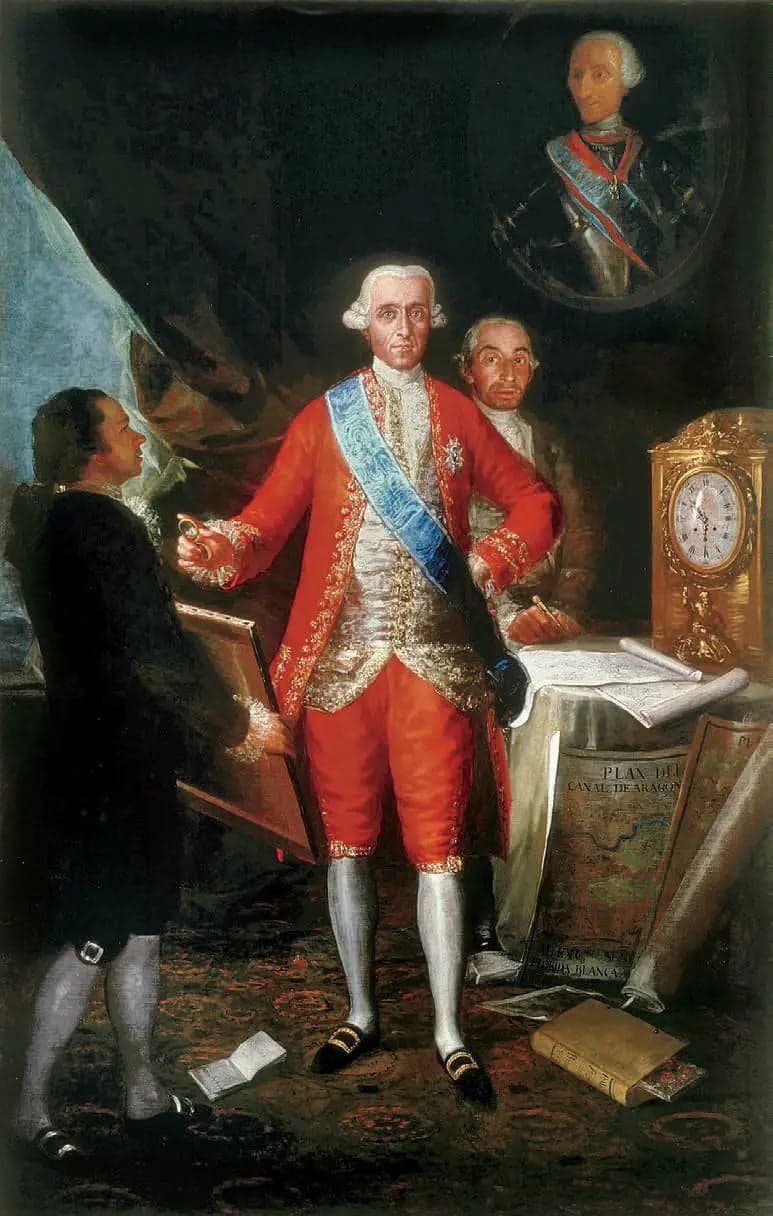
The Count of Floridablanca and Goya
- Original dimensions
- 166 x 262 cm
- Museum
- Not specified
- Year
- 1783
Scene depicted
In this painting , Goya depicts the Count of Floridablanca, a man of many faces, interlocutor of power and symbol of the intellectual authority of his time. The composition, boldly conceived, highlights the affinity between the artist and his model, capturing their confrontation in the light and shadow that shape their personalities and the Spanish political context. Every gaze, every gesture, becomes an echo of the tumult of the period and individual introspection.
Historical context
Created in 1783, this iconic work by Francisco de Goya is set against a rich backdrop of Spanish history, marked by political and cultural transitions at the end of the 18th century. The painting , a reflection of the romantic movement, evokes a time when art became a means of expressing inner feelings and social realities. Although its host museum is not specified, this painting remains a centerpiece of the artistic tradition of this period.
Place in the artist's career
This masterpiece marks a significant milestone in Goya's career, reflecting an evolution towards an emotional depth that will transcend his subsequent works. Compared to *Las Meninas* by Velázquez and *La Familia de Carlos IV*, this painting reveals the pre- romantic influences that are emerging in his style, placing Goya in full artistic maturity.
Anecdote
"Capturing the soul of a man is to propose a reflection of his inner being." These words resonate as Goya, in a creative surge, draws inspiration from a bright morning in the gardens of the palace over there, realizing that he could immortalize not only his model but also the very essence of his time through this canvas .