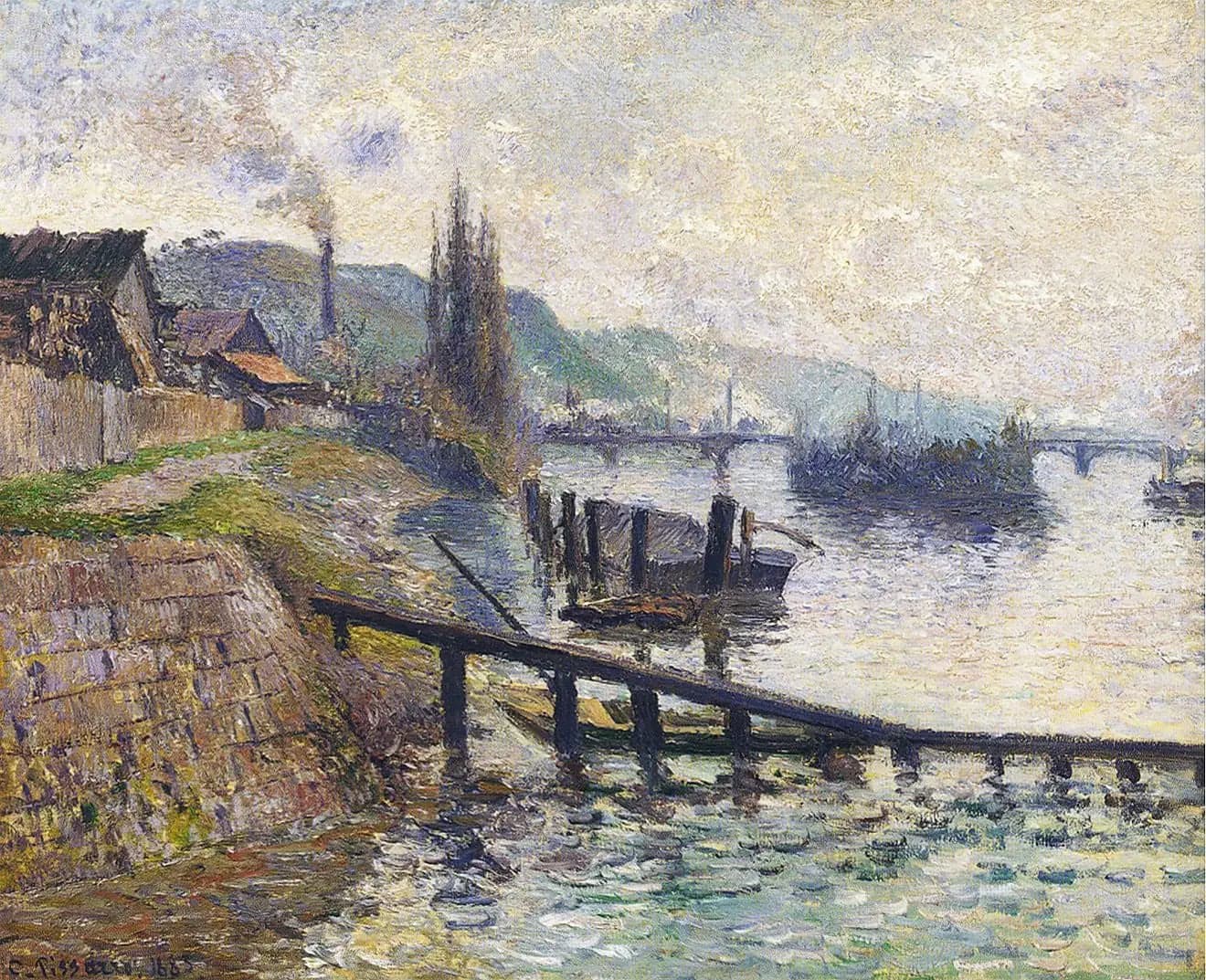
The Côte Sainte-Catherine in Rouen
- Original dimensions
- 65 x 54 cm
- Museum
- Not specified
- Year
- 1883
Scene depicted
This canvas transports us to La Côte Sainte-Catherine, where the lush hills blend with the bright blue of the Seine. Pissarro, with his keen eye, captures the tranquility of the scene, evoking the life of the inhabitants and the sweetness of a summer day. The subtle details, such as the shadows of the trees and the reflections in the water, testify to the respect the artist has for nature.
Historical context
Created in 1883, this painting is part of a pivotal moment in the history of art, in Rouen, a city steeped in culture and history. The work belongs to the Impressionist movement, characterized by a quest for light and color. Today, the canvas remains elusive in public museums, its location remaining a mystery for art lovers. The imposing dimensions of this composition give the canvas a strong and captivating presence.
Place in the artist's career
Set in a period of maturity, this painting places Camille Pissarro at the heart of the Impressionist landscape. In parallel with other works like “Boulevard Montmartre, spring” and “The Seine at Argenteuil,” one perceives an evolution towards a mastery of colors and lights. Each canvas from this period is like a step in his journey, marking a path towards free and instinctive expression.
Anecdote
“Nature is my greatest master” could have said Camille Pissarro , referring to the inspiration that springs forth at the dawn of a spring morning. A scent of blooming flowers floated in the air when the artist captured this fleeting moment, transforming the simplicity of the landscape into a timeless masterpiece . This painting resonates with the ephemeral beauty of nature.
Major exhibitions
“Impressionisti Segreti” in Palazzo Bonaparte