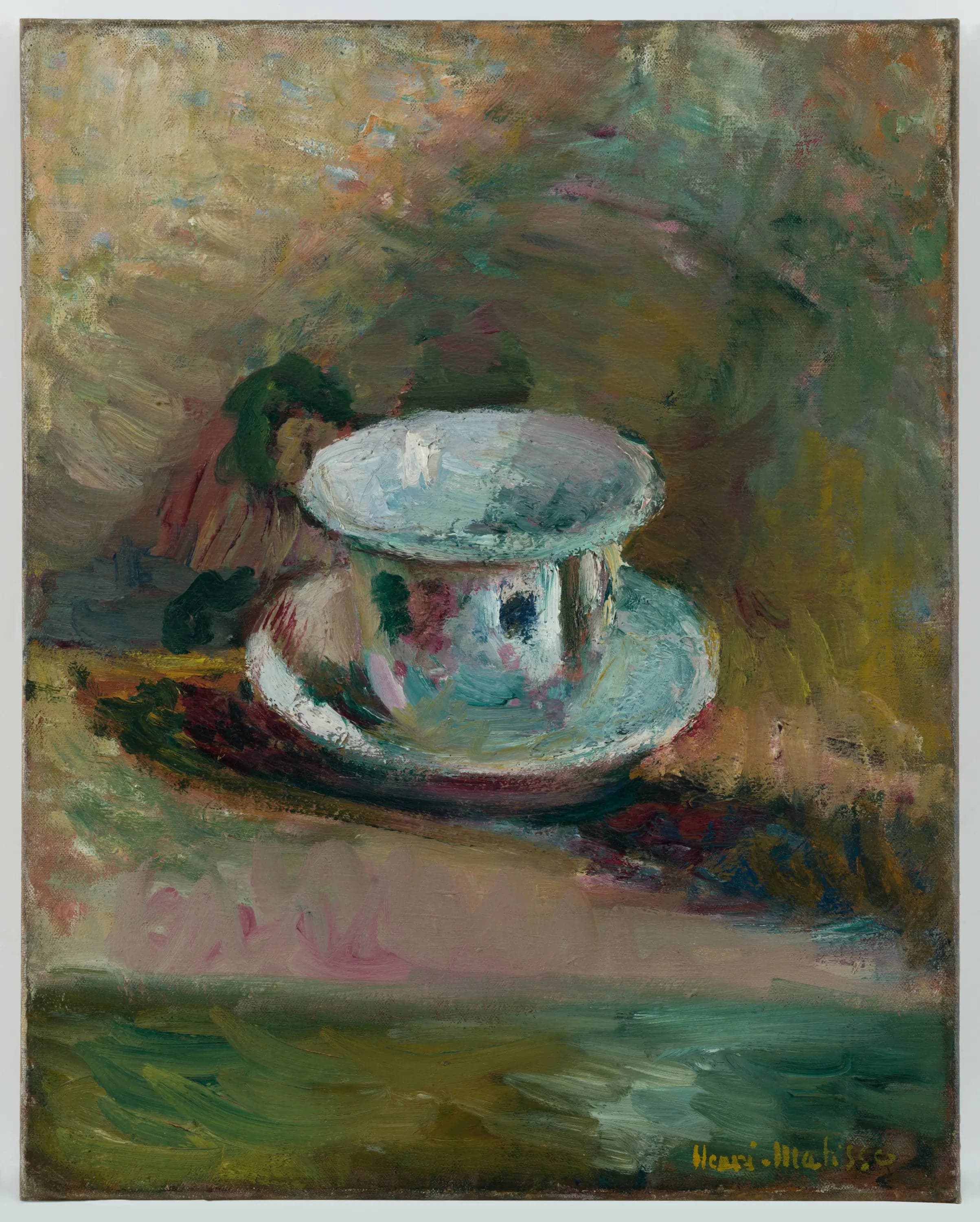
The Coffee Table
- Original dimensions
- 32.7 x 40.64 cm
- Museum
- San Francisco Museum of Modern Art
- Year
- 1899
Scene depicted
In "The Table at the Café," Matisse composes a scene that is both intimate and universal. Elegant figures gather around a table, absorbed in a conversation that seems suspended in time. The harmony of colors and simplified forms translate not only a reality but also a collective emotion, a silent communion shared among friends, offering a glimpse into the social and artistic life of the late 19th century.
Historical context
Created in 1899 following multiple inspirations, the painting "The Table at the Café" finds its essence in Nice, during a period when Fauvism emerges, marking a turning point in the artistic landscape. At that time, the City of Nice is not just a simple backdrop for the scene, but becomes a true catalyst for Matisse, nourishing his gaze with unparalleled light and a vibrant palette. Currently, this painting is preserved at the San Francisco Museum of Modern Art, where its captivating dimension continues to move all who contemplate it.
Place in the artist's career
"The Table at the Café" is positioned at the beginning of Matisse's career, marking a transition towards bolder explorations of colorism and form. In parallel with other paintings such as "The Joy of Life" and "The Dance," this work illustrates the evolution towards a stylistic maturity where the expression of emotions becomes paramount.
Anecdote
"Beauty is in the simplicity of the moment," said Matisse. This is undoubtedly what he had in mind when painting this scene: a radiant morning where the smell of freshly brewed coffee floated in the air, adding a tangible sensuality to the captured moment. This pictorial work invites the viewer to sit, breathe, and soak in the bluish atmosphere of the place.